
Compost Delivery in Montgomery, AL, Priced per Cubic Yard
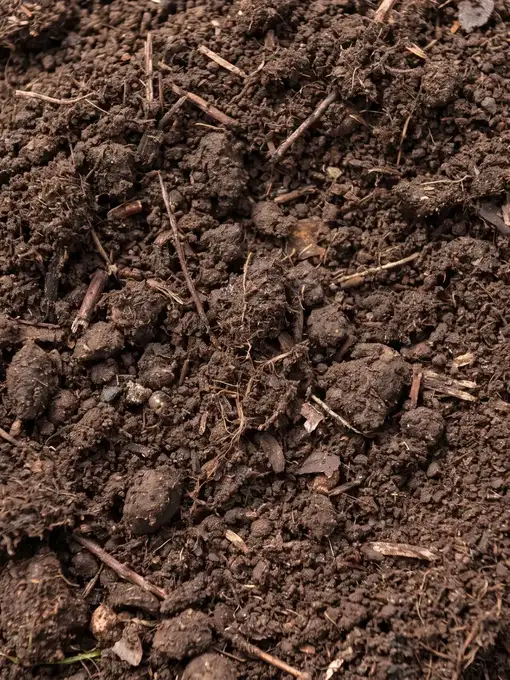
Bulk compost delivered in Montgomery, AL. Dark brown color.
Starting from $462.17 delivered to Montgomery for 2 yards, our minimum order
Compost delivery in Montgomery, AL is sold by the cubic yard, with 2 cubic yards as the smallest order, and the page works out the delivered price for your ZIP so you can see the total before you commit. Montgomery has a mix of flat residential lots, newer subdivisions and older yards where the soil has been worked for decades.
What compost does for Montgomery soil
Much of the ground around Montgomery is dense and slow to drain, and in dry stretches it cracks. Other lots are sandy and lose water quickly. Compost helps both extremes. In clay it creates small crumbs and pore space, and in sand it acts like a sponge that holds water near the roots.
Because the city is mostly flat, standing water after a downpour is a bigger worry than runoff. Raising a planting bed a few inches with a blend of compost and Premium Screened Topsoil gives roots a drier zone to grow in.
Older neighborhoods often have beds that were planted years ago and never refreshed. A fresh layer each season rebuilds that tired soil without tearing out established shrubs, because you can simply spread it around the plants and let rain and worms carry it down.
Good jobs for a load of compost
- New lawns: work a layer into the top few inches before seeding or laying sod.
- Vegetable gardens: fork it in before the spring planting.
- Landscape borders: blend it into the soil, then edge the bed with Pea Gravel for a clean path along the border.
- Tree and shrub holes: mix in one part compost to three or four parts native soil.
Measuring your compost order
For a rectangular bed, multiply the length and width in feet, then the depth in inches, and divide the total by 324. That gives cubic yards. Three beds that are each 4 by 12 feet and filled 3 inches deep add up to about 1.3 cubic yards, so they would need to be combined with a larger job or a deeper fill to reach the 2 cubic yard minimum. Our calculator can check your numbers if you prefer.
Add a cushion of about 10 percent. Compost is spongy when it arrives and loses some height once it has been rained on.
Compost delivery in Montgomery, AL: checkout
Put in your ZIP, set the quantity, and check out. Everything about delivery in Montgomery is on that page, including how the city is covered.
Decide where the pile goes before the truck shows up. A driveway edge or a patch of lawn beside the bed is easiest. Low-hanging branches and wires over the drive can stop a dump truck from tipping, so look up as well as down. If your lawn is soft after rain, a sheet of plywood under the pile spares the grass.
Compost beside other materials
Many Montgomery jobs combine soil work with hardscape. A common sequence is to grade with topsoil, set stone or gravel paths and edging, and bring in compost last so it does not get tracked onto the finished surfaces. Keep the compost pile clear of the stone, since fines and organic bits blend into gravel and are hard to sort out again.
When to spread it
Montgomery summers are long and hot, and a thin layer of exposed compost dries into a crust. Early fall and late winter are kinder times to dig it in. Water the bed after you finish so the material makes contact with the soil below.
Moving the pile is the slow part of any compost job, so plan the labor. A wheelbarrow and a flat shovel handle most home beds, and a landscape rake levels the material quickly once it is in place. Work in sections, finishing one bed fully before starting the next, so you can judge the depth as you go and avoid running short on the last bed. Gloves and a dust mask are sensible on a dry, breezy day, since dry compost lifts into the air as you shovel it.
Pricing notes
Pricing is by the cubic yard, delivered, and the figure on the page is for your ZIP. The more cubic yards in one order, the lower the rate per cubic yard. See Compost in Alabama for the other cities where we deliver it.
About Compost
Compost is organic matter, such as leaves, grass clippings and plant trimmings, that has been broken down by heat and microbes until it is dark, crumbly and mild smelling. It works as a soil conditioner: it adds nutrients slowly, helps sandy soil hold water and loosens dense clay. It is not a stand-alone planting soil and should be blended with native ground for most uses. This compost is sold by the cubic yard, and a cubic yard weighs about 1,000 lb. Screened material spreads evenly and fits in a wheelbarrow without clumping. Enter your ZIP on the page to see what it costs delivered, and note that a bigger order brings the rate per cubic yard down.
What Compost costs in Montgomery
Local Montgomery yards quote compost by the ton; the delivered number includes fuel, the truck, and the haul. Send your ZIP and load size and we will send back a same-hour quote with the truck rate and the per-ton figure spelled out. A ton of this material spreads across about 216 sq ft when laid 3 inches deep, useful when you are sizing a patio base or a walkway run.
How crews use Compost in Montgomery
In and around Montgomery, compost shows up most often on two project types. The most common deployment is planting bed gravel, often in tight urban lots and infill builds in two to three inch lifts. At roughly 200,603 people, the Montgomery order mix leans toward 3 to 8 ton residential drops with the occasional 16 ton job for a contractor.
Delivery day in Montgomery
A typical Montgomery drop is dispatched from the closest yard with a two hour window and a heads-up call once the truck is loaded. Tandem trucks want a 12 ft lane in and out; tri-axles need 14 ft, and both want firm ground at the tipping spot so the load releases cleanly. Standard lead time on this lane is Mon-Sat, with same-day windows held open for orders that hit the desk before 11 AM and clear payment.
Related materials we deliver in Montgomery



Estimate how much you need
Work out your material
A planning figure, not a guarantee. Order roughly a tenth extra to cover settling and uneven ground.
Browse more
Available in nearby cities
Plan your project
Related guides
 GUIDEWhat Size Crushed Stone Goes Under a Concrete SlabMost slabs need 4 to 6 inches of compacted crushed stone underneath. What size crushed stone under a concrete slab needs, and why it matters.Read guide →
 GUIDEWhat Is Crushed Stone? Sizes, Uses and Buying BasicsCrushed stone is quarried rock crushed and screened into angular pieces sold by the ton. Here is what it is, how it is graded, and where to use it.Read guide →
 GUIDEHow Much Does Gravel Cost? A Practical Pricing GuideHow much does gravel cost and why does it vary? See the real factors behind ton pricing, delivery, and order size before you buy.Read guide →GUIDEGravel Size Chart: Pea Gravel to Crushed StoneA gravel size chart showing pea gravel, crushed stone and river rock diameters side by side, so you can match the right size to your project.Read guide →
Frequently Asked Questions
How is compost different from potting soil?
Potting soil is a blended growing medium made for containers and usually contains peat or bark, perlite and fertilizer. Compost is a single organic ingredient meant to be mixed into ground soil or spread on top. Using it straight in a pot tends to pack down and hold too much water.
Can I use compost as mulch?
It can work as a thin cover in a vegetable bed, but it breaks down quickly and does little to stop weeds. Bark or shredded wood does that job better. A good routine is to dig or rake compost in first, then cover the bed with a real mulch.
How much compost should I mix into sandy soil?
A common rule is about 2 to 4 inches of compost worked into the top 6 inches. That roughly means a quarter to a third of the mix by volume. Sandy ground drains fast, so work it in thoroughly instead of leaving it as a layer on top.
Is it okay to plant right after spreading compost?
Yes, when the compost is finished and mixed into the soil. Do not plant into a pure layer of it, because seedlings need contact with mineral soil. Water the bed well, wait a day or two for it to settle, then plant as usual.
Does compost have weed seeds in it?
Well-made compost reaches temperatures that kill most weed seeds, but a few can survive or blow in once the pile sits. Spreading it and covering with mulch cuts down on any that sprout. Pull seedlings early, before they set roots.
How should I store leftover compost?
Keep it in a pile on bare ground or a tarp, with a cover to shed heavy rain and shade it from the sun. It stays usable for months. If the pile dries out, wet it lightly before spreading, since bone-dry compost is hard to wet again.
Can I order compost for a commercial job?
Yes. Contractors order it the same way homeowners do, by the cubic yard, with the same smallest order. Compost suits landscaping crews finishing new beds, lawns and plantings, and it is easy to combine with topsoil on the same job.
What if I am unsure how deep to spread it?
Think about the job rather than the depth. Top-dressing a lawn needs only a thin film, a garden bed needs a few inches dug in, and a new planting bed can take more. If the figure is a guess, order toward the high end, since leftover compost is easy to use elsewhere.