
Gravel Walkway Calculator
Quickly estimate cubic yards, tons, and material cost for your Pea Gravel project. Adjust the inputs below and the result updates in real time.
Calculate Your Project
Estimate only. Add 10-15% for compaction and waste.

How this calculator works
Cubic yards = (area × depth ÷ 12) ÷ 27
Tons = cubic yards × density × 27 ÷ 2000
Material estimator for a gravel garden path or backyard walkway. Default 3" depth.
Enter your area and depth, and we'll compute cubic yards, tons, and a delivered material cost using current 2026 quarry pricing.
What the walkway calculator computes
Walkway calculations are nearly identical to patio math but with a few key differences in depth and material choice. The calculator takes path length, width, and depth and returns cubic yards plus tons. A typical 30 foot front walkway at 3 feet wide and 2 inches finished depth needs roughly 0.55 cubic yards (about 0.75 tons) of surface material plus the same again in compacted base. The total is well under 2 tons for most residential walks.
Walkways differ from patios in two ways. First, the width is narrower (3 to 4 feet is standard versus 10 to 14 feet for a patio), so the volume is smaller. Second, walkways often span longer distances at uneven grade, which means more cuts and fills during base prep and slightly more overage to handle the trim losses around curves and grade transitions.
Material picks for walkways
Three materials cover most walkway installs. Pea Gravel does not stay in place on a sloped walk; anything steeper than a 2 percent grade and the gravel washes downhill during heavy rain. For flat walks it is the easiest and most forgiving choice.
Decomposed Granite is the desert-southwest and Mediterranean-garden pick. The fines bind when wet-compacted, producing a semi-stable surface that holds shape on gentle slopes and stays put under foot traffic. It tracks onto shoes and into the house more than gravel does, so plan a stepping-stone or doormat transition where the walkway meets the door.
Crushed Stone or #89 Stone) is the firmest walkway surface. The angular fragments lock together under foot pressure and stay in place on grades up to 5 percent. It is less forgiving on bare feet than rounded gravel, which matters more for some installs than others.
Depth, base, and edge for walkways
The full walkway profile is 4 inches of compacted Paver Base or Crusher Run topped with 2 inches of surface material, on top of woven landscape fabric. Total trench depth from finished grade is 6 inches. For high-traffic front walks that see foot traffic year-round, go 5 inches of base and 2 inches of surface for an even tighter pack.
Edging is more important on walkways than on patios because the surface area is small relative to the perimeter length, which means more proportional edge loss. Galvanized steel edging at $1.50 per linear foot is the standard. Brick or stone borders look intentional and double as visual cues for night navigation.
Grade matters. Walkways should slope away from the house at 1 to 2 percent for drainage. Steeper than 5 percent and the gravel migrates; flatter than 1 percent and water pools after rain. A simple string line and level confirms grade across each 6 to 8 foot run before the gravel goes down.
Pricing and delivery for a residential walkway
A 30 foot residential walkway at 3 feet wide totals about 1.5 tons of surface material plus 2 tons of base. Delivered, that is roughly $150 to $220 in materials. Edging and fabric add $50 to $100. The full project usually completes in one weekend including base prep and surface install.
Same-day delivery windows are usually open before 11 AM. Most walkway-sized orders arrive on a tandem-axle truck. If your driveway access is tight (under 10 feet wide or with a sharp turn) tell the yard when you order so they dispatch a shorter truck or stage the drop at the street.
Plan on a thin refresh every 2 to 3 years for the surface course. Walkways see concentrated foot traffic that wears the surface faster than a patio. A 0.5 ton top-up is typical, costing $40 to $60 delivered.
Walkway design and install pitfalls
The most common design pitfall is making the walkway too narrow. A 2 foot wide path forces people to walk single file and feels cramped. 3 feet is the standard for residential front walks; 4 feet allows two people to walk side by side comfortably. Add an extra 6 inches if the walkway is the main path to a back yard with carts or wheelbarrows running over it regularly.
The most common install pitfall is uneven base compaction. The base lift needs to be compacted in two passes with a plate compactor for the surface to stay flat. Skipping that step shows up six months later as a wavy walkway surface that becomes a trip hazard. Compactor rental is $60 to $80 per day and is the single best investment in walkway longevity.
Finally, plan the lighting before you finish the install. Path lights are easiest to set with the cable run alongside the walkway before the base goes down. Retrofitting lighting after the walkway is finished requires lifting sections of the surface, which is annoying and looks patched.
Walkway lighting and accessibility
Walkway lighting transforms a path from utilitarian to inviting and significantly improves nighttime safety. Plan lighting before the surface gravel goes down. Low-voltage path lights set 6 to 8 feet apart on alternating sides of the walkway provide enough illumination for safe footing without a dedicated electrician. The cable runs in the trench alongside the base course where it gets protected by the gravel above. Retrofitting lighting after the walkway is complete requires lifting sections of the surface to bury cable; far easier to plan it in.
Accessibility matters for any walkway leading to a primary entrance. ADA standards (which most municipalities adopt for residential walkways serving entries) require a 36 inch minimum width with no protruding objects, a maximum 1:20 slope on running grade, and a stable surface. Pea Gravel does not meet the "stable surface" requirement for ADA accessibility; Crushed Stone or #89 Stone) wet-compacted with Stone Dust (Screenings) does. For the path to a primary entrance, use the firmer surface even if the rest of the landscape uses softer gravels.
For aging-in-place applications, plan a 48 inch wide path with handrails on both sides for the section closest to the entrance. The wider path supports wheelchairs and walkers; the handrails support unsteady gait. These upgrades add roughly 25 percent to material costs and are worth every dollar over time.
For walkways with multiple turns or branch points, plan the lighting to provide visual wayfinding at each decision point. A low-voltage path light at every turn, plus one at the midpoint of any straight run longer than 12 feet, balances illumination with cost. Total lighting budget for a 30 foot residential walkway runs $80 to $200 in fixtures plus another $40 in transformer and cable.
Materials this calculator covers
 Price by ZIP
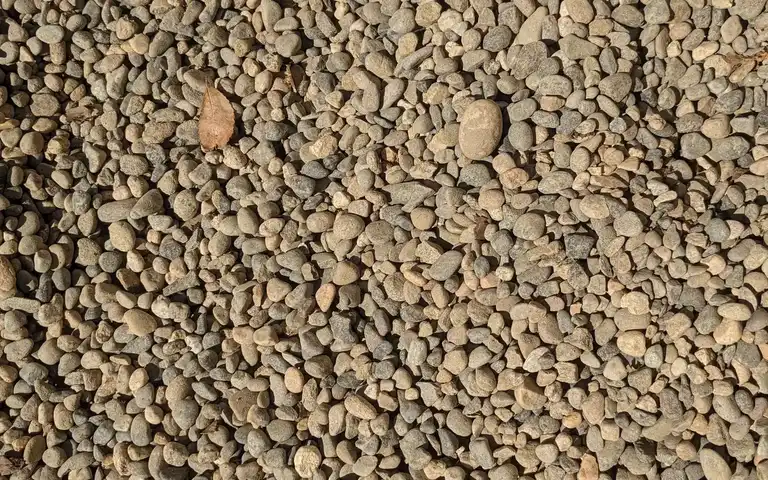
- Size1/4 - 3/8″
- Density2800 lb/yd³
- ColorTan / mixed
 Price by ZIP
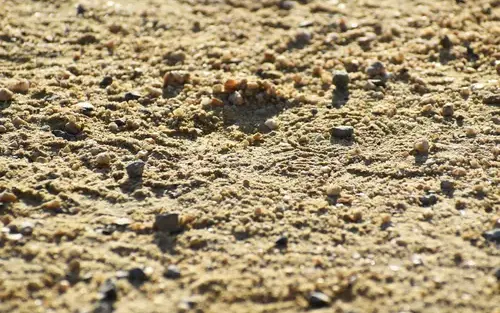
- Size0 - 1/4″
- Density3000 lb/yd³
- ColorTan, gold
 Price by ZIP
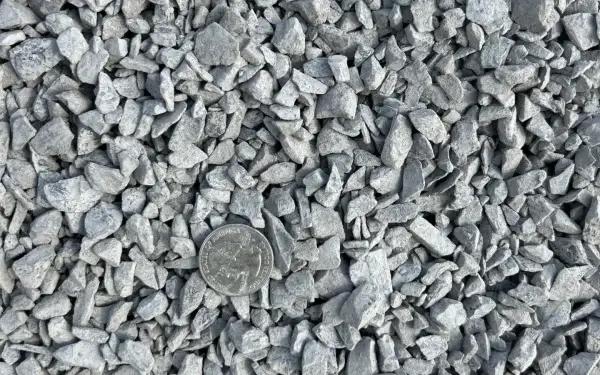
- Size3/8″
- Density2600 lb/yd³
- ColorGray
Other calculators
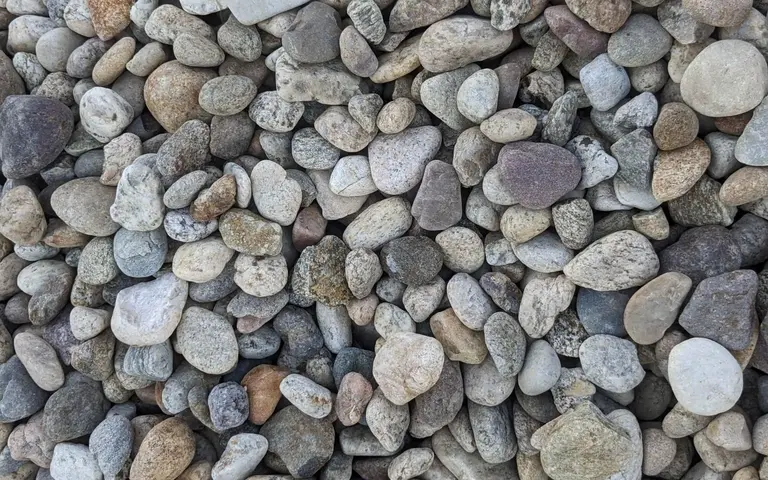 CALCULATORFire Pit Gravel CalculatorDecorative gravel around a fire pit. River rock is heat-stable; pea gravel can spall - use this calc to plan.Open calculator →CALCULATORPea Gravel Patio CalculatorFree Pea Gravel Patio Calculator - enter your area in square feet and depth in inches and get instant tons, cubic yards, and an estimated material cost.Open calculator →CALCULATORPool Deck Gravel CalculatorPool surround gravel calculator. Defaults to 4" depth of pea gravel; adjusts to river rock or DG.Open calculator →CALCULATORLandscape Rock CalculatorUse this landscape rock calculator to convert area and depth into cubic yards and tons for river rock or decomposed granite.Open calculator →
Related guides
GUIDEGravel Size Chart: Pea Gravel to Crushed StoneA gravel size chart showing pea gravel, crushed stone and river rock diameters side by side, so you can match the right size to your project.Read guide →GUIDEThe Different Types of Gravel and How to ChooseA plain-language guide to the main types of gravel, covering pea gravel, crushed stone, river rock and decomposed granite.Read guide →GUIDEHow Much Does Gravel Cost? A Practical Pricing GuideHow much does gravel cost and why does it vary? See the real factors behind ton pricing, delivery, and order size before you buy.Read guide →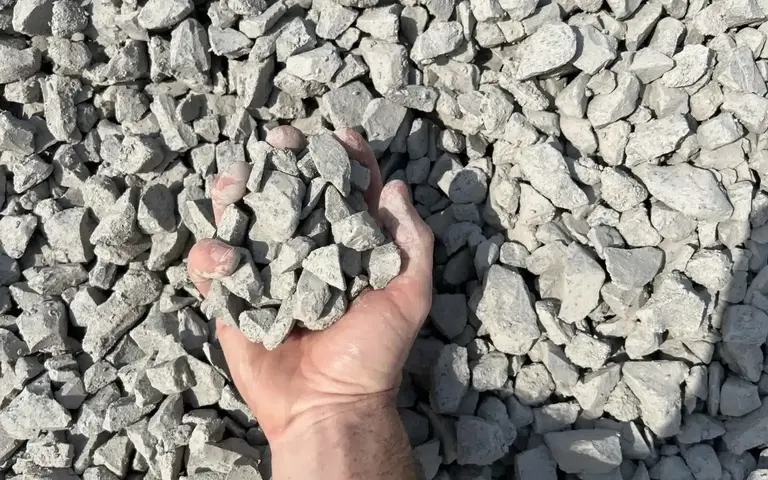 GUIDEWhat Is Crushed Stone? Sizes, Uses and Buying BasicsCrushed stone is quarried rock crushed and screened into angular pieces sold by the ton. Here is what it is, how it is graded, and where to use it.Read guide →
Frequently Asked Questions
How does this calculator work?
Enter area in sq ft and depth in inches. We convert to cubic yards, multiply by density to get tons, and divide by 2,000.
What if I don't know the depth?
Most projects use 4 inches. Drainage applications go deeper (6-12 in).
Why is the estimate different from my supplier quote?
Within 10% is normal - supplier quotes include delivery + minimum-load surcharges that depend on your distance from the quarry.
Should I round up?
Yes - round up to the nearest half-ton. The price-per-ton usually drops on larger orders.
Does this include delivery cost?
No - the result is material cost only. Get a delivered quote with your ZIP for the full price.
Can I use this for another material?
Density varies by material. This calculator is tuned for pea-gravel; switch to the matching calculator for accurate results.