
Compost Delivery in San Marcos, CA for Garden and Lawn Projects
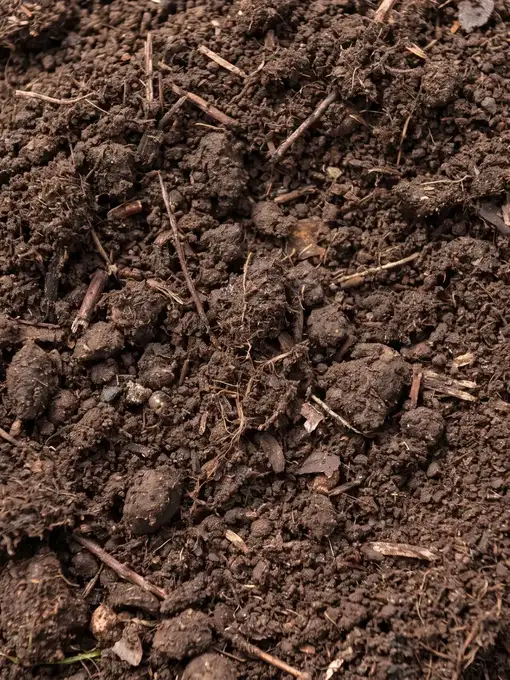
Bulk compost delivered in San Marcos, CA. Dark brown color.
Starting from $622.92 delivered to San Marcos for 2 yards, our minimum order
San Marcos is in North San Diego County and has about 97,000 residents, many of whom garden through hot, dry summers. Compost delivery here is ordered by the cubic yard, and the delivered price for your ZIP code is calculated live on the page. Added organic matter helps sandy soil hold water longer and lets dense clay drain more evenly, which matters in a dry climate.
Compost Delivery in San Marcos, CA: Where It Helps Most
Dry summers make soil structure matter. A compost layer worked into beds before planting gives roots a looser, moister zone to grow into. Lawns benefit from a light top-dressing during the cooler part of the year, and newly planted shrubs and trees do well when compost is blended into the backfill around the root ball rather than placed in a thick ring.
When the main job is a clean, weed-suppressing surface along pathways or around shrubs, Mulch is the more practical choice. It is measured in cubic yards too, so one set of bed dimensions serves both products.
Vegetable gardens respond to compost most in the first season after a bed is built. Working it into the top several inches gives the soil structure that a thin surface dressing cannot match, and it leaves room for roots to reach deeper as the summer goes on.
Fresh compost is fluffy and drops as it is watered in, so a bed spread to 3 inches will end up a little lower after the first few weeks. Set edging and border heights with that in mind, and judge the final depth after a good soaking rather than the day you rake it flat. Beds on a slope need a lighter touch: spread thinner and work across the contour so rain does not drag the surface layer downhill before it has a chance to bond with the soil.
Working Out How Much Compost You Need
Use this formula: length in feet times width in feet times depth in inches, divided by 324. That result is measured in cubic yards. A 12 by 6 foot planting strip spread 3 inches deep gives 216 divided by 324, or about two-thirds of a cubic yard. That is below the minimum, so the order starts at 2 cubic yards.
For a second check, enter the same numbers into the calculator. Use the depth you actually plan to spread, because that single number moves the total more than any other measurement.
A cubic yard of this compost weighs roughly 1,000 pounds, so choose a drop point close to the planting area and clear a path before the load comes.
How the Price Is Set for San Marcos Addresses
Compost is priced per cubic yard. The total you see is the delivered price for the ZIP you enter, shown before checkout, and it is not one flat figure for every address. A bigger order brings the rate per cubic yard down, so a larger project tends to work out better per yard than a small top-up.
The nearby cities in our data are Vista, about 6 miles away, Encinitas, about 8, Carlsbad, about 14, Escondido, about 16, and Oceanside, about 20. Those distances are for reference only. Your own ZIP sets the live price.
If you are unsure whether to split a project into one order or two, enter both options and compare the totals shown for your ZIP. A single larger order is the simpler choice when every bed sits on the same property.
Ordering Compost and Other Materials in San Marcos
Begin with delivery in San Marcos for the local details, then enter your ZIP to see the price for your address. Keep compost on cubic yards in your cart.
For garden soil or fill work, Premium Screened Topsoil is sold by the ton. Its quantity and price use a different unit, so compare it on its own page instead of against compost.
When the pile arrives, work through it bed by bed, raking each section flat before you move on and giving it a slow soak at the end. For projects elsewhere in the state, see Compost in California.
About Compost
Compost is a dark brown, crumbly material made from decomposed plant matter. Gardeners use it to put organic matter back into the soil, which gives roots a better environment to grow in. In a region with dry summers, that extra capacity to hold moisture can make a noticeable difference for beds that otherwise dry out quickly.
Each order is measured and sold by the cubic yard. A cubic yard weighs roughly 1,000 pounds, so the physical work of moving it is larger than the volume alone suggests. Plan a bed layer of 2 to 3 inches blended into the top several inches of soil, and a lawn top-dressing of a quarter inch to half an inch.
Spread compost in small sections so it stays even, and water each section lightly after it goes down. Working in small batches also makes it easier to see how far the material goes before you order more for a second area.
What Compost costs in San Marcos
Around San Marcos, compost is quoted by the ton with delivery layered in based on distance from the closest yard. Send your ZIP and load size and we will send back a same-hour quote with the truck rate and the per-ton figure spelled out. Plan on roughly 216 sq ft of coverage per ton at 3 inches deep, which puts a single-car driveway in the 3 to 5 ton bracket.
How crews use Compost in San Marcos
San Marcos contractors keep compost on the order sheet for a short list of standard installs. Top of the list is planting bed gravel, where the material is rolled out in tight urban lots and infill builds and screeded to grade. San Marcos sits at about 96,620 residents, which means we see steady weekday traffic from landscape crews and weekend pickups from owner-builders.
Delivery day in San Marcos
Delivery in San Marcos runs out of the nearest pit; you get a two hour arrival window the evening prior and a call when the driver leaves the scale. Plan for 12 ft of clear path for a tandem and 14 ft for a tri-axle, plus a level area at the dump point so the bed lifts straight. Standard lead time on this lane is Mon-Sat, with same-day windows held open for orders that hit the desk before 11 AM and clear payment.
Related materials we deliver in San Marcos



Estimate how much you need
Work out your material
A planning figure, not a guarantee. Order roughly a tenth extra to cover settling and uneven ground.
Browse more
Available in nearby cities
Plan your project
Related guides
 GUIDEThe Different Types of Gravel and How to ChooseA plain-language guide to the main types of gravel, covering pea gravel, crushed stone, river rock and decomposed granite.Read guide →
 GUIDEWhat Are Screenings? A Guide to Crushed Stone FinesScreenings are fine crushed stone used for paver bases, joint fill and walkways. See what screenings are, common types, and mistakes to avoid.Read guide →
 GUIDEWhat to Put Under River Rock for Landscaping BedsHere is what to put under river rock landscaping: a compacted base where needed, then landscape fabric, then rock, to stop weeds and settling.Read guide →GUIDEHow to Clean River Rock and Restore Its ColorLearn how to clean river rock landscaping with rinsing, soap and vinegar methods, plus common mistakes to avoid for a brighter, longer lasting rock bed.Read guide →
Frequently Asked Questions
How can I tell whether my soil is sandy or clay?
Squeeze a handful of moist soil. If it falls apart right away, it is sandy and drains fast. If it holds a tight ribbon when pressed between your fingers, it is clay. Sandy soil needs compost worked in deeply, while clay does better with a layer blended in gradually over several seasons.
What is the minimum compost order in San Marcos?
For San Marcos compost, the minimum is 2 cubic yards. If your measurement comes out lower, round up to the minimum rather than shorting the project. The extra material is useful for a second planting strip, a fall top-dressing, or patching thin spots on the lawn later on.
How deep should compost go into a planting strip?
For planting strips and beds, most gardeners blend a 2 to 3 inch layer into the top several inches of soil. Thinner coverage is fine for established lawns. Deeper is not always better, since an overly thick layer can keep young roots from reaching the native soil underneath.
Can I use compost in pots and containers?
Yes, but blend it with potting soil or native soil rather than filling a container with compost alone. A mix of about one part compost to three parts soil drains better and keeps roots from sitting in dense, wet material. Top up the container each spring as the mix settles.
Can compost be used on a lawn in San Marcos?
Yes, as a light top-dressing. A thin layer, roughly a quarter inch to half an inch, applied in the cooler part of the year, lets grass grow through without being smothered. Rake it evenly and water lightly so the material settles against the soil surface.
Will compost bring weeds into my beds?
Any compost can carry a few stray seeds, so a light flush of seedlings after spreading is normal. They pull easily from loose compost, and the best time to remove them is while they are small, before roots reach the soil underneath. Clearing existing weeds from the bed first keeps the problem to a minimum.
Can I plant right after working compost into a bed?
Usually yes. Mix the compost into the top several inches, water the bed well, and set transplants at their normal depth. Keep fresh compost from piling against stems or trunks. If you are sowing small seeds, rake the surface fine first so seedlings are not buried under chunky material.
What tools make spreading compost easier?
A flat-bladed shovel, a wide garden rake and a sturdy wheelbarrow cover most jobs. Lay a tarp where you stack material to protect the surrounding lawn or paving. A hard-tined rake levels the surface, while the back of a leaf rake gives it a finer finish around small plants.