
Fill Dirt Delivery in New Orleans, LA
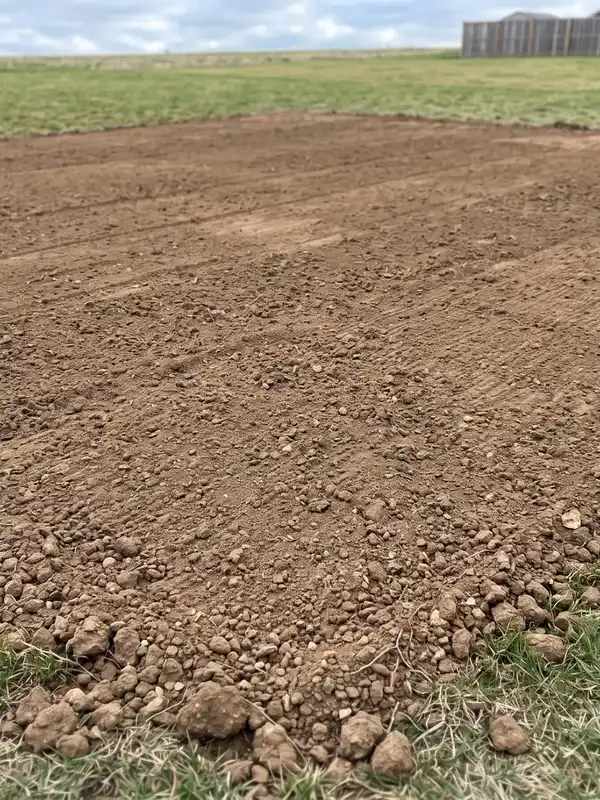
Bulk fill dirt delivered in New Orleans, LA. Brown color.
Starting from $480.44 delivered to New Orleans for 2 tons, our minimum order
Fill dirt delivery in New Orleans, LA
Ground in New Orleans is low, wet and always settling. That makes fill dirt delivery in New Orleans, LA one of the most practical orders a homeowner or small contractor can place. Choose a tonnage, type in the ZIP for the job, and the page returns a delivered price for that address. There is nothing to phone in and no quote to wait on.
What the local ground asks for
A city of about 377,000 people built on soft river delta soil deals with subsidence all the time. Older homes in neighborhoods across town have yards that have sunk below the street, and new construction is often raised to sit above the surrounding grade. Both situations call for the same thing: dense material that adds height and holds it.
Heavy rain makes the case stronger. Water that has nowhere to go ends up under the house or against a slab, so many property owners add dirt to push drainage toward the street or a swale.
Common jobs
- Yard leveling: fill in sunken areas left by settling, old stumps or removed trees.
- Raising grade near the house: slope the ground away from the foundation so runoff leaves the property.
- Building pads: sheds, generators, small outbuildings and concrete slabs.
- Trench and utility backfill: close excavations after plumbing or drainage work.
- Raised beds and berms: fill sets the bulk, and soil goes on the surface.
Pairing dirt with other materials
Fill rarely finishes a project on its own. For a planted area, spread a layer of Premium Screened Topsoil across the compacted fill, then seed or lay sod. For a path, patio border or drainage strip, a top layer of Pea Gravel gives a clean, walkable surface over a firm dirt base.
Ordering each material separately lets you size every load to its job, and the live engine prices each one on its own.
Estimating your volume
Start with the footprint. A rectangle that is 15 feet wide and 40 feet long, raised by 4 inches, needs roughly 7.4 cubic yards: multiply 15 by 40 by 4, then divide by 324. If the shape is irregular, break it into rectangles and add the results. Sunken yards rarely sit flat, so take the depth at several spots with a tape and use the average. The calculator does the same math if you enter the length, width and depth.
Next, change yards into tons. A cubic yard of our fill dirt runs roughly 1.1 tons, so the tonnage you order will be a bit higher than the yardage. Add extra for settling. In a city where the ground already moves, dirt that is not compacted in lifts will drop further than expected, so overshoot a little rather than coming up short.
Placing an order
Orders start at two tons. Beyond that, you pick the amount, and larger quantities carry a lower rate per ton. The price shown at checkout is the delivered total for your ZIP, and it changes as you change the tonnage.
Drop-off details are on the delivery in New Orleans page. Before you order, think about where the truck will stand. Narrow streets, parked cars and overhead lines can all limit where a dump bed can tilt, and many New Orleans lots have tight frontage. A spot at the curb or in a wide driveway is easiest.
Quick checklist
- Walk the lot, note the low spots and decide how high the finished surface should sit.
- Turn that volume into tons and pad it for the settling this soil is known for.
- Pick a dump spot at the curb or in the driveway, away from wires and parked cars.
- Type in the ZIP, read the delivered price and check out.
Fill dirt across Louisiana
The Fill Dirt in Louisiana page covers the whole statewide range for jobs outside the city.
About Fill Dirt
Fill dirt is the unscreened soil that comes out of excavations, and it is sold to anyone who needs to move ground level up. In color it runs brown, and in texture it is a blend of clay, silt and sand, sometimes with small rocks. None of that is a flaw. The mix is what lets the dirt lock together once it is tamped down.
Use it where strength and volume matter more than looks: under a slab, behind a retaining wall, across a sunken corner of the yard or in a trench that has to be closed. It is not meant for gardens, since seeds and roots need the loose, organic structure of topsoil. A common approach is to build the shape with fill and finish with a layer of screened soil.
Fill dirt is sold by the ton here, so there is no need to guess at a truck's volume. Work out the cubic yards you need, convert to weight, and order that tonnage.
What Fill Dirt costs in New Orleans
In the New Orleans market, fill dirt is sold by the ton and priced at the gate before delivery is added on. Send your ZIP and load size and we will send back a same-hour quote with the truck rate and the per-ton figure spelled out. One ton covers about 98 sq ft at a 3 inch finished depth, so a 400 sq ft driveway pad runs roughly 5 tons.
How crews use Fill Dirt in New Orleans
Crews working out of New Orleans tend to call for fill dirt on a few repeat jobs each week. The first is erosion control, typically laid in tight urban lots and infill builds with a base lift compacted before the finish course goes on. The second is driveway gravel, which lands here in dense neighborhoods where curb access is short and usually ships as a 4 to 8 ton order. With a population around 376,971, New Orleans pulls a mix of single-truck homeowner orders and contractor full-loads through the season.
Delivery day in New Orleans
On the day of the drop, the dispatcher pulls the closest yard, batches your ticket with other New Orleans stops, and sends a window the night before. Tandem-axle dumps need at least 12 ft of clear width and 14 ft overhead to set the bed; tri-axles need 14 ft of clearance on both counts and a level pad to tip safely. Standard lead time on this lane is Mon-Sat, with same-day windows held open for orders that hit the desk before 11 AM and clear payment.
Related materials we deliver in New Orleans
 Price by ZIP
- SizeScreened, no size grade
- Density2200 lb/yd³
- ColorDark brown
 Price by ZIP
- Density2000 lb/yd³
- ColorDark brown
 Price by ZIP
- Density1000 lb/yd³
- ColorDark brown
Estimate how much you need
Work out your material
A planning figure, not a guarantee. Order roughly a tenth extra to cover settling and uneven ground.
Browse more
Common uses for Fill Dirt in New Orleans
Available in nearby cities
Plan your project
Related guides
 GUIDEDoes Gravel Stop Weeds? Honest Answer + What WorksPractical, field-tested guide: does gravel stop weeds. Pulled from real US installer notes and 2026 supplier price data.Read guide →
 GUIDEHow Much Gravel Do I Need? Quick Sizing GuidePractical, field-tested guide: how much gravel do i need. Pulled from real US installer notes and 2026 supplier price data.Read guide →
 GUIDEWhat Is #57 Stone? Uses, Size, and Cost ExplainedPractical, field-tested guide: what is 57 stone. Pulled from real US installer notes and 2026 supplier price data.Read guide →
 GUIDEHow Deep Should a Gravel Driveway Be? Layer GuidePractical, field-tested guide: how deep should gravel driveway be. Pulled from real US installer notes and 2026 supplier price data.Read guide →
Frequently Asked Questions
What unit does fill dirt use at MyGravelBuddy?
Fill dirt in New Orleans is sold by the ton. Pick your tonnage and enter the ZIP for the dump location. Because the order is placed by weight rather than by the truck's volume, a measurement in cubic yards has to be converted before you check out.
Is there a minimum order for fill dirt in New Orleans?
Yes, the smallest order is 2 tons. That is enough for a modest yard repair, a small pad or a short run of trench backfill. Larger projects can order more, and any amount above the minimum is allowed.
How can I tell fill dirt from topsoil when the load arrives?
Fill is the heavier material: lumpy brown clay, silt and sand, sometimes with small rocks. Topsoil is darker and crumbly, with bits of organic matter. If your load looks like the first, it is behaving as fill should. It is meant to be packed hard for structure, not worked into a planting bed.
Can I plant directly in fill dirt?
It is better not to. Fill is mixed subsoil with clay and sand and few nutrients, so roots and grass seed struggle. Compact it to the shape you want, then cover it with several inches of screened topsoil. That layer is where plants will actually grow.
How do I stop the fill from sinking after I spread it?
Spread the dirt in lifts of 6 to 8 inches and tamp or roll every lift before the next one goes on. That matters on delta soil that keeps settling. Slightly damp soil packs best. Soil that is too wet turns to mud under the tamper, so let a soaked yard drain for a day or two before compacting.
How do I move the pile once it is dumped?
A wheelbarrow handles a small pile, and a skid steer is faster for a big one. Lay plywood or boards across a driveway or lawn where the wheels cross, so the surface is not rutted. Work from the edge of the pile toward the area you are filling, and keep the route clear of storm drains.
Can I order fill dirt along with other materials?
Yes. Topsoil, pea gravel, river rock and crushed stone are all available for New Orleans, each priced for your ZIP. Each is placed as its own order, so you can check out one material at a time.
What can I do with leftover fill?
Leftover fill is useful for topping up low spots, building a berm or backfilling a trench later. Cover the pile with a tarp so rain does not wash it into the street, and keep it clear of storm drains and away from the curb until you are ready to use it.