
Compost Delivery in Homestead, FL for Yards and Beds
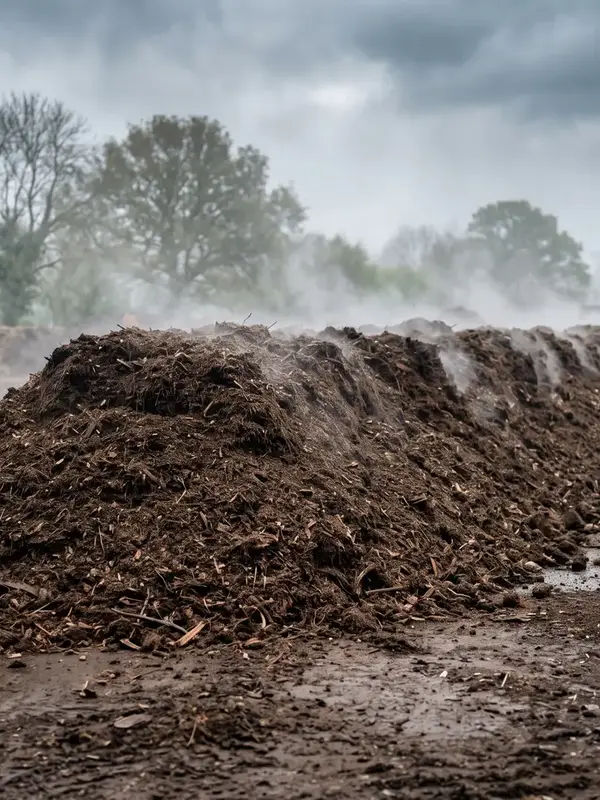
Bulk compost delivered in Homestead, FL. Dark brown color.
Starting from $581.80 delivered to Homestead for 2 yards, our minimum order
Homestead is a city at the southern edge of Miami-Dade County, close to Everglades National Park, and many of its yards sit on limestone-based ground that is shallow in spots. Compost delivery in Homestead, FL adds organic matter to that base, giving roots something to grow into and helping the ground hold water between watering days.
Pricing compost in Homestead, FL
The number on the Homestead page is the delivered price for your ZIP. Delivery is built in, so the figure you read is the figure to budget with. Bigger quantities bring the rate per cubic yard down, which makes one larger order a better value than a string of small ones for most projects.
Before you compare prices, work out your real volume. Overbuying leaves material to store, and underbuying means a second order and a second drop.
Compare the delivered figure with the trips you would otherwise make to a store, since a full load is often the more practical route for a large bed.
Where compost fits best in Homestead
Compost works well in new beds where the native ground has little organic matter. Mix a few inches into the top layer before planting shrubs, citrus, or a row of vegetables. Around established trees, spread a thin ring and keep it away from the trunk.
Raised beds are a practical option where the ground is shallow. Fill them with a blend that includes compost, since the material gives the mix body and helps it hold moisture between irrigation cycles. Check the depth of each bed before you calculate the order, because a raised bed can need more volume than it looks like from the surface.
Mulch is the other common choice for beds, and the two work well side by side. Mulch is sold by the cubic yard, so measure beds the same way for both. For high-traffic paths, compost is the wrong pick, since it breaks down and washes away.
How much compost you need in Homestead
Measure each bed's length and width in feet and its depth in inches. Multiply length by width and depth, then divide by 324. A 12 by 25 foot bed at 2 inches deep works out to about 1.85 cubic yards, which rounds up to the 2 cubic yard minimum. If you prefer a form, the calculator on this site does the arithmetic for you.
Each cubic yard weighs about 1,000 pounds when dry, so expect a heavy drop.
Getting compost delivered to Homestead
The delivery in Homestead page is where to look for how orders reach the city. Check it for current timing rather than planning around a set day. A paved, level drop area keeps the truck steady and the unload simple, so note any gate code or narrow entrance before the load is scheduled.
Coral Gables sits about 19 miles away, Doral about 25, and Miami about 26. Those distances help you picture where Homestead sits within the county.
Keeping the layer working through the season
Compost keeps working for months, so a layer put down in spring can still be feeding plants by late summer. Refresh the top layer once or twice a year rather than all at once. Tree rings and foundation beds respond well to the same routine, and a light annual topdressing keeps the surface even. Pull back any debris that piles against stems so air can move around the base of each plant.
Ordering compost for a Homestead project
Enter your ZIP, choose a quantity of at least 2 cubic yards, and review the delivered price before checkout. The Compost in Florida hub links the other Florida pages for this material, which helps if you are comparing a nearby city.
A separate purchase like Premium Screened Topsoil is sold by the ton, so keep it in its own order if you need both. Sort out the drop location and the quantity first, then place the order.
About Compost
About this material
Compost is an organic amendment made from broken-down plant material. The product on this page is dark brown with a crumbly texture and an earthy smell, and it is sold by the cubic yard. Each cubic yard weighs about 1,000 pounds when dry, so expect a heavy load.
In South Florida, native ground is often thin, rocky, or quick to drain, and plants growing in it dry out faster than they would in deeper soil. Compost holds water and nutrients in the root zone, which is often the difference between a bed that stalls and one that fills in. It also helps turf stay greener through the dry stretches between rains.
Spread compost in a layer, then water it in. A few inches in the planting zone is a common choice for new beds, while a thin topdressing suits lawns. Keep the material a few inches away from trunks and stems so moisture does not stay trapped against the bark.
Because this is bulk material, there is no bag to haul, and you can size the order to the project. Check the delivered price shown for your ZIP to see what the order costs before you check out.
What Compost costs in Homestead
In the Homestead market, compost is sold by the ton and priced at the gate before delivery is added on. Send your ZIP and load size and we will send back a same-hour quote with the truck rate and the per-ton figure spelled out. One ton covers about 216 sq ft at a 3 inch finished depth, so a 400 sq ft driveway pad runs roughly 2 tons.
How crews use Compost in Homestead
Crews working out of Homestead tend to call for compost on a few repeat jobs each week. The first is planting bed gravel, typically laid in tight urban lots and infill builds with a base lift compacted before the finish course goes on. With a population around 85,796, Homestead pulls a mix of single-truck homeowner orders and contractor full-loads through the season.
Delivery day in Homestead
On the day of the drop, the dispatcher pulls the closest yard, batches your ticket with other Homestead stops, and sends a window the night before. Tandem-axle dumps need at least 12 ft of clear width and 14 ft overhead to set the bed; tri-axles need 14 ft of clearance on both counts and a level pad to tip safely. Standard lead time on this lane is Mon-Sat, with same-day windows held open for orders that hit the desk before 11 AM and clear payment.
Related materials we deliver in Homestead


Estimate how much you need
Work out your material
A planning figure, not a guarantee. Order roughly a tenth extra to cover settling and uneven ground.
Browse more
Available in nearby cities
Plan your project
Related guides
 GUIDEWhat Is #57 Stone? Uses, Size, and Cost ExplainedPractical, field-tested guide: what is 57 stone. Pulled from real US installer notes and 2026 supplier price data.Read guide →
 GUIDEHow Deep Should a Gravel Driveway Be? Layer GuidePractical, field-tested guide: how deep should gravel driveway be. Pulled from real US installer notes and 2026 supplier price data.Read guide →
 GUIDEHow Much Does River Rock Cost? By Ton or YardRiver rock cost depends on your ZIP code, order size, and whether you buy by the ton or the cubic yard. Here is how pricing works.Read guide →
 GUIDEWhat Size Crushed Stone Goes Under a Concrete SlabMost slabs need 4 to 6 inches of compacted crushed stone underneath. What size crushed stone under a concrete slab needs, and why it matters.Read guide →
Frequently Asked Questions
Does Homestead compost come by the bag or the cubic yard?
Homestead compost is sold by the cubic yard, not by the bag, and every quantity on the page is in cubic yards. For Homestead compost, the least you can order is 2 cubic yards. A shallow bed needs only a modest depth, so pick the depth first and work out the volume from there.
How many cubic yards do I need for a 300 square foot planting bed in Homestead?
At one inch deep, a 300 square foot bed needs about 0.93 cubic yards, which is under the 2 cubic yard minimum. At three inches deep, the same bed needs about 2.78 cubic yards, so you would order roughly 3 cubic yards of material. Compost settles after watering, so a small margin above the calculated figure is sensible.
What is the smallest compost order in Homestead?
Two cubic yards is the least you can order here. On Homestead's shallow ground that is enough to build up a couple of raised beds or a long hedge row. For a project smaller than that, a few bags from a garden center will do the job without leaving a pile of extra material.
Can I spread compost right after heavy rain in Homestead?
Wait until the surface is workable. Soaked compost is heavy to move and can compact the ground under wheelbarrow tires. A day or two of drying makes spreading easier and keeps the bed from turning to mud. Spread it once the top is damp rather than dripping, and the layer will go down evenly.
Can I topdress a Homestead lawn with compost?
Yes, with a thin layer. Rake it in lightly so the grass blades stay visible, and brush off any clumps that sit on top. Homestead lawns on shallow ground gain the most from a light yearly dressing. A heavy pile can smother the turf and invite rot at the crown.
Can I split a compost delivery between two beds?
Yes. The load lands in one pile, and you move it to each bed by wheelbarrow. Start with the bed farthest from the pile so you are not walking over finished work. Cover whatever is left with a tarp if rain is forecast, so it does not wash toward the street.
Is compost the same as topsoil?
No. Compost is decomposed organic matter that you mix into soil, while topsoil is a screened soil you can use to fill or level a space. Compost on its own is rich, so it is usually blended rather than used as the only fill in a bed. Many Homestead beds use both.
What can I do with leftover compost?
Spread it thinly around shrubs, or add it to a vegetable row. Compost keeps for a good while if it is covered with a tarp and kept out of standing water. A small extra pile is handy for topping up spots that sink in the weeks after planting.