
Compost Delivery in Rapid City, SD by the Cubic Yard
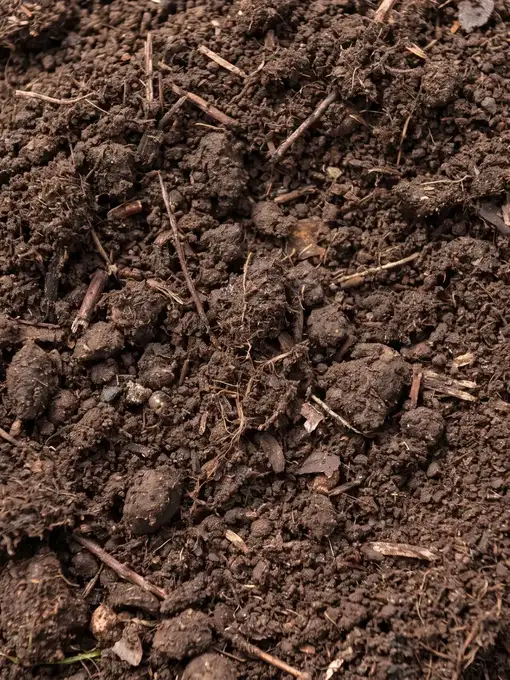
Bulk compost delivered in Rapid City, SD. Dark brown color.
Starting from $471.26 delivered to Rapid City for 2 yards, our minimum order
Compost delivery in Rapid City, SD brings finished, dark brown compost to your address by the cubic yard, so you can work it into a garden bed or spread it over a lawn without a trip to a garden center. Compost is organic matter that has broken down into a crumbly, earthy material. Mixed into existing ground, it loosens heavy soil, holds moisture and feeds the soil life that plants depend on. Many people start with a single bed, then find they want compost for the lawn, the trees and the vegetable rows once they see the difference in how the ground holds water.
Where Rapid City properties use compost
Rapid City has roughly 80,000 residents and sits at the eastern edge of the Black Hills, so yards across town vary a lot. Lots on the hillsides often have thin, stony topsoil, while newer subdivisions may have ground that was graded and then covered with a shallow layer of fill. Compost helps in both cases because it adds body to poor ground without replacing it.
The climate here is semi-arid, with dry summers and cold winters. Spring and early fall are the usual windows for working compost into beds, since the ground is easier to turn and is not frozen or baked hard. Work it in before planting, then keep the top layer moist while new roots settle in.
- Vegetable and flower beds: worked into the top layer, it gives annuals and perennials a richer root zone each year.
- Lawn topdressing: a thin spread over tired grass helps fill low spots and supports new growth.
- Tree and shrub planting holes: mixed into the backfill, it gives new roots an easier path into the surrounding ground.
- Raised beds and containers: compost blends with other fill to make a loose, workable planting mix.
Some projects call for a second material. Pair compost with Mulch when a bed needs a protective top layer, or add Premium Screened Topsoil when the ground needs more body.
How delivery works in Rapid City
Your order goes to the address you enter, and the truck drops the load where you point it. Choose a drop spot close to the work, on ground firm enough to carry a loaded truck. Look at the path between the street and that spot too. Overhead lines, low branches and narrow side gates can all change where the material can be placed. For the local details, see delivery in Rapid City.
How much compost you need
Start with the area and the depth you want to cover. Multiply the length in feet by the width in feet, multiply that by the depth in inches, and divide by 324. The result is the number of cubic yards to order. If you would rather let a tool handle the arithmetic, the calculator works from the same length, width and depth inputs.
Compost settles after it is spread and watered in, so a load that matches the bare number will look a little thin once it has packed down. Order slightly more than the calculation if the bed is large or the fill will be raked level.
Pricing notes for compost delivery in Rapid City, SD
Quantities are counted in cubic yards here, and 2 cubic yards is the smallest order you can place. The delivered price is calculated live and shown for the ZIP you enter, so the total you see already covers the trip to your address. Larger orders get a lower rate per cubic yard, which means a bigger load often works out to less per yard than two small ones.
Ordering compost in Rapid City
Enter your ZIP, choose the number of cubic yards, and review the delivered total in the cart before you pay.
Small contractors who buy compost for several jobs can place a separate order for each site. Keep a note of the quantity and address for each job so the totals match what you planned.
For compost in other South Dakota towns, see Compost in South Dakota.
About Compost
Compost is organic matter that has broken down over time until it turns dark brown, crumbly and earthy. Finished compost has a rich, woodsy smell and blends into existing ground without leaving large clumps behind. This material is dark brown in color and sold by the cubic yard. A cubic yard weighs roughly 1,000 pounds, so the number you order translates directly into a weight you can plan around.
Gardeners use compost to improve the structure of heavy clay or fast-draining sand, to refresh planting beds from one season to the next, and to add organic matter to new planting areas. It works in the ground and in containers, and it can be raked into a lawn to build up thin spots over time.
Compost is a soil amendment rather than a bulk fill. It is meant to be worked into what is already there, which means it does its best work when it is mixed into the top layer of a bed or the backfill of a planting hole instead of being left as a separate pile.
What Compost costs in Rapid City
Around Rapid City, compost is quoted by the ton with delivery layered in based on distance from the closest yard. Send your ZIP and load size and we will send back a same-hour quote with the truck rate and the per-ton figure spelled out. Plan on roughly 216 sq ft of coverage per ton at 3 inches deep, which puts a single-car driveway in the 3 to 5 ton bracket.
How crews use Compost in Rapid City
Rapid City contractors keep compost on the order sheet for a short list of standard installs. Top of the list is planting bed gravel, where the material is rolled out in tight urban lots and infill builds and screeded to grade. Rapid City sits at about 79,894 residents, which means we see steady weekday traffic from landscape crews and weekend pickups from owner-builders.
Delivery day in Rapid City
Delivery in Rapid City runs out of the nearest pit; you get a two hour arrival window the evening prior and a call when the driver leaves the scale. Plan for 12 ft of clear path for a tandem and 14 ft for a tri-axle, plus a level area at the dump point so the bed lifts straight. Standard lead time on this lane is Mon-Sat, with same-day windows held open for orders that hit the desk before 11 AM and clear payment.
Related materials we deliver in Rapid City



Estimate how much you need
Work out your material
A planning figure, not a guarantee. Order roughly a tenth extra to cover settling and uneven ground.
Browse more
Available in nearby cities
Plan your project
Related guides
 GUIDEWhat Size Crushed Stone Goes Under a Concrete SlabMost slabs need 4 to 6 inches of compacted crushed stone underneath. What size crushed stone under a concrete slab needs, and why it matters.Read guide →
 GUIDEWhat Is Crushed Stone? Sizes, Uses and Buying BasicsCrushed stone is quarried rock crushed and screened into angular pieces sold by the ton. Here is what it is, how it is graded, and where to use it.Read guide →
 GUIDEHow Much Does Gravel Cost? A Practical Pricing GuideHow much does gravel cost and why does it vary? See the real factors behind ton pricing, delivery, and order size before you buy.Read guide →GUIDEGravel Size Chart: Pea Gravel to Crushed StoneA gravel size chart showing pea gravel, crushed stone and river rock diameters side by side, so you can match the right size to your project.Read guide →
Frequently Asked Questions
Why would two Rapid City addresses show different totals?
Each ZIP code gets its own delivered figure, so an address across town can show a different total than yours. Enter the ZIP for the address where the material will be dropped rather than a nearby one, so the total matches the actual drop point. If you are comparing two properties, run the order once for each ZIP and compare the totals side by side.
Is compost the same thing as mulch?
No. Compost is decomposed organic matter that gets mixed into the ground, while mulch is a layer that sits on top of the soil. Compost feeds the soil underneath, and mulch covers it. Many gardens use both, with compost worked into the bed and a mulch layer added after planting.
What does a cubic yard of compost look like?
A cubic yard is 27 cubic feet, which is a pile about three feet long, three feet wide and three feet high. Spread over a flat area, that much compost covers a fairly large patch of ground at a few inches deep. Spread compost in Rapid City at a depth of 3 inches and one cubic yard covers about 108 square feet.
How long does compost take to break down once it is in the ground?
Finished compost is already broken down, so it does not disappear quickly. Over a growing season, soil organisms keep working it into the surrounding ground and the organic matter gradually gets absorbed into the root zone. Most gardeners notice the soil feeling looser and holding water better within a season or two of regular additions.
What is the difference between compost and topsoil?
Compost is organic matter, while topsoil is usually used to bring a low area up to grade, and compost is usually used to improve what is already there. Because they do different jobs, many projects need both.
Can I combine compost with another material on the same order?
Materials on the same order are priced by their own units, so compost is counted in cubic yards while a ton-sold material is counted in tons. Each line shows its own quantity and delivered total for your ZIP. Add each material as its own line, check the quantity on each one, and then review the full cart before you pay.
What should I do with leftover compost if I cannot spread it right away?
Keep the pile covered if rain is likely, and keep it out of low spots where water can pool around it. Spread it out in a thin layer as soon as the ground is ready, because a large pile that sits for weeks can start to compact and lose its loose texture.
Can I add compost to a bed that already has plants growing in it?
Yes. You can top up an established bed by working compost gently around the existing plants rather than digging deep under them. Keep the material off the stems and crowns, and water the bed afterward so the new layer starts to settle into the root zone. For trees and large shrubs, spread the compost outward from the trunk rather than piling it against the base.