
Fill Dirt Delivery in Newark, NJ by the Ton
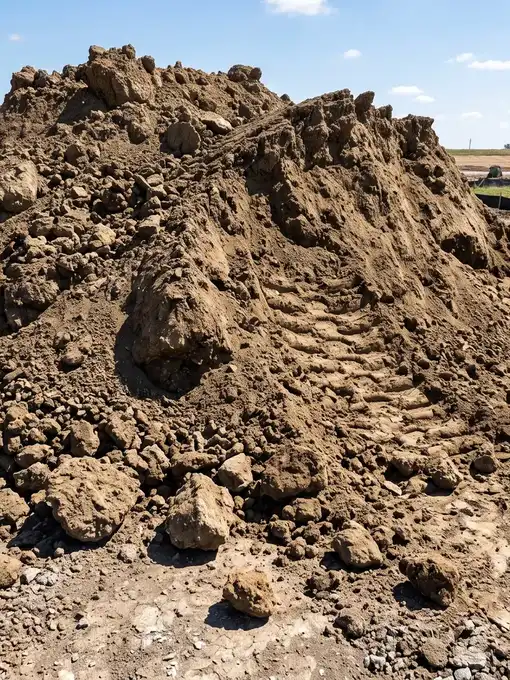
Bulk fill dirt delivered in Newark, NJ. Brown color.
Starting from $473.47 delivered to Newark for 2 tons, our minimum order
Contractors and homeowners in Newark order fill dirt for the same reasons they do anywhere: a low spot, a trench, a base that needs raising. What differs is the site. In a city of about 320,000 people, many jobs are on small lots or reused ground. For fill dirt delivery in Newark, NJ, MyGravelBuddy sells by the ton, with a 2 ton minimum.
What fill dirt does on a Newark job
This is brown, unscreened sub-soil. It fills, levels and supports. It does not feed plants. Common Newark uses include:
- Raising the low corner of a yard that collects water after rain
- Backfilling around a new footing, slab or buried line
- Bringing a lot up to grade before a driveway or parking pad
- Filling a former pool, planter or excavation that was dug out and abandoned
Anything that gets planted afterward should get a layer of topsoil on top. For the state overview of this material, see Fill Dirt in New Jersey.
Fill dirt delivery in Newark, NJ: getting the load to the right spot
Before you place an order, walk the route from the street to the spot where the soil will end up. Note low wires, parked cars, soft ground and any gate width. A dump truck needs room to tip, and a pile blocking a shared driveway or a neighbor's access will cause trouble that no amount of shoveling fixes.
Drop the load on a hard surface or on plywood if you can, so the truck does not dig ruts into a lawn. The page for delivery in Newark goes through how drop-off works in the area.
Newark ground and what it means for fill
Much of Newark is flat, built-up land where earlier buildings, pavement and utility lines have already disturbed the soil. That matters in two ways. First, dig or probe before you fill, because old slabs, buried pipes and cinders can sit just under the surface and are better removed than buried. Second, flat ground drains slowly, so the grade you create decides where rain goes. A fall of about 2 percent away from any building keeps puddles off the wall and out of the basement.
Contractors on commercial or multi-family sites should also confirm what the owner or the city requires for imported soil before ordering, since some projects have documentation rules that the buyer must handle.
Working out the tonnage
Take length and width in feet, then the depth you want in inches. Multiply the three and divide by 324 to get cubic yards. Since this fill dirt runs around 2,200 lb to the yard, convert to tons by multiplying by about 1.1. A 20 by 15 foot patch filled 6 inches deep, for example, needs roughly 5.5 cubic yards, which is a bit over 6 tons.
In Newark, the quickest way to size fill dirt is the calculator. Remember that loose soil compacts as it settles, so order slightly more than the raw figure, and keep any leftover for the first settling touch-up.
How the price works
Fill dirt is sold by the ton. Put your delivery ZIP into the price box and the delivered price appears for that address, calculated live. Larger orders get a lower rate per ton, which helps if a driveway and a yard regrade can be ordered together.
Pairing fill dirt with stone or millings
Many Newark projects need a second material. Soil goes down first, then a hard layer on top. #57 Crushed Stone works for drainage trenches and as a base under paving, while Asphalt Millings make a firm, low-cost surface for a work lane or a side lot. If the finished look matters, Newark can also get Pea Gravel and River Rock.
Placing the order
Weekday mornings tend to suit city drop-offs, because streets are clearer and crews can spread the pile while the ground is dry.
Set the tons, type in the ZIP of the job site and check out. Crews with other sites nearby can place a separate order for each one: Elizabeth is 5 miles from Newark, Jersey City 8, and Paterson 12.
About Fill Dirt
Fill dirt is a brown, unscreened sub-soil sold for general filling and leveling. It comes from excavation work, so it is a natural mix that can include clay, sand, silt and a few small stones, and it is priced and sold by the ton here.
Builders use it to backfill around foundations, raise low ground, bury trenches and build up a pad before stone, asphalt or concrete goes in. One cubic yard weighs about 2,200 lb. Place it in layers of around 6 inches and tamp each one before adding the next, since thick lifts settle unevenly and leave dips later.
This is not a planting soil. If you want a lawn or beds over it, finish with topsoil. The delivered price for your ZIP shows on the product page, larger orders get a lower rate per ton, and the smallest order is 2 tons.
What Fill Dirt costs in Newark
In the Newark market, fill dirt is sold by the ton and priced at the gate before delivery is added on. Send your ZIP and load size and we will send back a same-hour quote with the truck rate and the per-ton figure spelled out. One ton covers about 98 sq ft at a 3 inch finished depth, so a 400 sq ft driveway pad runs roughly 5 tons.
How crews use Fill Dirt in Newark
Crews working out of Newark tend to call for fill dirt on a few repeat jobs each week. The first is erosion control, typically laid in tight urban lots and infill builds with a base lift compacted before the finish course goes on. The second is driveway gravel, which lands here in dense neighborhoods where curb access is short and usually ships as a 4 to 8 ton order. With a population around 317,303, Newark pulls a mix of single-truck homeowner orders and contractor full-loads through the season.
Delivery day in Newark
On the day of the drop, the dispatcher pulls the closest yard, batches your ticket with other Newark stops, and sends a window the night before. Tandem-axle dumps need at least 12 ft of clear width and 14 ft overhead to set the bed; tri-axles need 14 ft of clearance on both counts and a level pad to tip safely. Standard lead time on this lane is Mon-Sat, with same-day windows held open for orders that hit the desk before 11 AM and clear payment.
Related materials we deliver in Newark
 Price by ZIP
- SizeScreened, no size grade
- Density2200 lb/yd³
- ColorDark brown
 Price by ZIP
- Density2000 lb/yd³
- ColorDark brown
 Price by ZIP
- Density1000 lb/yd³
- ColorDark brown
Estimate how much you need
Work out your material
A planning figure, not a guarantee. Order roughly a tenth extra to cover settling and uneven ground.
Browse more
Common uses for Fill Dirt in Newark
Available in nearby cities
Plan your project
Related guides
 GUIDEHow Much Does River Rock Cost? By Ton or YardRiver rock cost depends on your ZIP code, order size, and whether you buy by the ton or the cubic yard. Here is how pricing works.Read guide →
 GUIDEWhat Size Crushed Stone Goes Under a Concrete SlabMost slabs need 4 to 6 inches of compacted crushed stone underneath. What size crushed stone under a concrete slab needs, and why it matters.Read guide →
 GUIDEWhat Is Crushed Stone? Sizes, Uses and Buying BasicsCrushed stone is quarried rock crushed and screened into angular pieces sold by the ton. Here is what it is, how it is graded, and where to use it.Read guide →
 GUIDEHow Much Does Gravel Cost? A Practical Pricing GuideHow much does gravel cost and why does it vary? See the real factors behind ton pricing, delivery, and order size before you buy.Read guide →
Frequently Asked Questions
How deep can I spread fill dirt in one pass?
Keep each layer to roughly 6 inches and compact it before adding more. If you need 18 inches of buildup, that means three passes. Skipping this step is the usual reason a filled area sinks a year later, because deep unpacked soil keeps consolidating as water moves through it.
Will fill dirt grow grass?
Poorly. It has little organic matter, and the texture can be heavy clay or sandy depending on the load. For a lawn, finish with several inches of topsoil, rake it smooth and seed or lay sod on that. The fill dirt underneath still does its job as the stable layer.
Can I stockpile fill dirt for a few weeks before using it?
Yes, if the pile sits on firm ground away from drains and the neighbor's property line. Cover it so rain does not turn it to mud, and rake the top loose before you spread, since a crust forms on a pile that dries out. Do not leave it on a public sidewalk without checking local rules.
What should I do about a soggy fill site?
Water needs somewhere to go first. If the low area stays wet, lay a perforated pipe or a stone layer to carry it off, then fill over it. Fill dirt dumped on standing water turns to mud and will not compact well, so wait for the ground to firm up.
How long should I wait before building on filled ground?
That depends on the load. For a patio or shed pad, compacting in thin layers lets you build soon after. For a slab, a footing or anything heavy, ask your engineer or inspector, because they may want compaction testing or a settling period first.
Can I order for two different addresses?
Place one order for each address and enter that site's ZIP each time. The delivered price is figured per address, so a job in one part of the city may show a different figure from a job across town.
Can I mix fill dirt with gravel?
It is better to keep them in separate layers. Mixed soil and stone can behave unpredictably under load, and stone buried in soil loses its drainage value. Use fill dirt to reach grade, then cap with a clean stone or millings layer where you need a firm, free-draining surface.
Does the soil come with any testing or certification?
The listing describes fill dirt as general-purpose fill, and nothing on the product page promises a lab analysis. If your project has environmental or engineering requirements, such as a permit condition, confirm those requirements with the local authority or your engineer before you order.