
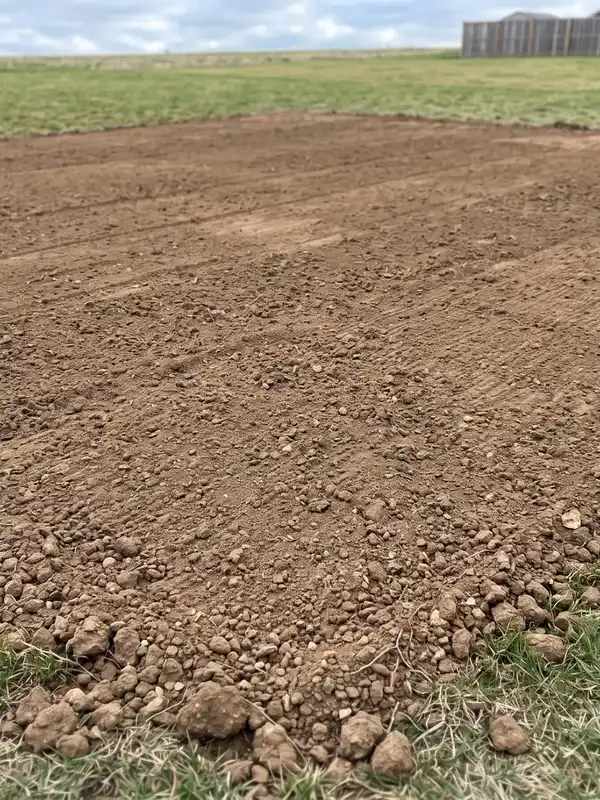
Fill Dirt Delivery in Overland Park, KS
Bulk fill dirt delivered in Overland Park, KS. Brown color.
Starting from $457.54 delivered to Overland Park for 2 tons, our minimum order
Overland Park has grown fast, and newer subdivisions mean a steady need for grading material: builders squaring off lots, owners correcting a yard after the first wet spring, crews finishing a retaining wall. For fill dirt delivery in Overland Park, KS, MyGravelBuddy sells brown fill by the ton, with the delivered price worked out for your ZIP on this page.
Fill dirt delivery in Overland Park, KS
With a population around 200,000, Overland Park has plenty of lots cut into gentle slopes. Builders leave graded pads, but settling around basement walls and along new driveways is common in the first few years. Fill dirt is the practical answer: dense subsoil that compacts well, priced for volume rather than looks.
It is subsoil, not planting soil. Use it to build up and level, then add topsoil on top if grass is the goal. In Overland Park, the minimum fill dirt order is 2 tons. Details on how drop-offs are handled are on the page about delivery in Overland Park, and the Fill Dirt in Kansas page shows where else in the state this material is sold.
Typical jobs here
- Settled backfill: a dip along a foundation or beside a stoop that keeps collecting water.
- Yard leveling: smoothing a lawn that has gone lumpy before reseeding.
- Retaining wall fill: filling behind a block wall once drainage stone is in.
- Building pads: a firm base for a shed, hot tub or small outbuilding.
Finished surfaces need a different layer. For a gravel parking pad or walkway on top of your compacted fill, #57 Crushed Stone locks together and drains. For a softer, rounded surface around a play area, Pea Gravel is the usual pick.
Working out the tons
Start with square footage and depth. Multiply length by width in feet, multiply by the depth in inches, and divide by 324 to get cubic yards. Then multiply by about 1.1 to reach tons, since a yard of this dirt is a little over a ton. As an example, a 12 by 30 foot strip raised 4 inches comes to roughly 4.4 cubic yards, or about 5 tons.
The calculator does the same sums if you would rather enter your dimensions and read off the result. Round up slightly, because loosely placed fill packs down below your target height.
Where the truck can go
Check HOA rules and overhead lines before the truck arrives: a bed raised to dump needs clear air above it. A driveway is the easiest drop point, though a tarp underneath protects the concrete from stains. If you have a backyard gate, tell us how wide it is and plan to move the pile by wheelbarrow or loader from the front.
What the price covers
Trucking is already built into the number you see, so nothing gets added later. Larger quantities bring the cost per ton down, which matters when a job spans several yards or you are splitting a load with a neighbor on the same street.
Planning around weather and soil
Kansas weather swings from dry stretches to heavy spring storms, and fill behaves very differently in each. Bone-dry dirt will not bind, so lightly mist it as you work. Saturated dirt turns to paste that smears under a compactor and never firms up. Aim for soil that holds a shape when squeezed but does not drip. If rain is forecast right after delivery, cover the pile with a tarp and weigh down the edges so it does not wash into the street or a storm drain.
Slope matters too. When you build a pad or raise a low corner, shape the finished surface so water leaves the house, with a gentle fall away from the foundation of roughly an inch per few feet. That small grade does more for a basement than any amount of extra dirt.
Placing the order
Enter the tons you need and your ZIP, then check out. Buyers in Olathe, 10 miles away, and Kansas City, KS, also 10 miles away, follow the same steps.
About Fill Dirt
Fill dirt is excavated subsoil, brown in color, with a blend of clay, silt and sand and almost no organic matter. It is sold by the ton and built for volume: raising low ground, evening out a yard, filling behind walls, and forming pads that will later get a stone or slab surface.
The same lack of organic content that makes it stable also makes it a poor place to grow things. Cover it with topsoil if you plan to seed or plant. Because it is natural and unscreened, loads vary a little in color and may hold small stones or clods; break these up as you spread.
The best results come from placing it in thin lifts, dampening each one and compacting before the next. One cubic yard weighs about 1.1 tons, so a cubic yard estimate converts to tons by a small multiplier. Overland Park fill dirt shows a delivered price for your ZIP, and bigger loads drop to a lower rate per ton.
What Fill Dirt costs in Overland Park
In the Overland Park market, fill dirt is sold by the ton and priced at the gate before delivery is added on. Send your ZIP and load size and we will send back a same-hour quote with the truck rate and the per-ton figure spelled out. One ton covers about 98 sq ft at a 3 inch finished depth, so a 400 sq ft driveway pad runs roughly 5 tons.
How crews use Fill Dirt in Overland Park
Crews working out of Overland Park tend to call for fill dirt on a few repeat jobs each week. The first is erosion control, typically laid in tight urban lots and infill builds with a base lift compacted before the finish course goes on. The second is driveway gravel, which lands here in dense neighborhoods where curb access is short and usually ships as a 4 to 8 ton order. With a population around 202,893, Overland Park pulls a mix of single-truck homeowner orders and contractor full-loads through the season.
Delivery day in Overland Park
On the day of the drop, the dispatcher pulls the closest yard, batches your ticket with other Overland Park stops, and sends a window the night before. Tandem-axle dumps need at least 12 ft of clear width and 14 ft overhead to set the bed; tri-axles need 14 ft of clearance on both counts and a level pad to tip safely. Standard lead time on this lane is Mon-Sat, with same-day windows held open for orders that hit the desk before 11 AM and clear payment.
Related materials we deliver in Overland Park
 Price by ZIP
- SizeScreened, no size grade
- Density2200 lb/yd³
- ColorDark brown
 Price by ZIP
- Density2000 lb/yd³
- ColorDark brown
 Price by ZIP
- Density1000 lb/yd³
- ColorDark brown
Estimate how much you need
Work out your material
A planning figure, not a guarantee. Order roughly a tenth extra to cover settling and uneven ground.
Browse more
Common uses for Fill Dirt in Overland Park
Available in nearby cities
Plan your project
Related guides
 GUIDEHow Deep Should a Gravel Driveway Be? Layer GuidePractical, field-tested guide: how deep should gravel driveway be. Pulled from real US installer notes and 2026 supplier price data.Read guide →
 GUIDEHow Much Does River Rock Cost? By Ton or YardRiver rock cost depends on your ZIP code, order size, and whether you buy by the ton or the cubic yard. Here is how pricing works.Read guide →
 GUIDEWhat Size Crushed Stone Goes Under a Concrete SlabMost slabs need 4 to 6 inches of compacted crushed stone underneath. What size crushed stone under a concrete slab needs, and why it matters.Read guide →
 GUIDEWhat Is Crushed Stone? Sizes, Uses and Buying BasicsCrushed stone is quarried rock crushed and screened into angular pieces sold by the ton. Here is what it is, how it is graded, and where to use it.Read guide →
Frequently Asked Questions
How is fill dirt different from clay or topsoil?
Fill dirt is excavated subsoil, often a blend that includes clay. Pure clay holds water and cracks, while topsoil is organic and meant for plants. Fill sits between them: stable and dense, good under structures and for raising grade, but not a growing layer.
How deep can I place fill in one go?
Keep each layer to roughly 6 inches before compacting. Deeper lifts do not compact through the middle, and the soft core settles later, leaving a dip over your new surface. For a tall build-up, repeat spread, dampen and tamp until you reach the height you want.
Do I need a permit to add fill to my property?
Rules vary. Raising grade near a property line, in a floodplain or beside a drainage easement may need city approval, and an HOA may have its own say. Check with the local building office before a large regrade so a change to runoff does not become a dispute with a neighbor.
Is fill dirt safe for vegetable gardens?
It is not meant for that. Fill has little organic matter and is not tested for planting. Build raised beds with proper garden soil instead. Fill is better used underneath a bed or as the base for a terrace than inside the growing zone.
What if my ZIP is not accepted at checkout?
Double-check the digits first. If the ZIP still is not recognized, the engine cannot price delivery there yet. Use the delivery page to see how coverage works around Overland Park, or contact the team.
Can fill dirt be spread by hand?
Yes, for small jobs. A square shovel, rake and wheelbarrow handle a few tons over a weekend. For something close to 10 tons or more, hiring a skid steer for a day saves effort. Spread from the pile outward and keep the heavy pass on firm ground.
Why does my fill look different from a neighbor's?
Fill dirt is a natural subsoil, so color and texture shift from load to load. You may see tan, brown or reddish tones, with varying clay. Those differences do not affect how it compacts or supports a base, so color alone is not a reason to reject a load.
What should go over fill dirt before a gravel surface?
Compact it first, then lay a layer of angular stone. Some people add landscape fabric between dirt and stone to stop the layers mixing over time. The stone layer should be thick enough to spread vehicle weight, which is why a single thin dusting does not last.