
Compost Delivery in Charleston, SC
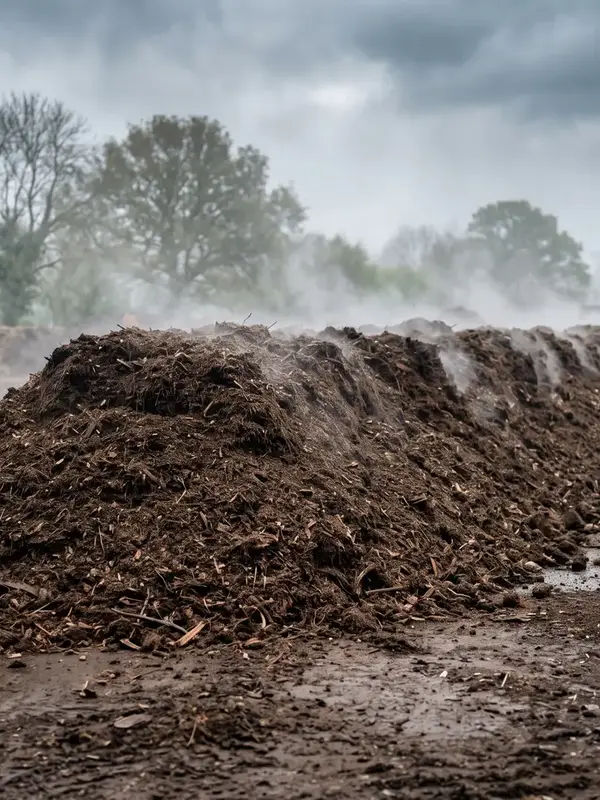
Bulk compost delivered in Charleston, SC. Dark brown color.
Starting from $529.71 delivered to Charleston for 2 yards, our minimum order
Gardeners on the peninsula and across the Lowcountry fight the same two soil problems: sand that drains too fast and clay that holds water too long. Compost delivery in Charleston, SC gives you a dark, crumbly material that helps with both, and it arrives by the cubic yard so you can fill raised beds, top-dress a lawn or rebuild a tired border in one pass. Browse the Compost in South Carolina hub if you want the statewide picture.
Why compost suits Charleston soil
Coastal sand lets water and nutrients slip straight through, so plants dry out between storms. Compost adds organic matter that holds moisture near the roots and feeds soil life slowly. In the heavier, low-lying ground that sits close to the marsh, the same material opens up the structure so water moves instead of pooling. Humid summers also burn through organic matter quickly, which is why a Charleston bed usually needs a fresh layer more often than one inland.
Best uses around the city
- Raised vegetable beds: a yearly top-up after harvest keeps the soil level where it started.
- Lawn top-dressing: a thin layer worked into thin turf helps it recover after a hot season.
- Foundation and flower borders: spread it around shrubs and perennials, keeping it off the stems.
- New planting holes: mix it with the native soil you dug out, not as a pure backfill.
- Mulch under shade trees: a layer over the root zone slows evaporation.
For a bed mix, pair it with Premium Screened Topsoil, which is sold by the ton, so the base soil carries the structure and the compost carries the nutrients. If a pathway or drainage strip sits beside the bed, Pea Gravel is a clean, small-stone choice that stays out of the planting area.
Getting your order to the right spot
Compost is sold by the cubic yard here, and the smallest order is 2 cubic yards. Details for the area, including the neighborhoods and suburbs we serve, are on the page about delivery in Charleston. Mount Pleasant is 5 miles away, North Charleston is 6 miles away and Summerville is 25 miles away, so most buyers around the metro order the same way you would from the city itself. Tell us the address at checkout and the live engine works from there.
Think about where the truck will tip before you order. A pile needs a flat, open patch of driveway or yard, clear of low branches and wires, and a spot you can reach with a wheelbarrow. Older lots often have tight access, so if yours does, say so when you order and consider a drop at the curb or a wider part of the property.
How much compost you need
Work out the area first, then the depth you want. Multiply length by width in feet, multiply by the depth in inches, then divide by 324 to get cubic yards. A two-inch blanket over a 10 by 20 foot bed, for example, comes to a little over 1 cubic yard. Since the minimum is 2 cubic yards, a bed that small is better paired with a second project, such as a lawn patch or a few tree rings. The calculator handles the multiplication if you prefer to enter the numbers and let it return the volume.
Compost is light for a landscape material, at about 1,000 pounds per cubic yard, and it is usually wet when it arrives, so weight is rarely the limiting factor on a driveway. Order a little more than your math says. Beds in the Lowcountry sink noticeably after the first heavy rain and the first hot month, and extra material is easy to use as a top-up.
What you see on the price
The delivered price is calculated live for your ZIP code and shown on the product page before you commit, so there is nothing to back into later. Larger orders get a lower rate per cubic yard, which makes it cheaper to do every bed in one delivery than to split the job over several small ones.
Putting the order together
Add up the area you plan to cover, then open the product page and read the delivered price for your ZIP code. Set the quantity in cubic yards, never below 2, and finish checkout with your drop location noted.
Charleston lots range from small downtown yards to larger suburban ones, so one order often gets split between a front border and a back vegetable bed. Decide that split before the pile lands, and you only have to move it once.
About Compost
Compost is decomposed organic matter, screened to a fine, dark brown texture and ready to use as soon as it lands. It is the soil amendment gardeners reach for when a bed needs more life and more moisture holding capacity, and it is not a replacement for topsoil. Think of it as an ingredient: it improves the soil you have rather than standing in for it.
In Charleston, where sandy ground drains quickly and wet lowlands can stay soggy, it does a useful job in both situations. It works well in vegetable beds, flower borders, new lawn prep and tree rings. The material is sold by the cubic yard, and a cubic yard weighs roughly 1,000 pounds, so it is lighter than stone or soil of the same volume.
Because the delivered price depends on where you live, the live engine calculates it from your ZIP code and shows it before checkout. Larger orders carry a lower rate per cubic yard, and the smallest order is 2 cubic yards. Use finished compost rather than raw material in planting areas, spread it evenly, and work the top few inches into the existing soil for the best result.
What Compost costs in Charleston
Around Charleston, compost is quoted by the ton with delivery layered in based on distance from the closest yard. Send your ZIP and load size and we will send back a same-hour quote with the truck rate and the per-ton figure spelled out. Plan on roughly 216 sq ft of coverage per ton at 3 inches deep, which puts a single-car driveway in the 3 to 5 ton bracket.
How crews use Compost in Charleston
Charleston contractors keep compost on the order sheet for a short list of standard installs. Top of the list is planting bed gravel, where the material is rolled out in tight urban lots and infill builds and screeded to grade. Charleston sits at about 150,277 residents, which means we see steady weekday traffic from landscape crews and weekend pickups from owner-builders.
Delivery day in Charleston
Delivery in Charleston runs out of the nearest pit; you get a two hour arrival window the evening prior and a call when the driver leaves the scale. Plan for 12 ft of clear path for a tandem and 14 ft for a tri-axle, plus a level area at the dump point so the bed lifts straight. Standard lead time on this lane is Mon-Sat, with same-day windows held open for orders that hit the desk before 11 AM and clear payment.
Related materials we deliver in Charleston


Estimate how much you need
Work out your material
A planning figure, not a guarantee. Order roughly a tenth extra to cover settling and uneven ground.
Browse more
Available in nearby cities
Plan your project
Related guides
 GUIDEDoes Gravel Stop Weeds? Honest Answer + What WorksPractical, field-tested guide: does gravel stop weeds. Pulled from real US installer notes and 2026 supplier price data.Read guide →
 GUIDEHow Much Gravel Do I Need? Quick Sizing GuidePractical, field-tested guide: how much gravel do i need. Pulled from real US installer notes and 2026 supplier price data.Read guide →
 GUIDEWhat Is #57 Stone? Uses, Size, and Cost ExplainedPractical, field-tested guide: what is 57 stone. Pulled from real US installer notes and 2026 supplier price data.Read guide →
 GUIDEHow Deep Should a Gravel Driveway Be? Layer GuidePractical, field-tested guide: how deep should gravel driveway be. Pulled from real US installer notes and 2026 supplier price data.Read guide →
Frequently Asked Questions
Can I use compost by itself in a raised bed?
It is better blended. A common mix is about one part compost to two or three parts topsoil, because pure compost can settle hard, dry out unevenly and sometimes hold too many salts for seedlings. Mixing gives roots a stable base and still delivers the nutrients, so your vegetables get a steady start through the Lowcountry growing season.
How deep should I spread compost on a Charleston lawn?
Keep a lawn top-dressing to about a quarter to a half inch, raked level so the grass blades still show. Thicker layers smother turf, especially in humid weather. For bare or newly seeded patches you can go a little deeper, then rake it into the surface so seed contacts soil.
Is compost safe to use around shrubs and trees?
Yes, as long as you keep it a few inches back from trunks and stems. Piled against bark, it holds moisture and invites rot. Spread it in a wide ring that reaches the drip line, two to three inches deep, and the roots near the surface will use it over the season.
Does compost help with the sandy soil near the coast?
It does. Organic matter acts like a sponge in sand, holding water and nutrients that would otherwise drain away. One application helps, and a yearly top-up compounds the benefit. Expect the improvement to build over a couple of seasons rather than showing up fully the first week.
What should I do if my yard stays wet after rain?
Compost helps open heavy ground, but it will not fix standing water by itself. If low spots hold water for days, address the grade or add drainage first, then amend the soil. Raised beds also lift roots above wet ground, which is often the simplest improvement in flood-prone Lowcountry yards.
Can I order compost along with other materials?
Yes. Each material has its own product page and its own quantity, so add them one at a time and enter your ZIP on each to see its delivered price. A stone edging strip or a path beside the new bed can ride along in the same project, which saves you from planning two separate deliveries on different days.
Will the pile have an odor or attract pests?
Charleston compost that has cured smells earthy, not sour. A sharp or ammonia-like smell means the material is not fully cured, and you should let us know. Flies and other pests are rarely drawn to cured compost, and a pile with no food scraps in it has little to attract them, so a clean, dark pile is a good sign.
Do I need to water after spreading compost?
A light watering helps settle fresh compost into the surface, especially in the Charleston summer when the top inch dries fast. Skip it if rain is forecast that day. Newly planted beds should still follow their usual watering schedule, because compost holds moisture but does not replace a regular drink for young roots.