
Compost Delivery in Cedar Rapids, IA
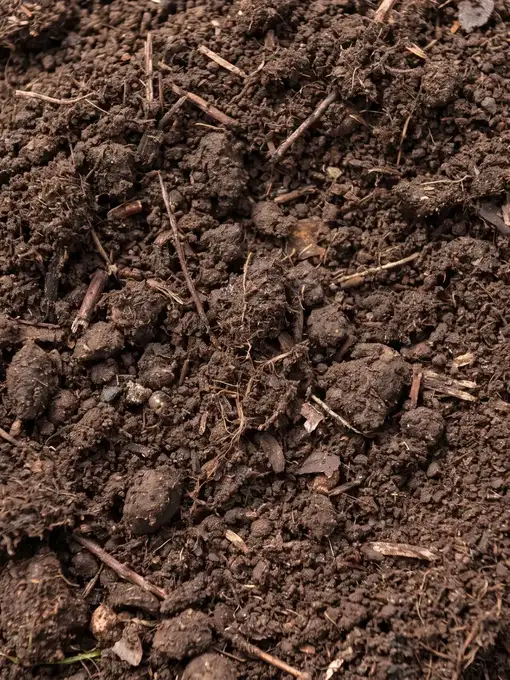
Bulk compost delivered in Cedar Rapids, IA. Dark brown color.
Starting from $453.07 delivered to Cedar Rapids for 2 yards, our minimum order
Garden beds in Cedar Rapids tend to wear out the same way: a few seasons of vegetables, a wet spring, and the soil turns pale and tight. Compost delivery in Cedar Rapids, IA arrives as one pile, and priced for your address before you commit.
Compost delivery in Cedar Rapids, IA for beds, lawns and trees
Heavy, compacted ground is the main reason compost sells well here. Worked into a heavy bed, it opens the soil so roots and water can move through it. Spread on a thin lawn, it feeds the grass without the burn that fresh manure can cause. Around young trees and shrubs, a ring of it keeps the root zone cooler through July and August.
The material is dark brown and crumbly, with a clean earthy smell.
Raised beds and vegetable plots
For an established plot, a layer worked into the top few inches each spring is plenty.
Lawn repair and overseeding
A thin layer raked into bare patches before seed gives grass a better start than seed alone on packed clay.
Ordering and where the drop goes
You choose the amount, enter your ZIP, and the page shows what delivery to your address costs. Cedar Rapids buyers order compost by the cubic yard, and the smallest order is 2 cubic yards. Bigger orders get a lower rate per cubic yard, which is worth knowing if you are doing several beds at once.
Pick the drop spot before the truck shows up. A flat patch of driveway or a corner of the yard close to where the compost will be used saves a lot of wheelbarrow miles. Tarp the ground first if you do not want dark stains on concrete. Details on how drop-offs work across town are on the page for delivery in Cedar Rapids, and the wider picture for the state is at Compost in Iowa.
How much compost you need
Measure the bed in feet, multiply length by width, then multiply by the depth in inches and divide by 324. That gives cubic yards. A 10 by 12 foot bed topped with 3 inches works out to about 1.1 cubic yards.
Cedar Rapids gardeners can skip the arithmetic: the calculator handles the conversion. Compost weighs around 1,000 lb per cubic yard, a figure you only need if you are planning how to move it.
Other materials for the same project
Compost rarely works alone. Paths between beds hold up better with stone, and a few options are sold in Cedar Rapids too. #57 Crushed Stone makes a firm base under a garden shed or a gate approach. Asphalt Millings compact into a low-cost surface for a service lane beside the garden. Both are sold by the ton, not the cubic yard, so the quantities are figured differently from compost.
Matching the amount to the job
Most Cedar Rapids yards fall into one of three jobs. A few raised beds in a backyard usually call for the minimum order or a little over it. A full lawn renovation on a typical city lot needs more, since even a thin layer spreads across a lot of square footage. Landscapers refreshing several client properties often order a larger pile and split it between sites.
A simple soil test from the county extension office tells you whether the ground actually needs the organic matter or just a little lime or fertilizer. It costs little and keeps you from buying more than the garden can use.
Think about where the leftover goes before you order. Edging a bed with a board or a strip of steel keeps the compost from washing onto the lawn or the path, and a small spare pile is handy for patching low spots after the first heavy rain. Cedar Rapids yards with a vegetable plot, a flower border and a few shrubs often find the whole pile gets used within one season.
Working the compost in
Spring, once the ground can be worked, and early fall are the usual windows. Spread it soon after it lands. Rake it level and either dig it in or leave it on top as mulch, depending on the bed.
Water the bed lightly after you finish so the compost settles against the soil below, and check it again after a week for low spots.
About Compost
The compost Cedar Rapids yards receive is decomposed organic matter, screened to a fine, crumbly texture and dark brown in color. It is not soil by itself. It is a soil amendment, meant to be blended into existing ground or spread on top as a feeding layer.
In heavy Iowa clay it loosens the structure so water drains and roots can push through. In sandy spots it does the reverse and helps the ground hold moisture. It also adds slow-release nutrients that feed plants through the season, which is why gardeners use it on vegetable beds, flower borders, new lawns and around trees.
Here it is sold by the cubic yard, and a cubic yard weighs roughly 1,000 lb. Cedar Rapids orders start at 2 cubic yards. Look at the pile when it arrives: good compost is dark, earthy and crumbly, not wet or sour. The delivered price is calculated live for your ZIP and shown on the page.
What Compost costs in Cedar Rapids
In the Cedar Rapids market, compost is sold by the ton and priced at the gate before delivery is added on. Send your ZIP and load size and we will send back a same-hour quote with the truck rate and the per-ton figure spelled out. One ton covers about 216 sq ft at a 3 inch finished depth, so a 400 sq ft driveway pad runs roughly 2 tons.
How crews use Compost in Cedar Rapids
Crews working out of Cedar Rapids tend to call for compost on a few repeat jobs each week. The first is planting bed gravel, typically laid in tight urban lots and infill builds with a base lift compacted before the finish course goes on. With a population around 137,904, Cedar Rapids pulls a mix of single-truck homeowner orders and contractor full-loads through the season.
Delivery day in Cedar Rapids
On the day of the drop, the dispatcher pulls the closest yard, batches your ticket with other Cedar Rapids stops, and sends a window the night before. Tandem-axle dumps need at least 12 ft of clear width and 14 ft overhead to set the bed; tri-axles need 14 ft of clearance on both counts and a level pad to tip safely. Standard lead time on this lane is Mon-Sat, with same-day windows held open for orders that hit the desk before 11 AM and clear payment.
Related materials we deliver in Cedar Rapids


Estimate how much you need
Work out your material
A planning figure, not a guarantee. Order roughly a tenth extra to cover settling and uneven ground.
Browse more
Available in nearby cities
Plan your project
Related guides
 GUIDEHow to Lay a Gravel Driveway: Step-by-Step GuidePractical, field-tested guide: how to lay gravel driveway. Pulled from real US installer notes and 2026 supplier price data.Read guide →
 GUIDEDoes Gravel Stop Weeds? Honest Answer + What WorksPractical, field-tested guide: does gravel stop weeds. Pulled from real US installer notes and 2026 supplier price data.Read guide →
 GUIDEHow Much Gravel Do I Need? Quick Sizing GuidePractical, field-tested guide: how much gravel do i need. Pulled from real US installer notes and 2026 supplier price data.Read guide →
 GUIDEWhat Is #57 Stone? Uses, Size, and Cost ExplainedPractical, field-tested guide: what is 57 stone. Pulled from real US installer notes and 2026 supplier price data.Read guide →
Frequently Asked Questions
Is compost the same thing as topsoil?
No. Compost is decomposed organic matter that feeds and loosens ground, while topsoil is mineral soil you grow in. Most gardeners blend the two for raised beds, or work a few inches of compost into existing soil. Using compost alone as the full growing medium can run too rich for some plants and shrink noticeably over a season.
Can I put compost directly on my lawn?
Yes, as a thin top-dressing. Rake a light layer, roughly a quarter to half inch, over the turf and brush it down into the grass so the blades are not smothered. It works best after aerating, because the compost gets into the thatch layer together.
How deep should I spread compost in a vegetable bed?
Two to three inches, mixed into the top six or so inches of soil, is a common starting point. Established beds that get compost every year can do with less. New beds on tight clay benefit from the heavier end, since the goal is to change how the ground holds water.
Will compost bring weeds or smell?
Finished compost should smell earthy, like a forest floor. A sharp sour or ammonia smell means it is not fully broken down and may need to sit before use. Some weed seeds can survive in any organic material, so a layer of mulch on top helps keep new sprouts down.
Can I use compost around trees and shrubs?
Yes. Spread a ring a couple of inches deep out to the drip line, and keep it a few inches back from the trunk so bark stays dry. Follow it with wood mulch if you like, which holds in moisture and slows the compost from drying out.
What if my project is smaller than the minimum order?
The smallest order is 2 cubic yards, so a single small bed may not reach it on its own. Planning ahead helps: add a second bed, thicken the layer, top-dress the lawn, or share the pile with a neighbor who is also working on their yard this season.
Is compost the same as mulch?
No. Compost is fine, broken-down material that feeds the soil and gets worked in or spread thin. Mulch is a coarser covering, such as shredded bark, that sits on top to hold moisture and slow weeds. Many gardeners use both: compost first to feed the bed, then a layer of mulch over it to protect the surface.
How should I store leftover compost?
Keep it in a pile with a tarp over the top so rain does not wash out nutrients and the surface does not bake into a crust. Set it on bare ground or a pad, not against a wooden fence or wall, and turn it once in a while so it stays loose and ready to use.