
Fill Dirt Delivery in St. George, UT for Grading and Leveling
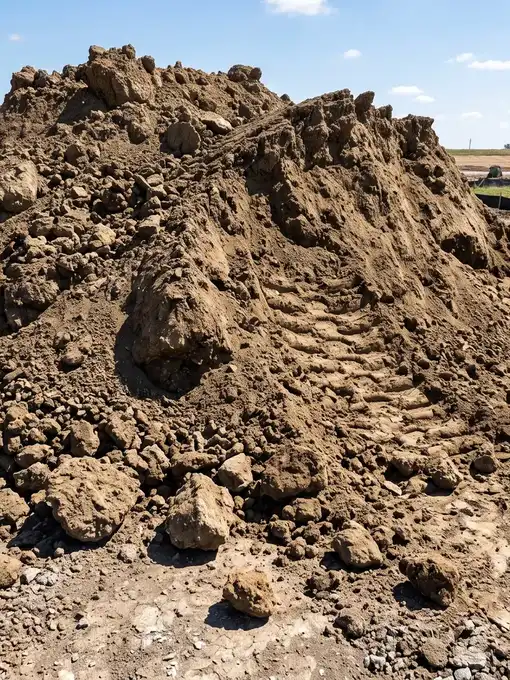
Bulk fill dirt delivered in St. George, UT. Brown color.
Starting from $468.55 delivered to St. George for 2 tons, our minimum order
Fill dirt delivery in St. George, UT suits grading work on lots that were cut into a slope or left with a low corner that never drains well. Fill is subsoil rather than planting mix, which makes it the right choice for raising low ground under sod, pavers, or a new pad. Homeowners and small contractors reach for it when the existing ground is too low or too uneven to finish.
Fill dirt delivery for St. George homes and small job sites
St. George is home to about 106,000 people, and its neighborhoods range from older streets to newer subdivisions built on shaped lots. A lot graded for the house alone often leaves a low side along a fence line or a dip where the old drainage ran. Small job sites face the same issues on a larger footprint, such as a shop pad, a gravel yard, or the edge of a commercial parcel. Statewide context is on the Fill Dirt in Utah hub.
Common uses for bulk fill in St. George
- Leveling a sunken patch of lawn or a dip beside a walkway
- Building a pad for a shed, RV parking, or a storage area
- Filling a trench left behind after a utility line was buried
- Raising a section of yard before sod, pavers, or a planting bed goes in
Most properties need more than one kind of fill. A patio base in the backyard may call for a deeper layer than the thin skim that evens out the front bed. Mark each zone on a sketch and size it on its own, so every area gets the depth it actually needs.
How much fill dirt a St. George project needs
Multiply the length and width of the area in feet, multiply that by the depth in inches, then divide by 324. The answer is cubic yards. A 14 ft by 22 ft patch filled 4 inches deep comes to about 3.8 cubic yards. This material weighs about 2,200 pounds per cubic yard, so 3.8 cubic yards is roughly 4.2 tons. The calculator handles the conversion if your shape is irregular.
Pricing and ordering fill dirt in St. George, UT
Fill dirt is sold by the ton, and the smallest order is 2 tons. The delivered price for your ZIP is calculated live and shown on the page, so the number you see already covers the trip. Larger orders get a lower rate per ton, which matters when one bigger load replaces two smaller ones. Enter your ZIP and tonnage on the order page to see the total before you decide.
Placing the pile on delivery day
Set the pile where the truck can stop on solid ground, and keep it off steep driveway sections. Look up for low branches and power lines, and leave room for the truck to turn around. If you can, schedule the drop for a dry stretch, since a soft lawn rutted by a loaded truck takes a while to recover. Keep children, pets, and parked vehicles well back while the load is dumped. Local details for drop access are on the delivery in St. George page.
Settling, slope, and drainage after the fill goes down
Expect the ground to drop as rain soaks in and people walk across it, so leave the finished surface slightly high and spread the fill in layers no thicker than a few inches. Tamp each layer before adding the next one. Shape the top so it falls away from the house, and watch where runoff heads during the first storm after the job. A low spot that collects water will undo the work fastest.
Other materials for St. George projects
The finish decides what the fill has to support, so pick it before you size the load. Pavers need a sand-set bed over a firm base, sod needs a few inches of topsoil to root into, and a planting bed wants a richer mix than the fill underneath. Knowing the finish tells you where the final grade should land.
If the job needs a firm base rather than a soil fill, #57 Crushed Stone is a material many builders pick under pavers and drive pads. Asphalt Millings suit a lightly used track or a short-term parking area, where recycled pavement compacts into a surface you can drive across.
About Fill Dirt
Brown and dense, this bulk soil is built for grading and for lifting low ground. It has little organic matter, so it works as the body of a grade rather than a growing medium. Contractors and homeowners use it to bring an area up to a set height before a finish material goes on top.
Orders are measured in tons, with each ton equal to 2,000 pounds. Once packed, it holds its shape well, which makes it a steady choice for pads, low corners, and trench backfill where a loose soil would shift over time.
Fill dirt is usually the first layer of a project rather than the last. Pavers, sod, and planting beds all sit on top of it, so the fill has to be solid before anything else goes down.
What Fill Dirt costs in St. George
Local St. George yards quote fill dirt by the ton; the delivered number includes fuel, the truck, and the haul. Send your ZIP and load size and we will send back a same-hour quote with the truck rate and the per-ton figure spelled out. A ton of this material spreads across about 98 sq ft when laid 3 inches deep, useful when you are sizing a patio base or a walkway run.
How crews use Fill Dirt in St. George
In and around St. George, fill dirt shows up most often on two project types. The most common deployment is erosion control, often in tight urban lots and infill builds in two to three inch lifts. Second on the list is driveway gravel, which we see in dense neighborhoods where curb access is short on partial-truck deliveries. At roughly 106,288 people, the St. George order mix leans toward 3 to 8 ton residential drops with the occasional 16 ton job for a contractor.
Delivery day in St. George
A typical St. George drop is dispatched from the closest yard with a two hour window and a heads-up call once the truck is loaded. Tandem trucks want a 12 ft lane in and out; tri-axles need 14 ft, and both want firm ground at the tipping spot so the load releases cleanly. Standard lead time on this lane is Mon-Sat, with same-day windows held open for orders that hit the desk before 11 AM and clear payment.
Related materials we deliver in St. George
 Price by ZIP
- SizeScreened, no size grade
- Density2200 lb/yd³
- ColorDark brown
 Price by ZIP
- Density2000 lb/yd³
- ColorDark brown
 Price by ZIP
- Density1000 lb/yd³
- ColorDark brown
Estimate how much you need
Work out your material
A planning figure, not a guarantee. Order roughly a tenth extra to cover settling and uneven ground.
Browse more
Common uses for Fill Dirt in St. George
Available in nearby cities
Plan your project
Related guides
 GUIDEDoes Gravel Stop Weeds? Honest Answer + What WorksPractical, field-tested guide: does gravel stop weeds. Pulled from real US installer notes and 2026 supplier price data.Read guide →
 GUIDEHow Much Gravel Do I Need? Quick Sizing GuidePractical, field-tested guide: how much gravel do i need. Pulled from real US installer notes and 2026 supplier price data.Read guide →
 GUIDEWhat Is #57 Stone? Uses, Size, and Cost ExplainedPractical, field-tested guide: what is 57 stone. Pulled from real US installer notes and 2026 supplier price data.Read guide →
 GUIDEHow Deep Should a Gravel Driveway Be? Layer GuidePractical, field-tested guide: how deep should gravel driveway be. Pulled from real US installer notes and 2026 supplier price data.Read guide →
Frequently Asked Questions
Is fill dirt the same as topsoil?
No. Topsoil or a planting mix.
Can fill be piled against a fence or a retaining wall?
Keep it back from the structure. Soil pressed against a wood fence, a block wall, or a shed wall pushes sideways and holds moisture against the surface. A wall that was not built to hold soil can lean or crack over time. Ask whoever built the wall, or a local builder, before you raise the grade beside it.
Can fill dirt go under a concrete slab?
A slab is only as good as what sits under it, so the fill beneath one needs a spec from the builder or an engineer: how thick each layer is and how dense it must be. Ask for that in the plans before the first load arrives, because fixing a cracked pour costs far more than waiting.
Do I need a permit for a fill project in St. George?
Rules vary with the size of the job and where the fill goes. Grade changes near a property line, a wash, or a drainage channel are the ones most likely to draw questions. Ask the city office that handles building or grading before ordering, and write down what they say, since a redo after an inspection costs more than the call.
What should I do with an old stump hole before filling it?
Remove loose roots and debris from the hole first. Then fill in stages rather than dumping the whole load at once. A hole that still holds old roots can keep sinking as they break down, so expect to top it off after the first season.
Will fill dirt smother the grass it covers?
A thin skim over lawn can smother the grass beneath it, and dense turf may push through in places. Raking the new surface smooth is easier when the grass is cut short first. Plan to reseed or lay sod on any bare patches once the grade is final.
Will rain wash a fill pile away before I spread it?
Heavy rain can strip surface soil off an open pile and leave a muddy fan on the lawn or pavement below it. Shape the pile so water does not run toward a drain, and spread it as soon as you can. A tarp over the pile helps in the meantime. Keep silt out of storm drains, since runoff there is a problem for the neighborhood.
Can I put fill dirt in a raised garden bed?
Fill can form the bottom of a raised bed, but it should not be the growing mix. Set a layer of fill in the bottom, then add a richer soil or compost on top for the roots. Fill has little organic matter to start with, so run a soil test kit on the finished bed before you plant vegetables.