
Compost Delivery in Hayward, CA
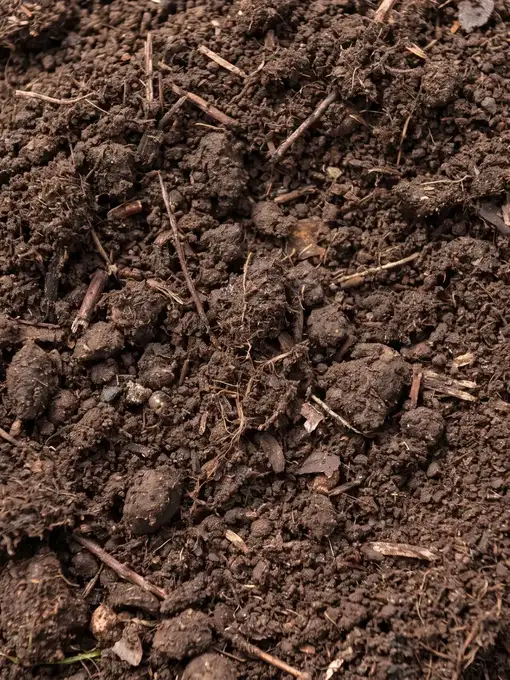
Bulk compost delivered in Hayward, CA. Dark brown color.
Starting from $597.58 delivered to Hayward for 2 yards, our minimum order
Compost delivery in Hayward, CA against heavy clay
Much of the East Bay sits on dense, sticky soil that turns to brick in summer and mud after a winter storm. If your Hayward yard behaves that way, compost is the most dependable long-term fix. For compost delivery in Hayward, CA, you can order by the cubic yard, with the delivered price for the ZIP calculated live on this page. The smallest order is 2 cubic yards, and a bigger order brings a lower rate per cubic yard.
Details about the drop itself are on the page for delivery in Hayward. This page covers what to do with the material once it is there.
Why clay and compost go together
Clay particles are tiny and pack tightly, which leaves little room for air or water to move. Mixing in organic matter pries those particles apart into crumbs. Roots push through more easily, winter rain soaks in instead of pooling, and summer cracking eases off. It is a slow change. Expect the first season to be better and the second to be noticeably better again, provided you keep adding some each year.
Do not try to fix clay with sand. Sand and clay together can set up like weak concrete. Organic matter is the dependable route.
Where compost earns its keep
- Raised beds: fill with a mix of compost and a mineral base, and top up as the level drops through the season.
- Backyard orchards and berries: a spring layer around the root zone supports steady growth and holds moisture through a dry spell.
- Bare patches in a lawn: loosen the surface, sprinkle a thin layer, and overseed.
- Planting strips and parkways: blend it into the strip before drought-tolerant plants go in.
- Hillside terraces: use it in the planting pockets, with mulch on top to hold it in place.
Calculating a Hayward-sized order
Most residential jobs here are a few beds, a lawn, or a front-yard conversion. Start with the area in square feet and pick a depth in inches. Cubic yards equal area times depth, divided by 324. That means a 400 square foot front yard dug in at 3 inches needs close to 3.7 cubic yards, so a sensible order would be 4.
If you want a second opinion, the calculator will do the same sum from length, width and depth. Add a margin for the soil-blending step, because compost incorporated into clay seems to disappear into it.
A cubic yard of compost weighs roughly 1,000 lb, so a standard pickup carries far less than most people hope. That is one reason a delivered load makes more sense than repeated trips with a truck bed.
Drop spot and handling
The load is tipped in a single heap. Choose a flat, firm patch that is close to the work, and keep it clear of storm drains, since loose compost washes into them quickly during rain. A driveway works if you lay a sheet underneath. Tell the crew about low-hanging branches, parked cars or a narrow side gate when you place the order.
Wheelbarrow the pile into place in sections, spreading each barrow load before fetching the next. Working that way keeps the depth even and avoids leaving heaps that smother the grass.
Timing around the rainy season
Winter storms in the Bay Area can wash loose material off a graded surface, so schedule big spreading jobs for a dry stretch and finish them before the next front arrives. Fall is the natural time for beds, and early spring works for lawns. Avoid digging clay while it is wet. A handful that forms a sticky ball is too soggy to work, and a handful that crumbles is ready.
Other materials for the same project
Garden projects usually include a hard surface. Asphalt Millings make an economical base for a driveway extension or a service path beside the beds, and #57 Crushed Stone suits drainage runs where clay needs a way to shed water. Both are sold by the ton and are ordered separately. Pea gravel and river rock are available as well for decorative borders.
Comparing options around the Bay
People often shop across several cities. Fremont is 9 miles from Hayward, Oakland is 14, Berkeley is 16, Concord is 20 and Richmond is 23. For a state-level overview, see Compost in California.
About Compost
This compost is a dark, crumbly soil conditioner made from fully broken-down organic material. It is screened to an even texture so it blends easily into beds and spreads smoothly over lawns.
Its main value is structure. In dense clay it opens the soil up, and in thin, sandy ground it adds body that holds moisture. It supplies mild, slow-release nutrients as well, which makes it a gentle choice for vegetables, herbs, shrubs and trees.
Compost is sold by the cubic yard, with about 1,000 lb in each one, and the smallest order is 2 cubic yards. The delivered price is calculated live for your ZIP, and larger orders get a lower rate per cubic yard.
What Compost costs in Hayward
Local Hayward yards quote compost by the ton; the delivered number includes fuel, the truck, and the haul. Send your ZIP and load size and we will send back a same-hour quote with the truck rate and the per-ton figure spelled out. A ton of this material spreads across about 216 sq ft when laid 3 inches deep, useful when you are sizing a patio base or a walkway run.
How crews use Compost in Hayward
In and around Hayward, compost shows up most often on two project types. The most common deployment is planting bed gravel, often in tight urban lots and infill builds in two to three inch lifts. At roughly 158,440 people, the Hayward order mix leans toward 3 to 8 ton residential drops with the occasional 16 ton job for a contractor.
Delivery day in Hayward
A typical Hayward drop is dispatched from the closest yard with a two hour window and a heads-up call once the truck is loaded. Tandem trucks want a 12 ft lane in and out; tri-axles need 14 ft, and both want firm ground at the tipping spot so the load releases cleanly. Standard lead time on this lane is Mon-Sat, with same-day windows held open for orders that hit the desk before 11 AM and clear payment.
Related materials we deliver in Hayward



Estimate how much you need
Work out your material
A planning figure, not a guarantee. Order roughly a tenth extra to cover settling and uneven ground.
Browse more
Available in nearby cities
Plan your project
Related guides
 GUIDEWhat Is Crushed Stone? Sizes, Uses and Buying BasicsCrushed stone is quarried rock crushed and screened into angular pieces sold by the ton. Here is what it is, how it is graded, and where to use it.Read guide →
 GUIDEHow Much Does Gravel Cost? A Practical Pricing GuideHow much does gravel cost and why does it vary? See the real factors behind ton pricing, delivery, and order size before you buy.Read guide →GUIDEGravel Size Chart: Pea Gravel to Crushed StoneA gravel size chart showing pea gravel, crushed stone and river rock diameters side by side, so you can match the right size to your project.Read guide →
 GUIDEThe Different Types of Gravel and How to ChooseA plain-language guide to the main types of gravel, covering pea gravel, crushed stone, river rock and decomposed granite.Read guide →
Frequently Asked Questions
How much compost should I mix into clay soil?
Aim for roughly a third compost by volume in the top 6 to 8 inches, using a fork or tiller. Spreading it only on the surface helps less, because the clay beneath stays dense. Repeat with a lighter amount each year to keep the structure from collapsing again.
Can I plant directly into a pile of compost?
Not usually. Pure compost holds a lot of water and may shrink as it breaks down, leaving roots exposed. Mix it with native soil or use it in a raised bed blend. Seedlings do fine in a mixed bed, and larger shrubs do better in blended backfill.
Should I water after spreading compost?
Yes. A light watering settles the surface and helps the material knit into the soil. On a mixed bed, soak it once so moisture reaches the blended layer, then let the top inch or so dry before the next round so roots do not sit in soggy clay.
Does compost have a smell?
Finished compost smells like forest floor, mild and earthy. A sharp sour or ammonia odor means it has not finished breaking down. Any mild smell fades within a day or two of spreading and watering.
What is the difference between compost and mulch?
Compost is fine, decomposed material that gets mixed into soil. Mulch is a coarser covering that sits on the surface to hold moisture and block weeds. Many gardeners use both: compost underneath for nutrition, then mulch on top to protect it.
Is the minimum order really 2 cubic yards?
Yes, every order starts at 2 cubic yards. A 4 by 8 foot raised bed filled a foot deep is about 1.2 cubic yards, so pair it with a lawn patch or a second bed to reach the minimum.
How do I see the price for my address?
Type your ZIP into the price engine on the page. It shows the delivered price for that location, and it updates as you change the quantity.
Is compost safe around pets and kids?
Finished compost is gentle, but it is still soil. Wash hands after handling it, and keep dogs from eating it. Water the area in once after spreading so it settles and does not get tracked through the house.