
Compost Delivery in Santa Rosa, CA
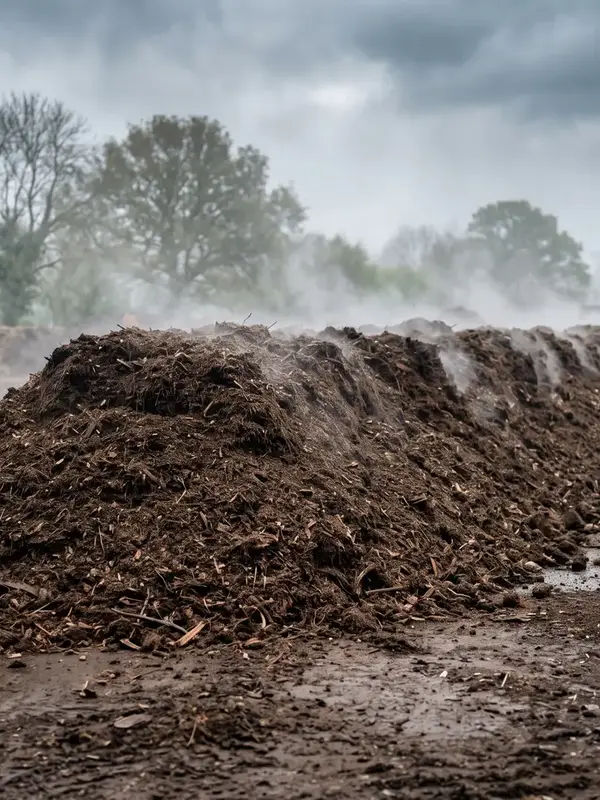
Bulk compost delivered in Santa Rosa, CA. Dark brown color.
Starting from $597.58 delivered to Santa Rosa for 2 yards, our minimum order
Compost delivery in Santa Rosa, CA
Sonoma County gardeners, vineyard-adjacent homeowners and small landscapers in a city of roughly 178,000 people all end up at the same question: how do you get a few yards of good compost without hauling it yourself? Compost delivery in Santa Rosa, CA answers that. You pick the quantity, enter your ZIP and the truck brings the material to your site.
Santa Rosa compost is counted in cubic yards, and the smallest load is 2 cubic yards. The Compost in California page covers the wider state picture, and the delivery in Santa Rosa page explains how drop-offs are handled locally.
What the material is
Finished compost is dark brown, crumbly and earthy, with no sharp odor. It is screened organic matter, so you will see small flecks of wood and plant fiber but nothing recognizable as the original trimmings. Each cubic yard weighs around 1,000 pounds.
Good jobs for compost around Santa Rosa
Santa Rosa Plain soils range from heavy adobe clay to looser loam, and clay in particular benefits from a regular dose of organic matter. Rainy winters soak the ground and dry summers bake it, so structure matters in both seasons.
- Vegetable and cut-flower beds: mix a few inches into the top of the soil before planting.
- Orchard and fruit trees: a ring spread out from the trunk, kept clear of the bark itself.
- Vineyard rows and small plots: a light annual dressing between the vines.
- Tired lawns: a thin layer worked into the surface after aeration.
Working out your quantity
Multiply length by width in feet, then by depth in inches, and divide by 324 to get cubic yards. A 20 by 10 foot bed amended 3 inches deep needs a little under 2 cubic yards, which lands right at the minimum. The calculator handles the arithmetic if you enter your dimensions. Round up a little for uneven ground.
Spreading goes faster than most people expect, but moving it does not. Plan on a wheelbarrow and a flat shovel, and a helper if the bed is far from the drop spot.
Drop spot and delivery details
The load arrives as one loose pile. Choose a level, hard surface close to where you will use it, and lay a tarp first if you want the driveway clean afterward. Hillside lots around Santa Rosa can make steep driveways awkward for a heavy truck, so note any slope or tight turn when you order. Keep sprinklers off the area until the pile is gone.
Seasons and timing in Sonoma County
Wet winters make the soil heavy and sticky, so most people spread compost in early spring once the ground can be worked, or in fall after the first cool days. Applying it in a downpour just creates mud. A dry week in April or October is ideal, and fall applications give the material months to knit into the soil before spring planting.
Compost warms slowly, which suits cool-season crops such as lettuce, kale and peas.
Price and how it works
Pricing is delivered and calculated live for your ZIP, so the figure on screen already includes the truck. Larger orders get a lower rate per cubic yard, and you can see the change as you adjust the quantity.
Nearby cities
Santa Rosa sits in the Santa Rosa-Petaluma metro, and the closest cities on our list are American Canyon at 36 miles, Vallejo at 38 miles and Fairfield at 44 miles. Check your own ZIP for availability, since it decides what is shown.
Pairing compost with stone
Garden projects often finish with a path or a drainage run. #57 Crushed Stone forms a firm base under a walkway, and Pea Gravel makes a softer surface between beds. Those are separate products with their own units, so size them separately from the compost.
About Compost
Compost is decomposed organic material, screened into a dark, crumbly soil amendment. It improves soil structure, feeds plants slowly and holds moisture in the root zone.
In Santa Rosa it suits vegetable and flower beds, fruit trees, small vineyard plots and lawn renovation. Heavy clay takes on better drainage with regular additions, while lighter soils keep water longer.
It is sold loose by the cubic yard, with about 1,000 pounds in each yard. A Santa Rosa order starts at 2 cubic yards, and bigger orders carry a lower rate per cubic yard. The delivered price for your ZIP appears on the page.
Work a few inches into planting beds or spread it thinner as a top-dressing. Keep it back from tree trunks and cover any leftover pile.
What Compost costs in Santa Rosa
In the Santa Rosa market, compost is sold by the ton and priced at the gate before delivery is added on. Send your ZIP and load size and we will send back a same-hour quote with the truck rate and the per-ton figure spelled out. One ton covers about 216 sq ft at a 3 inch finished depth, so a 400 sq ft driveway pad runs roughly 2 tons.
How crews use Compost in Santa Rosa
Crews working out of Santa Rosa tend to call for compost on a few repeat jobs each week. The first is planting bed gravel, typically laid in tight urban lots and infill builds with a base lift compacted before the finish course goes on. With a population around 177,524, Santa Rosa pulls a mix of single-truck homeowner orders and contractor full-loads through the season.
Delivery day in Santa Rosa
On the day of the drop, the dispatcher pulls the closest yard, batches your ticket with other Santa Rosa stops, and sends a window the night before. Tandem-axle dumps need at least 12 ft of clear width and 14 ft overhead to set the bed; tri-axles need 14 ft of clearance on both counts and a level pad to tip safely. Standard lead time on this lane is Mon-Sat, with same-day windows held open for orders that hit the desk before 11 AM and clear payment.
Related materials we deliver in Santa Rosa



Estimate how much you need
Work out your material
A planning figure, not a guarantee. Order roughly a tenth extra to cover settling and uneven ground.
Browse more
Available in nearby cities
Plan your project
Related guides
 GUIDEHow to Clean River Rock and Restore Its ColorLearn how to clean river rock landscaping with rinsing, soap and vinegar methods, plus common mistakes to avoid for a brighter, longer lasting rock bed.Read guide →
 GUIDEHow to Lay a Gravel Driveway: Step-by-Step GuidePractical, field-tested guide: how to lay gravel driveway. Pulled from real US installer notes and 2026 supplier price data.Read guide →
 GUIDEDoes Gravel Stop Weeds? Honest Answer + What WorksPractical, field-tested guide: does gravel stop weeds. Pulled from real US installer notes and 2026 supplier price data.Read guide →
 GUIDEHow Much Gravel Do I Need? Quick Sizing GuidePractical, field-tested guide: how much gravel do i need. Pulled from real US installer notes and 2026 supplier price data.Read guide →
Frequently Asked Questions
What does a cubic yard of compost cover?
One cubic yard covers about 324 square feet at a depth of 1 inch, or roughly 108 square feet at 3 inches. That is a handy way to sanity-check your numbers before ordering. Most beds need two to three inches worked in, while lawns need much less.
Is the minimum order really 2 cubic yards?
Yes, Santa Rosa orders start at 2 cubic yards. If your project needs less, you can spread the extra over another bed or use it as a mulch layer around trees.
Can I use compost around fruit trees?
Yes. Compost feeds the soil life under a tree slowly, so a yearly refresh in early spring or fall works better than one heavy application. Two to three inches is plenty, since a thicker layer can hold too much moisture.
How do I handle compost on a sloped yard?
On a Santa Rosa hillside, spread compost in thin passes and rake across the slope, not down it. On steep ground, lay a few straw wattles or edging boards to slow runoff until plants take hold. Avoid piling thick layers on a hill, because heavy rain can wash them downhill.
Does compost need to be mixed with soil?
Mixing is the better approach for planting beds. A common ratio is about one part compost to three of existing soil. For mulch or lawn dressing you can leave it on the surface, and worms and rain will carry nutrients down on their own.
Is finished compost safe for vegetable gardens?
Properly finished compost is widely used in vegetable gardens. Look for a dark color and an earthy smell. Wash produce as you normally would, and keep the layer worked in rather than pressed against the stems of young plants.
What if I over-order?
Leftover compost keeps well. Cover the pile with a tarp so rain does not leach it and sun does not dry it out, then use it for top-dressing beds later in the year. Surplus rarely goes to waste in a garden of any size.
Can I use compost in containers and planters?
Yes, but mix it with potting soil rather than filling a container with compost alone. A common starting point is about one part compost to three parts potting mix, which keeps drainage good in pots and planters.