
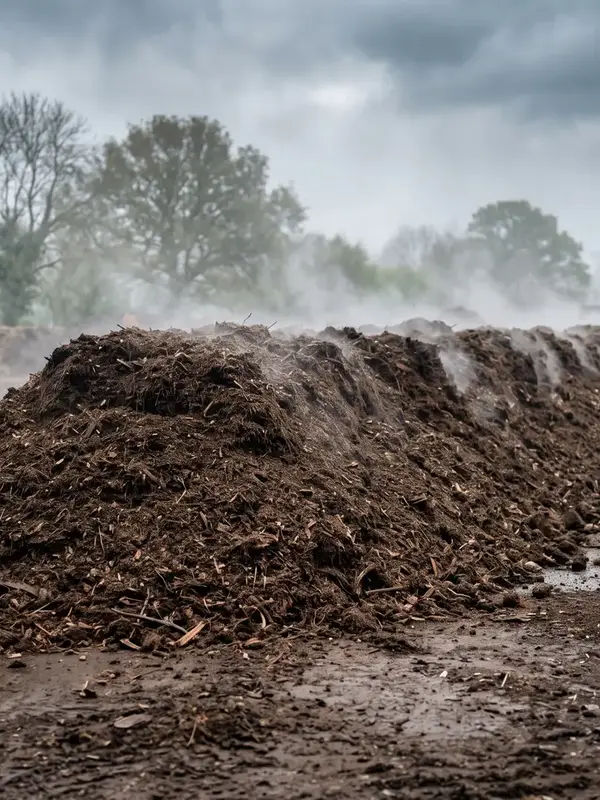
Compost Delivery in Visalia, CA by the Cubic Yard
Bulk compost delivered in Visalia, CA. Dark brown color.
Starting from $612.06 delivered to Visalia for 2 yards, our minimum order
Visalia homeowners and small growers use compost to improve ground that bakes through the summer and then gets worked hard the rest of the year. Compost delivery in Visalia, CA covers dark, finished compost, sold by the cubic yard. Browse the statewide page, Compost in California, for related details.
Why Central Valley gardens use compost
Valley summers are hot and dry, and the soil in many yards is either hard-packed or drains too quickly. Compost addresses both: it loosens dense ground and slows the loss of water from loose ground. Raised beds, vegetable rows, citrus and young shade trees are the usual targets, and a lawn that has gone patchy responds to a thin top-dressing in the cooler part of the year.
It is a growing material, so it stays out of walkways and parking areas. For a firm surface use Asphalt Millings or #57 Crushed Stone instead.
Compost delivery in Visalia, CA, and the drop spot
A single pile is delivered, so decide where it goes before the order is placed. Many lots here leave room for a pile on a corner of the driveway or beside the garden. Look up for utility lines and tree limbs, and keep the pile off any area that drains toward a neighbor. The nearest cities in our data are Lemoore at about 35 miles, Fresno at about 41 and Clovis at about 42. More background is on the delivery in Visalia page.
How much you need
Turn the depth into feet before you multiply. A 4 inch layer is one third of a foot, so a 12 by 30 foot bed holds 12 x 30 x one third, about 120 cubic feet. Divide by 27 and you have around 4.4 cubic yards. The calculator returns a volume in the same way. For an irregular bed, break the area into rectangles, work out each one separately and add the results together.
The smallest order is 2 cubic yards, so even a small bed needs that quantity as a floor. Add roughly ten percent for the settling that happens after the first irrigation.
Working it into the ground
Start by watering a dry bed a day ahead, since valley ground can be hard enough to shed water, and then loosen it with a fork. Spread compost across the surface and dig or rake it into the top several inches. In an established bed, skip the digging and lay it around plants, then let irrigation pull it down.
If your beds run on drip lines, they are easy to damage with a shovel. Locate the tubing before you dig, and slide a thin layer of compost over it instead of working deep. If you are building a new bed from scratch, mix the compost into the native ground rather than filling a box with pure compost, which settles and dries out unevenly under valley sun.
Timing is flexible, but many local gardeners add compost in late winter ahead of spring planting or in early fall before cool-season crops go in. Whichever you pick, have the beds marked out and the tools ready, so the pile does not sit around longer than needed.
After the compost is down, water the bed slowly so the layer soaks through instead of running off. A light covering of wood chip or straw on top helps hold that moisture through a hot afternoon and keeps the compost from crusting over. Leftover material is useful too: bag it for containers and patio pots, or work it into a vegetable row that needs a boost mid-season.
For a vegetable garden, a layer of two to three inches dug in before planting gives most crops what they need. Trees and shrubs need a thinner layer than a vegetable bed. Matching the depth to the plant keeps the pile from running out before every bed is covered.
Pricing notes
The live price engine calculates the delivered figure from your ZIP and displays it before checkout. Larger orders carry a lower rate per cubic yard, so a bigger single order usually works out better than two separate small ones.
Ordering
Open the compost page, enter your ZIP, and choose a quantity of 2 cubic yards or more.
About Compost
Compost is the end product of controlled decomposition: plant and food waste turned into a dark, crumbly material with a faint earthy smell. Gardeners use it to add organic matter and soil life, to improve structure in compacted ground, and to help sandy beds hold water. It is sold by the cubic yard, the smallest order is 2 cubic yards, and a cubic yard weighs about 1,000 pounds.
It works in vegetable gardens, flower borders, planting holes for trees and shrubs, lawn renovation and potting mixes. It is not a paving or fill material and should not go under hardscape. For beds, fork it into the top six to eight inches of soil, or spread two inches across the surface and let worms and watering carry it down. The delivered price for your ZIP is calculated live on the product page, and larger orders get a lower rate per cubic yard.
What Compost costs in Visalia
Around Visalia, compost is quoted by the ton with delivery layered in based on distance from the closest yard. Send your ZIP and load size and we will send back a same-hour quote with the truck rate and the per-ton figure spelled out. Plan on roughly 216 sq ft of coverage per ton at 3 inches deep, which puts a single-car driveway in the 3 to 5 ton bracket.
How crews use Compost in Visalia
Visalia contractors keep compost on the order sheet for a short list of standard installs. Top of the list is planting bed gravel, where the material is rolled out in tight urban lots and infill builds and screeded to grade. Visalia sits at about 146,271 residents, which means we see steady weekday traffic from landscape crews and weekend pickups from owner-builders.
Delivery day in Visalia
Delivery in Visalia runs out of the nearest pit; you get a two hour arrival window the evening prior and a call when the driver leaves the scale. Plan for 12 ft of clear path for a tandem and 14 ft for a tri-axle, plus a level area at the dump point so the bed lifts straight. Standard lead time on this lane is Mon-Sat, with same-day windows held open for orders that hit the desk before 11 AM and clear payment.
Related materials we deliver in Visalia



Estimate how much you need
Work out your material
A planning figure, not a guarantee. Order roughly a tenth extra to cover settling and uneven ground.
Browse more
Available in nearby cities
Plan your project
Related guides
 GUIDEWhat Size Crushed Stone Goes Under a Concrete SlabMost slabs need 4 to 6 inches of compacted crushed stone underneath. What size crushed stone under a concrete slab needs, and why it matters.Read guide →
 GUIDEWhat Is Crushed Stone? Sizes, Uses and Buying BasicsCrushed stone is quarried rock crushed and screened into angular pieces sold by the ton. Here is what it is, how it is graded, and where to use it.Read guide →
 GUIDEHow Much Does Gravel Cost? A Practical Pricing GuideHow much does gravel cost and why does it vary? See the real factors behind ton pricing, delivery, and order size before you buy.Read guide →GUIDEGravel Size Chart: Pea Gravel to Crushed StoneA gravel size chart showing pea gravel, crushed stone and river rock diameters side by side, so you can match the right size to your project.Read guide →
Frequently Asked Questions
Can compost fix hard clay-like soil?
It helps over time. Mixing in several inches loosens heavy ground, lets water soak in and gives roots room. One application will not transform a bed overnight, so repeat each season and avoid walking on the area while it is wet, which re-compacts the soil.
Is it okay to use around fruit and nut trees?
Yes. Spread a ring a couple of inches deep out to the drip line, and pull it back from the trunk so bark stays dry. Water afterward to carry nutrients down. Many growers repeat this once a year, usually before the growing season starts.
Will compost burn my plants in summer heat?
Finished compost does not burn roots. The risk comes from material that is not fully cured. If a pile feels warm or smells sharp, spread it out and let it rest before planting. Water in the morning so the layer stays evenly moist.
How long does a layer last?
Compost keeps breaking down, and in warm ground it goes faster. Expect a surface layer to shrink noticeably over a season. Plan on refreshing beds annually, and dig some in each time so the benefit builds in the soil.
Can I plant seeds in it right away?
For most vegetables, yes, especially mixed with native ground. Small seeds do best in a fine layer that is lightly watered daily until they sprout. Large seeds like beans and squash are less fussy and can go into a blend straight away.
What tools make moving a yard easier?
A wheelbarrow, a flat shovel and a garden fork cover most jobs. A second person doubles the pace. Use a tarp to drag material across lawns, and wet the pile slightly if it is dusty, since dry compost blows around in valley wind.
Is compost good for a new lawn?
Work an inch or so into the top few inches of ground before seeding or laying sod. That gives roots a better start. Do not bury sod under a thick layer, and keep the surface level so water does not collect in low spots.
Can I mix compost with Pea Gravel for a path?
No. Compost holds water and breaks down, so a path built with it turns soft and muddy. Use it in planting areas and put gravel on its own base elsewhere. A strip of edging between a bed and a path keeps each material where it belongs.