
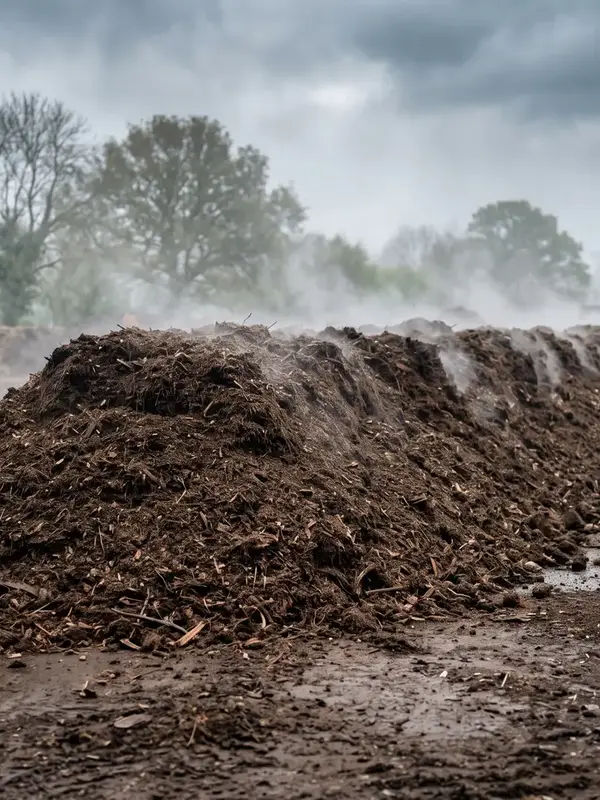
Compost Delivery in Clearwater, FL by the Cubic Yard
Bulk compost delivered in Clearwater, FL. Dark brown color.
Starting from $544.59 delivered to Clearwater for 2 yards, our minimum order
Compost delivery in Clearwater, FL brings a full load of dark brown organic material to your driveway, so you can top-dress a lawn, fill a raised bed or refresh a planting area in one trip. We sell compost by the cubic yard, and the smallest order is 2 cubic yards. The delivered price for your ZIP is calculated live and shown on the page before you pay.
What Clearwater soil needs from compost
Many yards in Clearwater sit on sandy ground that drains quickly and holds little organic matter. Compost gives that kind of soil more body, which helps water and nutrients stay near the roots between rains and irrigation cycles. New beds dug into sandy fill tend to benefit the most, since they start with almost no organic matter at all.
A layer of compost on top also slows evaporation during the hot, wet months when lawns and gardens here grow fastest. The surface stays damp longer, so you water less often to keep new plantings going.
Compost delivery in Clearwater, FL: how ordering works
Choose compost on the product page and enter your Clearwater ZIP. Larger orders get a lower rate per cubic yard, which matters if you are covering several beds or a full lawn in one delivery.
- Type in the ZIP of the place where the truck will unload, which may not be where you live.
- Set the cubic yard count from your measurements.
- Confirm there is open room for a truck at the spot you picked.
- Check the total in your cart and place the order.
For how delivery works in Clearwater, see our delivery in Clearwater page. If you are planning compost for other parts of Florida, Compost in Florida lists the material by city.
Best uses for compost in Clearwater
Compost is mostly used in three places here: blended into garden and flower beds ahead of planting, raked thinly across worn turf, and spread in a ring under trees and shrubs with a gap left at the trunk.
After planting into amended ground, check the soil a few inches down before you water again. Compost holds moisture longer than bare sand, so a quick finger test keeps you from overwatering new roots. Spots where the layer has thinned can get a light top-up.
A heavy layer can crowd out young seedlings, so keep it modest and mix some into the soil you already have.
Preparing a Clearwater bed before the load arrives
Spend an hour on the ground before the truck shows up. Pull weeds by the roots, cut back any turf you plan to replace, and loosen the top few inches with a garden fork so the compost has something to mix into. Keep a wheelbarrow, a flat shovel and a rake near the spot where the pile will land, and mark each bed with a stake showing the depth you want. Edging along the bed keeps loose material from drifting onto walks. Once the compost is spread, a thin cover of mulch keeps the surface from crusting over in strong sun.
How much compost to order in Clearwater
Measure the area in feet, multiply length by width, then multiply by the depth in inches and divide by 324. A 15 by 12 foot bed filled 3 inches deep works out to 540 divided by 324, or about 1.7 cubic yards. The 2 cubic yard smallest order covers that bed with a little left over.
For a rough check on a bigger or oddly shaped area, our gravel driveway calculator lets you run similar length and width numbers before you order. If your numbers land between two sizes, round up, since a short load leaves a bare spot.
Other materials delivered in Clearwater
A Clearwater project can combine materials. Premium Screened Topsoil, Pea Gravel, River Rock and #57 Crushed Stone are all sold by the ton, so each gets its own order size and delivered price, kept apart from compost and its cubic yards. If you are also working on a property in Saint Petersburg (about 17 miles away) or Tampa (about 20 miles away), the same steps apply there. Topsoil suits a low corner that needs filling before seed goes down.
About Compost
Compost is dark brown, loose organic material that adds body to soil and gives plants a steadier base for water and nutrients. Sales are made by the cubic yard. One cubic yard weighs roughly 1,000 pounds, so a yard is a manageable amount to spread with a wheelbarrow across several beds.
Gardeners use compost in three common ways. It gets mixed into planting beds before new plants go in, it is spread as a thin top-dressing on lawns, and it is laid in a ring over tree and shrub roots. Each use asks for a different depth, so the order size depends on the project more than on the material itself.
Compost is a soil amendment, not a base layer. It should not be used under a path, patio or driveway. For those jobs, choose a stone or fill product priced by weight instead.
Orders are placed by the cubic yard with a 2 cubic yard smallest order. The delivered price is calculated for the ZIP you enter, and it is shown before you check out.
What Compost costs in Clearwater
Local Clearwater yards quote compost by the ton; the delivered number includes fuel, the truck, and the haul. Send your ZIP and load size and we will send back a same-hour quote with the truck rate and the per-ton figure spelled out. A ton of this material spreads across about 216 sq ft when laid 3 inches deep, useful when you are sizing a patio base or a walkway run.
How crews use Compost in Clearwater
In and around Clearwater, compost shows up most often on two project types. The most common deployment is planting bed gravel, often in tight urban lots and infill builds in two to three inch lifts. At roughly 116,946 people, the Clearwater order mix leans toward 3 to 8 ton residential drops with the occasional 16 ton job for a contractor.
Delivery day in Clearwater
A typical Clearwater drop is dispatched from the closest yard with a two hour window and a heads-up call once the truck is loaded. Tandem trucks want a 12 ft lane in and out; tri-axles need 14 ft, and both want firm ground at the tipping spot so the load releases cleanly. Standard lead time on this lane is Mon-Sat, with same-day windows held open for orders that hit the desk before 11 AM and clear payment.
Related materials we deliver in Clearwater



Estimate how much you need
Work out your material
A planning figure, not a guarantee. Order roughly a tenth extra to cover settling and uneven ground.
Browse more
Available in nearby cities
Plan your project
Related guides
 GUIDEWhat Size Crushed Stone Goes Under a Concrete SlabMost slabs need 4 to 6 inches of compacted crushed stone underneath. What size crushed stone under a concrete slab needs, and why it matters.Read guide →
 GUIDEWhat Is Crushed Stone? Sizes, Uses and Buying BasicsCrushed stone is quarried rock crushed and screened into angular pieces sold by the ton. Here is what it is, how it is graded, and where to use it.Read guide →
 GUIDEHow Much Does Gravel Cost? A Practical Pricing GuideHow much does gravel cost and why does it vary? See the real factors behind ton pricing, delivery, and order size before you buy.Read guide →GUIDEGravel Size Chart: Pea Gravel to Crushed StoneA gravel size chart showing pea gravel, crushed stone and river rock diameters side by side, so you can match the right size to your project.Read guide →
Frequently Asked Questions
What does good compost look and feel like?
Finished compost is dark brown, crumbly and smells like damp woods. You should not see recognizable scraps, and it should not smell sour or sharp. A handful squeezed in your fist should hold together loosely and then break apart. Material that feels slimy or hot is not finished and is better left out of your beds.
How thick should compost be on a lawn?
About one inch is the upper limit on turf. Rake it evenly across the grass and water it in so it settles between the blades. Thicker layers can smother the grass and slow its recovery, so for a bigger gap in the lawn, spread a thin layer and repeat after a few weeks.
Can I use compost in pots and containers?
Yes, but not on its own. Blend compost with potting mix or screened topsoil so the container drains well and the roots have air. A mix of about one part compost to two or three parts other material works for most plants. Pure compost can pack down and dry out faster than a blended mix.
How soon after spreading compost can I plant?
Right away in most cases. If you worked the compost into the soil, set transplants in the same day and water them in. Seeds are fine too, as long as the surface is raked fine and kept damp. The only wait worth making is after a heavy rain, when soaked ground is too sticky to handle.
Does rain hurt a pile of compost?
Rain does no harm to the compost itself, but a wet pile is heavier and clumpier, which makes it harder to shovel and spread. If a storm is on the way and you cannot move the pile yet, a tarp over the top keeps it workable. Take it off afterward so the pile can breathe.
Can compost replace fertilizer?
Compost improves soil structure and adds some nutrients, but it works slowly and is not a quick fix for a hungry plant. Many gardeners use it as the base for healthy soil and add fertilizer only where plants show a clear need. Over a season or two, a compost-rich bed usually needs less feeding than bare sand.
How long does compost last in a bed?
Compost breaks down gradually, so one application keeps working for a season or more. In sandy ground it disappears a little faster, since the soil is open and microbes are active in the warm months. Plan to refresh beds once a year, or when the soil level has dropped and plants look pale.
Can I mix compost with topsoil for a raised bed?
Yes, and it is a common recipe. Fill the box with topsoil for body, then blend in compost for organic matter and moisture holding. Mix them well rather than layering, so roots do not hit an abrupt change between layers. Order each product in its own unit, then measure the box to size both loads.