
Compost Delivery in Lowell, MA, Sold by the Cubic Yard
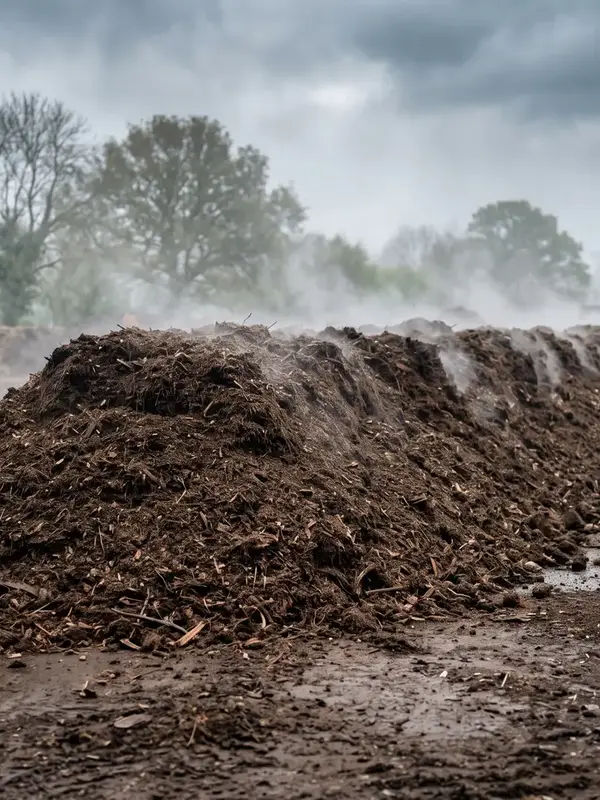
Bulk compost delivered in Lowell, MA. Dark brown color.
Starting from $531.07 delivered to Lowell for 2 yards, our minimum order
Lowell is a mill city where the Merrimack and Concord rivers meet, and it has about 120,000 residents living across older neighborhoods and newer blocks. Compost delivery in Lowell, MA means a single drop covers beds, borders and lawn repair, and the soil in one yard can differ sharply from the next. Orders start at 2 cubic yards, and the material is sold by the cubic yard.
Where compost earns its place in a Lowell yard
Lowell yards range from small city lots to larger parcels with room for planting, and each one has its own soil story. Compost is the most flexible way to improve that ground, since it loosens dense soil, adds body to thin sand and supports the microbes that feed plant roots. The Compost in Massachusetts hub has the broader state overview, while the points below cover the main jobs Lowell buyers order it for.
- Annual flower and vegetable beds: worked into the top few inches each spring so the bed starts the season with loose, dark soil.
- Perennial borders: spread around established plants in a thin layer, kept back from the crown of each one.
- Lawn renovation: a light dressing over thin turf, raked in, then seeded where the grass is sparse.
- Newly graded or filled areas: blended into the surface so new seed or sod has something to root into.
Old lots in an industrial city often have buried debris or dense fill near the surface. Compost helps the top layer, but it cannot fix a hard layer several inches down. If a spade hits brick, concrete or rubble, break it up or plan a deeper bed instead of relying on a thin application.
Working out the compost volume for a Lowell bed or lawn
Measure the length and width of the area in feet, multiply them, then multiply by the depth in inches and divide by 324. That gives cubic yards. A 10 by 15 foot border spread 2 inches deep works out to about 1 cubic yard, which is below the 2-yard minimum, so it makes sense to combine it with a second area in the same order. The calculator on this site follows the same steps, and it is a handy way to check a long strip against a wider project.
Pricing compost for a Lowell order
Your delivered price is calculated for your ZIP and shown live on the page, so the figure is specific to your address. Bigger orders carry a lower rate per cubic yard, which favors combining beds, borders and lawn repair into one delivery. Breaking a single project into several small orders means paying the higher rate on each, so size the whole job before you check out.
Delivery to Lowell
The delivery in Lowell page covers how the city is served. Cambridge and Lynn are each about 20 miles away and Boston about 24, so Lowell sits on the northern edge of the Boston area.
Placing your Lowell compost order
Choose a drop spot that is firm, level and within easy reach of the planting area. A paved driveway or a stretch of flat lawn works well, as long as it is clear of parked cars and low limbs. Plan on a little extra compost beyond your measurement, because the material settles as you water it in and walk across it.
If the job needs a base or grade change instead of a conditioner, Lowell has other materials that fit better. #57 Crushed Stone and Pea Gravel are both sold by the ton, and they suit drainage and path work where compost would wash out or break down. Asphalt Millings and River Rock are also sold by the ton in Lowell, and each has a different use. Pick the material for the job, then order compost only for the planting areas.
Planning a Lowell compost project around the seasons
Mill-city lots come in odd shapes, so sketch each one before you order. Give every area a line with its size in cubic yards and its job, such as a front strip, a side border or a patched back lawn. A list like that shows whether one first pass can cover the beds and leave the lawn for later, which also spreads the physical work over more weekends.
About Compost
About this material
Compost is decomposed organic matter, usually made from yard trimmings and similar plant material that has been broken down over time. Finished compost is dark brown, loose and sweet smelling, and it no longer shows the leaves and stems it started as. Gardeners rely on it to improve soil texture, to help beds hold moisture and to feed the life in the soil.
The material is sold by the cubic yard, and a cubic yard weighs roughly 1,000 pounds. That weight matters for moving it by hand, so plan access and spreading with the load in mind. Work it into the top few inches of existing soil for planting, and keep it off the bark and crowns of woody plants.
Compost acts as a conditioner, not a base. It can improve ground that already drains and supports growth, but it is not a substitute for crushed stone under a path or a fill layer under a sunken lawn. Use it where the goal is healthier planting soil, and check the delivered price for your ZIP before you commit to a size.
What Compost costs in Lowell
Local Lowell yards quote compost by the ton; the delivered number includes fuel, the truck, and the haul. Send your ZIP and load size and we will send back a same-hour quote with the truck rate and the per-ton figure spelled out. A ton of this material spreads across about 216 sq ft when laid 3 inches deep, useful when you are sizing a patio base or a walkway run.
How crews use Compost in Lowell
In and around Lowell, compost shows up most often on two project types. The most common deployment is planting bed gravel, often in tight urban lots and infill builds in two to three inch lifts. At roughly 120,418 people, the Lowell order mix leans toward 3 to 8 ton residential drops with the occasional 16 ton job for a contractor.
Delivery day in Lowell
A typical Lowell drop is dispatched from the closest yard with a two hour window and a heads-up call once the truck is loaded. Tandem trucks want a 12 ft lane in and out; tri-axles need 14 ft, and both want firm ground at the tipping spot so the load releases cleanly. Standard lead time on this lane is Mon-Sat, with same-day windows held open for orders that hit the desk before 11 AM and clear payment.
Related materials we deliver in Lowell


Estimate how much you need
Work out your material
A planning figure, not a guarantee. Order roughly a tenth extra to cover settling and uneven ground.
Browse more
Available in nearby cities
Plan your project
Related guides
 GUIDEWhat Is #57 Stone? Uses, Size, and Cost ExplainedPractical, field-tested guide: what is 57 stone. Pulled from real US installer notes and 2026 supplier price data.Read guide →
 GUIDEHow Deep Should a Gravel Driveway Be? Layer GuidePractical, field-tested guide: how deep should gravel driveway be. Pulled from real US installer notes and 2026 supplier price data.Read guide →
 GUIDEHow Much Does River Rock Cost? By Ton or YardRiver rock cost depends on your ZIP code, order size, and whether you buy by the ton or the cubic yard. Here is how pricing works.Read guide →
 GUIDEWhat Size Crushed Stone Goes Under a Concrete SlabMost slabs need 4 to 6 inches of compacted crushed stone underneath. What size crushed stone under a concrete slab needs, and why it matters.Read guide →
Frequently Asked Questions
Should I cover a pile of compost while it waits to be spread?
A loose tarp helps in a heavy rain, because a soaked pile gets heavy and harder to shovel, and runoff can carry fine material onto a driveway or sidewalk. Leave the edges open enough for air to move through. Most buyers spread within a few days, and a covered pile is easier to handle than a wet one.
Can compost replace topsoil under a new lawn?
Not by itself. Compost improves the top layer, but a new lawn usually needs a base of soil deep enough for roots to establish. A common approach is to set the grade with topsoil, then work a layer of compost into the surface before seeding or laying sod.
Will compost keep weeds away?
A thick layer of compost can slow some weeds, but it is not a weed barrier. Seeds in the material and in the surrounding soil can still sprout, and established weeds with deep roots will push through. Pull those first, and use mulch on bare areas if you want a surface cover.
Is compost good for a sandy lot?
Yes, sandy soil benefits from compost because the organic matter helps it hold water and nutrients. Expect gradual improvement over several seasons, not an instant change. Mix it into the top few inches and water deeply so the moisture reaches the roots.
How many times a year should I add compost?
Most beds do well with one application per year, spread in spring or fall. Lawns can take a light top dressing once or twice a year. Avoid heavy repeated layers in the same spot, since a deep buildup can hold too much water and slow root growth.
Can I use compost around trees?
Yes, as long as it stays away from the trunk. Spread a thin layer out to the edge of the root zone, and do not pile material against the bark, since that can invite rot and pests. Water the area after spreading so the layer settles into the surface.
Does compost attract rodents or pests?
Finished compost is not a food source for most pests, since the scraps that attract them have already broken down. Problems usually start with raw kitchen waste, not delivered material. Keeping a pile away from the foundation and spreading it soon after it arrives leaves little for animals to investigate.
Can I mix compost with topsoil for a raised bed?
Yes, and a blend usually works better than straight compost. Many gardeners use about equal parts so roots get both nutrients and structure. Mix the two on a tarp or in a wheelbarrow before filling the bed, and order each material in its own unit, since topsoil is sold by the ton.