
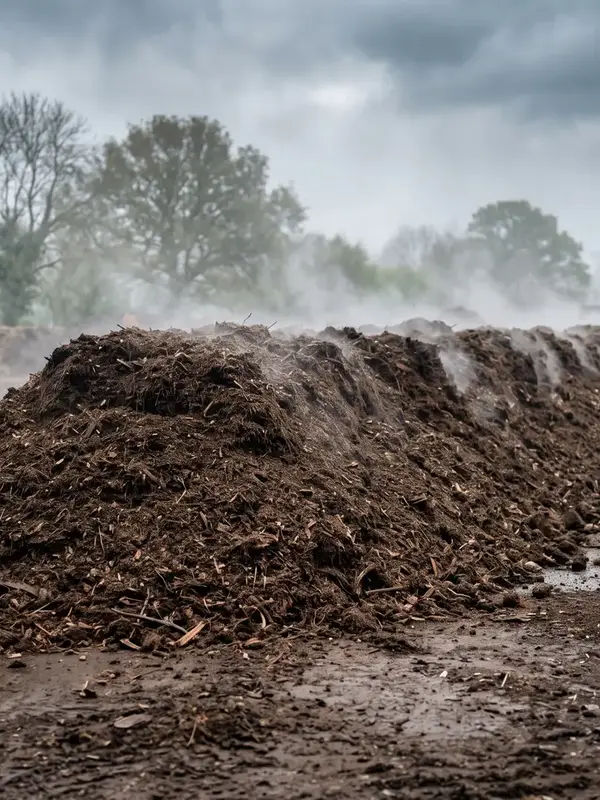
Compost Delivery in Farmington Hills, MI by the Cubic Yard
Bulk compost delivered in Farmington Hills, MI. Dark brown color.
Starting from $531.92 delivered to Farmington Hills for 2 yards, our minimum order
Farmington Hills is a suburb of about 84,000 people, set northwest of Detroit with a mix of older ranch homes and newer subdivisions. Compost delivery in Farmington Hills, MI is a bulk drop at the address itself, so the material arrives right where the work is. It is one of the simplest ways to build up soil in a yard that has been mowed for years with little else added.
What compost delivery in Farmington Hills, MI covers
Compost is a dark brown, finished material that you work into beds or spread over turf. Heavy clay is common across southeast Michigan, and that clay holds water poorly and packs under foot traffic. A layer of compost gives the ground structure, so roots can move through it and rain can soak in instead of running off.
Beyond drainage, compost releases small amounts of nutrients slowly, which suits perennials and shrubs that feed over a whole season. It also brings in the soil life that breaks down old roots and leaf litter, so a bed becomes easier to dig from one year to the next.
Pricing notes for Farmington Hills orders
Compost is priced by the cubic yard, and the delivered price for your ZIP shows on the page before you order. Larger orders get a lower rate per cubic yard, so a bigger quantity can cost less per unit even though the total goes up. Orders start at 2 cubic yards, which is enough for a sizable planting bed or a broad topdressing.
Best uses for compost in Farmington Hills
- In-ground vegetable plots that get turned over each season
- Shrub and perennial borders, worked in around the root zone
- Thin lawn topdressing for tired turf in early fall
- Refreshing older container and raised-bed mixes
Mulch is a different product. Mulch is a surface cover, while compost belongs in the soil. Topsoil and compost are not interchangeable either. For leveling a low area, Premium Screened Topsoil is sold by the ton and is a better match for bulk fill.
Plant after the last hard frost, and avoid digging into soil that is wet enough to ball up in your hand. Turning wet clay damages its structure for the rest of the season.
Once a bed is established, a light annual topdressing is usually all it needs. Heavy digging every year is rarely necessary and can disturb the soil life you are trying to build.
How much compost to order
Multiply length by width in feet, multiply by depth in inches, and divide by 324 to reach cubic yards. A 15 by 25 foot vegetable plot dug 3 inches deep gives 15 x 25 x 3 = 1,125, divided by 324, or about 3.5 cubic yards. The calculator is there to check your arithmetic before you enter a quantity.
Compost settles after watering and as it breaks down, so a plot filled to exact depth will drop noticeably by the end of summer. Plan a little extra on the first order, then top up in the second season if the bed needs it.
Delivery to a Farmington Hills address
Pick a level, firm spot and make sure the truck has a clear route in. Driveway aprons and soft lawn edges can rut under heavy loads, so a spot near a paved surface keeps the grass intact. Spread the pile quickly once it lands, because compost left in a heap in direct sun dries out at the surface. The delivery in Farmington Hills page covers the local details.
Placing your Farmington Hills order
Enter the number of cubic yards from your measurements and review the delivered price for your ZIP before you pay. For orientation, Novi, Southfield and Livonia are each about 6 miles away, and Dearborn Heights and Royal Oak are about 11 miles off.
To browse the full range and compare materials, head to Compost in Michigan.
About Compost
Compost is a dark brown, finished organic material designed to be worked into soil or spread over the surface of beds and lawns. It is sold by the cubic yard, and each cubic yard weighs roughly 1,000 pounds, so plan the drop point with that weight in mind. It helps heavy clay loosen, gives sandy ground something to hold onto, and feeds vegetable and flower beds with a slow, steady supply of organic matter.
The texture is loose and easy to shovel once it lands. It does pack down under foot traffic, so spread it in even layers and avoid stacking it deep in one place. Compost blends well with existing soil and suits gardeners who want a gentle feed rather than a quick fertilizer boost. Good finished compost looks crumbly and uniform, with no large chunks of raw material left in it.
What Compost costs in Farmington Hills
In the Farmington Hills market, compost is sold by the ton and priced at the gate before delivery is added on. Send your ZIP and load size and we will send back a same-hour quote with the truck rate and the per-ton figure spelled out. One ton covers about 216 sq ft at a 3 inch finished depth, so a 400 sq ft driveway pad runs roughly 2 tons.
How crews use Compost in Farmington Hills
Crews working out of Farmington Hills tend to call for compost on a few repeat jobs each week. The first is planting bed gravel, typically laid in tight urban lots and infill builds with a base lift compacted before the finish course goes on. With a population around 84,173, Farmington Hills pulls a mix of single-truck homeowner orders and contractor full-loads through the season.
Delivery day in Farmington Hills
On the day of the drop, the dispatcher pulls the closest yard, batches your ticket with other Farmington Hills stops, and sends a window the night before. Tandem-axle dumps need at least 12 ft of clear width and 14 ft overhead to set the bed; tri-axles need 14 ft of clearance on both counts and a level pad to tip safely. Standard lead time on this lane is Mon-Sat, with same-day windows held open for orders that hit the desk before 11 AM and clear payment.
Related materials we deliver in Farmington Hills



Estimate how much you need
Work out your material
A planning figure, not a guarantee. Order roughly a tenth extra to cover settling and uneven ground.
Browse more
Available in nearby cities
Plan your project
Related guides
 GUIDEWhat to Put Under River Rock for Landscaping BedsHere is what to put under river rock landscaping: a compacted base where needed, then landscape fabric, then rock, to stop weeds and settling.Read guide →GUIDEHow to Clean River Rock and Restore Its ColorLearn how to clean river rock landscaping with rinsing, soap and vinegar methods, plus common mistakes to avoid for a brighter, longer lasting rock bed.Read guide →
 GUIDEHow to Lay a Gravel Driveway: Step-by-Step GuidePractical, field-tested guide: how to lay gravel driveway. Pulled from real US installer notes and 2026 supplier price data.Read guide →
 GUIDEDoes Gravel Stop Weeds? Honest Answer + What WorksPractical, field-tested guide: does gravel stop weeds. Pulled from real US installer notes and 2026 supplier price data.Read guide →
Frequently Asked Questions
How many bags of compost make one cubic yard?
A cubic yard is 27 cubic feet, and a typical bag holds 1.5 cubic feet, which puts one yard near 18 bags. Labels vary between brands and some bags run smaller than they look. For a Farmington Hills plot of a few yards, bulk delivery replaces dozens of trips from the car to the bed.
Can I topdress an existing lawn with compost?
A thin topdressing works well. Aim for roughly a quarter inch, rake it so blades of grass still poke through, and water lightly afterward. A deep pile can smother turf and invite disease, so spread it in passes instead of dumping it in one spot on the lawn.
How deep should I work compost into a new bed?
Mix it into the top 4 to 6 inches of the existing soil rather than laying it as a separate band. A distinct layer can stop water and roots at the boundary, while a blended bed drains evenly. Digging deeper than the roots will reach rarely adds anything.
How often should a vegetable bed get fresh compost?
Most vegetable beds benefit from fresh material once a year, usually in spring or fall. Crops that feed heavily may use up organic matter faster. If plants look pale, grow slowly, or the bed drains poorly after rain, the soil likely needs more compost worked in.
How do I keep leftover compost in good condition?
Put a tarp over any leftover pile and set it on a board or paved edge so ground water stays out. Check it after heavy rain, and fluff a crusted surface with a fork before you spread it. Used within a season, it is ready whenever a bed needs a top-up.
Is compost safe to use near pets and kids?
Finished compost is a common backyard material. Wash up after handling it, and rake it in on spread areas so pets are not digging in loose material. Bagged or heaped leftovers should sit where small children cannot reach them.
What makes compost ready to plant into?
Check the color and smell first: ready compost is dark and earthy, with no sharp or sour odor. Pick out sticks and stones as you break up a few handfuls. If you can still name the leaves or stalks, it needs more time before seedlings go in, because raw material can pull nitrogen from young roots.
What tools help spread compost evenly?
A flat-bladed shovel and a wide landscape rake do most of the work. Dump wheelbarrow loads in a row along the bed, pull each one flat with the rake, and check the depth with a ruler in a few spots. A tarp lets you drag the material across lawn without cutting ruts.