
Bulk Compost Delivery in Rio Rancho, NM by the Cubic Yard
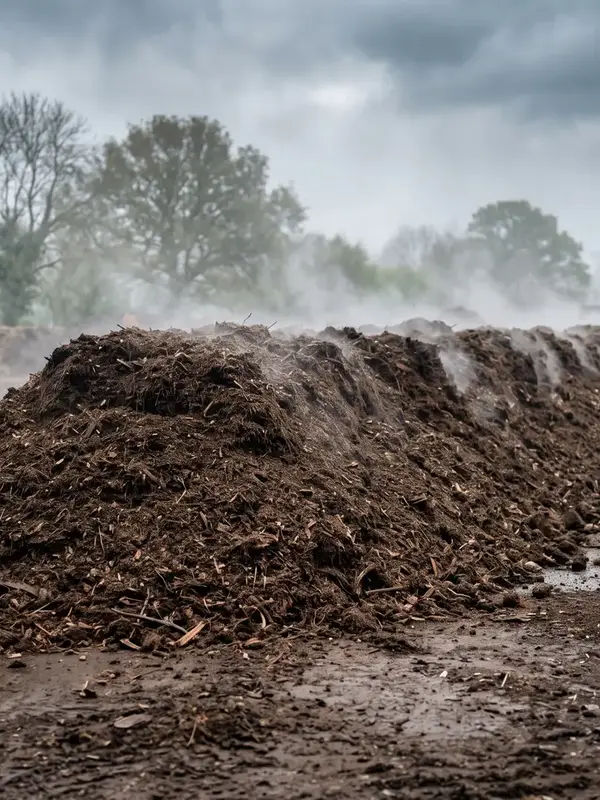
Bulk compost delivered in Rio Rancho, NM. Dark brown color.
Starting from $592.51 delivered to Rio Rancho for 2 yards, our minimum order
Compost delivery in Rio Rancho, NM is simple to order once you know the volume. Rio Rancho gardeners often begin with the question of how much to buy, so this page starts with the arithmetic and then covers uses, pricing and placement.
Rio Rancho has about 113,000 residents and sits on the west side of the Rio Grande. Albuquerque is about 15 miles away, and many people here work, shop and garden across that distance without giving it much thought. Newer subdivisions often have lots with thin topsoil, which makes a planting layer of compost more useful than it would be on an older, established yard.
Many lots in the area have sandy pockets, and some have a hard layer of caliche a few feet down. Compost helps sandy soil hold moisture and gives the bed more organic material to work with, but it does not break up a hard pan by itself, so dig through the layer when you plant.
Measuring Compost for a Rio Rancho Lot
Multiply the length of the area by its width, both in feet, then multiply by the depth in inches and divide the product by 324. For Rio Rancho gardens, the figure you need is the number of cubic yards to order. On newer lots a deeper layer may be the better choice, and it is worth adding a little extra for settling on a fresh bed that has not been watered in yet. For a long strip such as a driveway edge, the calculator on this site works through the volume for you.
How Compost Is Sold and Priced in Rio Rancho
Pricing works per cubic yard, and the delivered amount for your ZIP is calculated live, so the number you see reflects your address. Bigger loads drop to a lower rate for each cubic yard. In Rio Rancho, two cubic yards of compost is the least you can order.
What Compost Changes Over a Season
Compost does not transform a yard in one afternoon. The first season mostly shows up as easier digging and a bed that dries out a little more slowly. By the second and third seasons, the soil usually holds a richer crumb, roots reach further, and plants tend to look fuller on the same watering. Keep adding material on a regular basis instead of one heavy dose, and note how plants do in the same spots so you can compare them honestly.
Where Compost Fits on a Rio Rancho Property
- Garden beds: dig compost into the soil before planting, aiming for the top several inches.
- Lawns: a light topdressing in cooler months gives the turf organic matter without stressing it in summer heat.
- Containers: mix it with potting soil or topsoil for a planter that holds moisture longer. Herbs and potted citrus do well in that blend.
- Tree and shrub beds: keep the layer well away from the trunk so the bark stays dry. Native shrubs usually want less, so keep those applications light.
For projects that need a firm surface, #57 Crushed Stone makes the base under a shed or walkway, and the stone is sold by the ton. Asphalt Millings is another ton-priced option for a driveway or parking pad. Keep compost for the soil and let the stone carry the weight.
Ordering Compost in Rio Rancho
Enter your ZIP code at the start of the order and pick the number of cubic yards from your measurement. Choose a flat, open place the truck can reach without crossing soft lawn, and clear low branches or gate hardware along the route.
Compost does best when it goes down in mild weather. Spread it when the ground is not frozen or soaked, and water the layer lightly so it stays put. Material that dries out on a hot, windy afternoon is harder to work in than compost spread in the morning.
For the city service itself, read delivery in Rio Rancho. You can also browse Compost in New Mexico for the rest of the state.
About Compost
Orders for this compost are measured in cubic yards. Each one weighs roughly 1,000 pounds, and wet compost runs heavier, so plan for the weight when the load arrives.
Compost is organic matter that microbes have broken down into a dark, loose, earthy material. Mixed into the soil, it adds the organic content that many newer lots lack, and it helps the ground hold water and nutrients where roots can reach them.
Use it as a soil amendment, a surface dressing for lawns and shrub beds, or a component of planting mix for containers. It is not a load-bearing material, so stone and base products handle the structural work under paths and slabs.
What Compost costs in Rio Rancho
Local Rio Rancho yards quote compost by the ton; the delivered number includes fuel, the truck, and the haul. Send your ZIP and load size and we will send back a same-hour quote with the truck rate and the per-ton figure spelled out. A ton of this material spreads across about 216 sq ft when laid 3 inches deep, useful when you are sizing a patio base or a walkway run.
How crews use Compost in Rio Rancho
In and around Rio Rancho, compost shows up most often on two project types. The most common deployment is planting bed gravel, often in tight urban lots and infill builds in two to three inch lifts. At roughly 112,524 people, the Rio Rancho order mix leans toward 3 to 8 ton residential drops with the occasional 16 ton job for a contractor.
Delivery day in Rio Rancho
A typical Rio Rancho drop is dispatched from the closest yard with a two hour window and a heads-up call once the truck is loaded. Tandem trucks want a 12 ft lane in and out; tri-axles need 14 ft, and both want firm ground at the tipping spot so the load releases cleanly. Standard lead time on this lane is Mon-Sat, with same-day windows held open for orders that hit the desk before 11 AM and clear payment.
Related materials we deliver in Rio Rancho



Estimate how much you need
Work out your material
A planning figure, not a guarantee. Order roughly a tenth extra to cover settling and uneven ground.
Browse more
Available in nearby cities
Plan your project
Related guides
 GUIDEHow Much Does Gravel Cost? A Practical Pricing GuideHow much does gravel cost and why does it vary? See the real factors behind ton pricing, delivery, and order size before you buy.Read guide →GUIDEGravel Size Chart: Pea Gravel to Crushed StoneA gravel size chart showing pea gravel, crushed stone and river rock diameters side by side, so you can match the right size to your project.Read guide →
 GUIDEThe Different Types of Gravel and How to ChooseA plain-language guide to the main types of gravel, covering pea gravel, crushed stone, river rock and decomposed granite.Read guide →
 GUIDEWhat Are Screenings? A Guide to Crushed Stone FinesScreenings are fine crushed stone used for paver bases, joint fill and walkways. See what screenings are, common types, and mistakes to avoid.Read guide →
Frequently Asked Questions
How much compost does a 20 by 30 foot planting area need?
Use 20 times 30 times 3 inches of depth, then divide by 324. The result is about 5.6 cubic yards. Round the figure to the quantity you want to order, and if the area is split into several beds, run the arithmetic for each one and add the totals together.
Can I put compost over an existing lawn?
Yes, a thin layer over healthy turf is a common approach. Rake it in so the grass blades stay visible, and avoid smothering the crown of the grass with a thick pile. Work in small sections so you can judge how the turf responds before covering the whole yard.
Is compost the same thing as mulch?
No. Compost is decomposed organic matter that you mix into or spread over soil to improve it over time. Mulch is a surface covering that slows evaporation and suppresses weeds, and it is not meant to become part of the soil right away. Many yards use compost underneath a mulch layer.
How does compost help heavy clay?
Clay drains slowly and packs down, and organic matter loosens it so water moves and roots can spread. The change builds over several seasons rather than after one thick layer. Dig compost into the top soil where roots grow, then check how quickly the bed drains after a wet spell.
Is it safe to let kids or pets play near a freshly spread bed?
Finished compost is an ordinary garden material. Keep young children and pets off a freshly spread bed until the surface has been watered and the material looks settled and crumbly. Wash hands after handling compost, and keep a close eye on any animal that likes to dig.
Should I mix compost into sandy ground or leave it on top?
Mix it in. A layer left on the surface of sandy ground can blow or wash away, while material worked into the soil stays near the roots. Loosen the ground with a fork, spread the compost over it, turn it in, and water the bed through once so the fine particles settle between the sand grains.
What should I do if the compost arrives in clumps?
Clumps are normal in bulk material. Break them apart with a rake or a garden fork before mixing or spreading, and drop any stray sticks or stones into a separate pile. A few minutes of breaking up clumps gives you a smoother, more even layer to work with.
Do I need a soil test before adding compost?
A soil test is worth doing once, especially if you are starting a new bed or a vegetable plot. It shows the pH, the nutrient balance, and the organic matter level. Many county extension offices offer testing, and the results help you choose how much compost and any other amendments the bed really needs.