
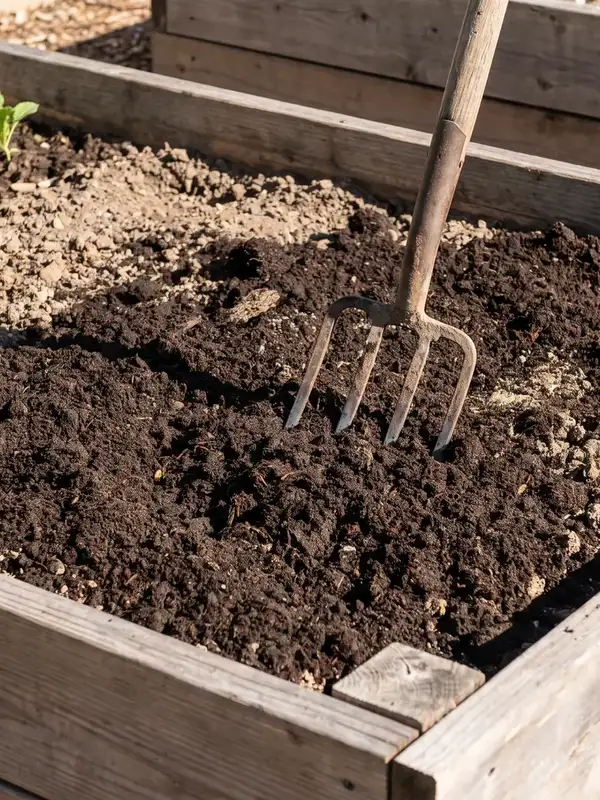
Bulk Compost Delivery in Akron, OH
Bulk compost delivered in Akron, OH. Dark brown color.
Starting from $531.92 delivered to Akron for 2 yards, our minimum order
Akron sits on heavy clay in many neighborhoods, and anyone who has tried to plant a shrub in it knows the shovel bounces back. If you want compost delivery in Akron, OH, you can order it here by the cubic yard and have it dropped at your address, with the delivered price calculated for your ZIP as you go.
A city of about 190,000 people has plenty of old lots with tired soil, and that is where compost earns its keep. Contractors finishing a new build, homeowners rebuilding a back yard, and landscapers rehabbing a client's beds all use it the same way: spread it, mix it in, and let the clay loosen up.
Where compost makes the biggest difference in Akron
Clay-heavy beds benefit most. A two to three inch layer tilled into the top six inches adds air pockets and gives roots a way down. Vegetable gardens, perennial borders, and the strip along a foundation all respond quickly.
Lawns are a second use. After a rough winter, or after a builder scraped the topsoil off a new lot, a thin top dressing of compost raked into seeded areas gives grass something to grab. For deeper regrading you will want a bulk base underneath, and Premium Screened Topsoil is the usual partner, with compost blended in on top.
Mixing it for raised beds
Many gardeners fill raised beds with roughly equal parts compost and topsoil. Pure compost can run hot and dry out fast, so the blend holds steadier through July.
Compost delivery in Akron, OH: getting a load to your address
Ordering starts with your ZIP. The page shows the delivered price for that address, so you see the real number before committing, and larger orders get a lower rate per cubic yard. You can read more about how drop-offs work on our page for delivery in Akron.
Canton is 21 miles from Akron, Parma is 24 miles, and Cleveland is 29 miles.
Working out how much you need
Compost is sold in cubic yards, and a yard covers a surprising amount of ground when spread thin. Multiply length by width in feet, then by the depth you want in inches, and divide by 324 to land on cubic yards. Our calculator does the same arithmetic if you would rather not.
Round up a little when your numbers land between sizes, since compost shrinks as it settles and the first rain packs it down. Most beds in this area need a lot less than people guess. A 10 by 20 foot bed at 3 inches deep comes to just under 2 cubic yards, so it lands right at the 2 cubic yard starting point.
- Top dressing a lawn: about half an inch to one inch.
- Amending an existing bed: two to three inches, then till.
- Filling a new raised bed: measure the box and fill it.
Planning the drop and the spreading
A delivery truck needs a firm, open spot with clear air overhead, so check for low branches and wires before you pick one. On Akron's older streets with narrow driveways, many people choose the curb-side edge of the lawn and lay a tarp first. That keeps the pile tidy and makes the last shovelfuls easy to collect.
Spring and early fall are the sweet spots for spreading. Soil is workable, rain is regular, and plants have time to use what you add. Wheelbarrow the pile out in stages instead of moving it all in one weekend.
Pairing compost with other materials
In Akron, compost seldom works alone on a project. A new patio edge may call for Pea Gravel as a walkway between beds, with compost going into the planting strips alongside it. Keep the two separate on the ground so the fines do not wash into the stone.
Ordering compost for Akron
Pick compost, enter your ZIP, and choose how many cubic yards you need. Akron's minimum is 2 cubic yards. Check the compost page for Ohio if you are comparing against another part of the state.
About Compost
Compost is decomposed organic matter, screened to a crumbly, dark brown texture that smells like forest floor rather than a barnyard. It is not a replacement for soil. It is an amendment that feeds soil life, loosens clay, and helps sandy ground hold moisture.
Finished compost is light for its bulk, so it is sold by the cubic yard rather than by weight. Expect a loose, damp pile that you can shovel and rake without a struggle. Fine particles mix in easily, and a few small woody bits are normal in a natural product. Use it as a top dressing, work it into planting beds, or blend it with topsoil to make a richer growing mix for raised beds and new lawns.
What Compost costs in Akron
In the Akron market, compost is sold by the ton and priced at the gate before delivery is added on. Send your ZIP and load size and we will send back a same-hour quote with the truck rate and the per-ton figure spelled out. One ton covers about 216 sq ft at a 3 inch finished depth, so a 400 sq ft driveway pad runs roughly 2 tons.
How crews use Compost in Akron
Crews working out of Akron tend to call for compost on a few repeat jobs each week. The first is planting bed gravel, typically laid in tight urban lots and infill builds with a base lift compacted before the finish course goes on. With a population around 188,701, Akron pulls a mix of single-truck homeowner orders and contractor full-loads through the season.
Delivery day in Akron
On the day of the drop, the dispatcher pulls the closest yard, batches your ticket with other Akron stops, and sends a window the night before. Tandem-axle dumps need at least 12 ft of clear width and 14 ft overhead to set the bed; tri-axles need 14 ft of clearance on both counts and a level pad to tip safely. Standard lead time on this lane is Mon-Sat, with same-day windows held open for orders that hit the desk before 11 AM and clear payment.
Related materials we deliver in Akron



Estimate how much you need
Work out your material
A planning figure, not a guarantee. Order roughly a tenth extra to cover settling and uneven ground.
Browse more
Available in nearby cities
Plan your project
Related guides
 GUIDEWhat Is Crushed Stone? Sizes, Uses and Buying BasicsCrushed stone is quarried rock crushed and screened into angular pieces sold by the ton. Here is what it is, how it is graded, and where to use it.Read guide →
 GUIDEHow Much Does Gravel Cost? A Practical Pricing GuideHow much does gravel cost and why does it vary? See the real factors behind ton pricing, delivery, and order size before you buy.Read guide →GUIDEGravel Size Chart: Pea Gravel to Crushed StoneA gravel size chart showing pea gravel, crushed stone and river rock diameters side by side, so you can match the right size to your project.Read guide →
 GUIDEThe Different Types of Gravel and How to ChooseA plain-language guide to the main types of gravel, covering pea gravel, crushed stone, river rock and decomposed granite.Read guide →
Frequently Asked Questions
Is compost the same thing as topsoil?
No. Topsoil for volume and structure, compost worked in to supply nutrients and loosen clay. Using compost alone in a deep fill tends to settle too much and dry out quickly.
Can I plant straight into compost?
You can in a shallow container or small bed, but fresh compost is rich and holds heat, so seedlings sometimes struggle in it. Sow a little deeper than usual and water gently so the seed does not wash out. Established perennials and shrubs do well with compost worked into the planting hole backfill at roughly one part in three.
How long does compost take to help heavy clay?
You will see better workability within one season, but real structural change builds over two or three years. Repeat a light application each spring. Avoid digging when the clay is wet, since compacting it undoes much of what the compost is doing underground.
Does compost have a smell?
Finished compost in Akron smells earthy and mild. A sharp ammonia or sour odor suggests it is not fully cured. Fresh deliveries should be dark, crumbly, and damp, without slimy clumps. If a load looks or smells off, note it when it arrives and contact us before spreading it.
What happens to the pile if it rains before I move it?
A tarp helps, but wet compost is still usable. It simply gets heavier to shovel and can clump. Spread it into beds once it is workable. Piles left uncovered for weeks will lose some nutrients to runoff, so plan to move it soon after it lands.
Is compost safe around vegetables and kids?
Properly cured compost is widely used in home vegetable gardens. Wash produce as usual, and wear gloves if you have cuts or sensitivities. Keep small children and pets from eating it. For vegetable beds, mixing it into soil rather than leaving it on the surface also limits dust.
Can I order less than 2 cubic yards for a small flower bed?
The smallest order is 2 cubic yards, so very small jobs can feel oversized. Neighbors often split one order, or you can use the extra to refresh existing beds, feed the lawn, or fill containers. Compost stores well in a covered corner of the yard for a few weeks.
How is compost different from mulch?
Mulch sits on top of the soil to block weeds and slow evaporation, and it breaks down slowly. Compost is finer, fully broken down, and meant to be mixed in or spread thin as feed. Many gardeners use both: compost first for nutrients, then a layer of mulch over it to protect the surface.