
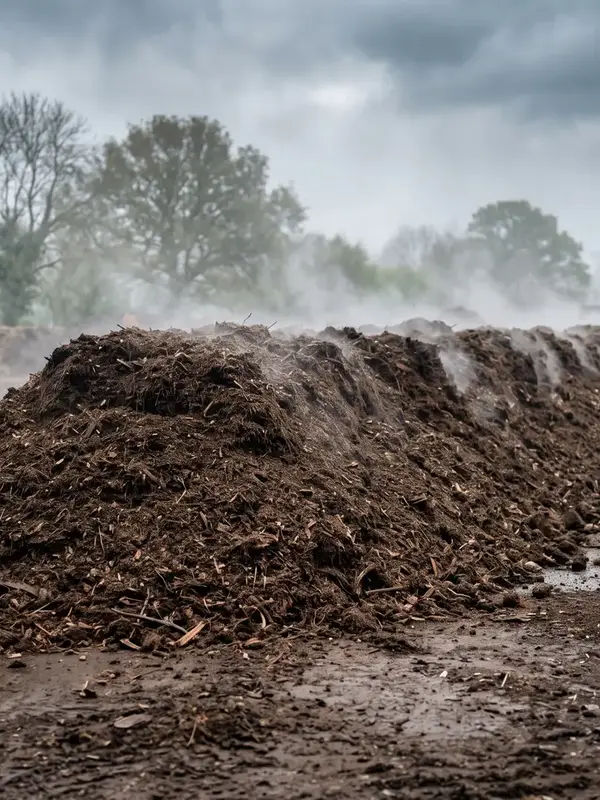
Compost Delivery in Beaverton, OR by the Cubic Yard
Bulk compost delivered in Beaverton, OR. Dark brown color.
Starting from $523.61 delivered to Beaverton for 2 yards, our minimum order
Compost delivery in Beaverton, OR: the local picture
Beaverton is a city of about 100,000 people just west of Portland in the Portland-Vancouver-Hillsboro metro, and many of its yards have garden beds, planting strips or thin lawns that could use more organic matter. Compost is a straightforward way to add it. MyGravelBuddy delivers compost across Beaverton, OR, and the delivered price is calculated for your ZIP and shown on this page before you choose a quantity.
Tigard is about 4 miles from Beaverton, Portland about 7 miles and Hillsboro about 8 miles. Gresham is about 20 miles out, and Vancouver, WA is about 20 miles away across the river.
What the price covers for Beaverton compost
The figure you see is a delivered price, so the trip is already built into it. The engine works it out for your ZIP. Larger orders receive a lower rate per cubic yard, which means a bigger project usually costs less per yard than several small top-ups would.
Beaverton compost orders start at 2 cubic yards. If a total looks higher than you expected, check the quantity first and step it up or down on the product page to see how the delivered figure responds.
Getting the load onto your Beaverton property
Our delivery in Beaverton page covers the city details. The part you control is the drop spot. A firm, level patch near the bed works best, with a clear path for a large truck and no low branches or closed gates in the way. If the driver cannot get close, the pile may end up farther from the work than you planned.
How much compost to order for a Beaverton project
Work in feet for the length and width, multiply them, then multiply again by the depth in inches. Divide that number by 324 to get cubic yards, the unit compost is sold in here. Freshly watered compost sinks as it is walked on, so add a few tenths of a yard to the total for beds you plan to plant soon.
If you would rather skip the arithmetic, the calculator on this site takes the same length, width and depth and gives you the volume. As a worked case, a bed 12 feet by 8 feet filled to 3 inches comes to just under a cubic yard, so a project that small falls below the 2 cubic yard minimum and a few beds usually need combining to reach it.
Best uses for compost in Beaverton gardens
Most projects here fall into one of three groups, and each spreads the material differently.
- New planting beds: blend it into the top several inches of soil before you plant, so the roots meet improved ground from the first day.
- Established beds and borders: spread a layer over the surface and keep it pulled back from tree and shrub trunks.
- Lawn renovation: a thin coat over the grass.
On a slope, spread the compost evenly instead of leaving it in one heap, or runoff will carry it downhill. If you are also topping beds with mulch, our Mulch is sold by the cubic yard, while Premium Screened Topsoil is sold by the ton, so the two orders are measured differently.
Vegetable gardens often respond well to a fresh layer each season, since crops draw nutrients from the soil as they grow. Flower borders and shrub beds can go longer between applications. Beaverton lots vary in size, so a front strip and a large back garden may call for very different amounts of the same material.
Ordering compost in Beaverton
Enter your Beaverton ZIP, choose the number of cubic yards, and review the delivered total on the product page. For compost options in other parts of the state, the Compost in Oregon hub is the place to start. Before the material arrives, sketch which beds get which share of the order, so unloading goes quickly and nothing ends up in the wrong place. Compost is easiest to handle within a day or two of arrival, while it is still loose, so have your shovels and barrow ready beforehand.
About Compost
Compost is finished organic matter that has broken down into a dark, crumbly material. It is made from plant and food material that has decomposed under controlled conditions, and it is sold by the cubic yard. A cubic yard weighs roughly 1,000 pounds, though the figure moves with moisture, so a wet load feels heavier than a dry one.
Gardeners use compost to build the structure of soil, improve how it holds water and air, and supply a slow, steady stock of nutrients. Those benefits add up over seasons rather than arriving in a single application, which is one reason compost is usually worked into the soil or spread as a thin layer instead of piled on thick.
Good compost looks dark and loose, smells earthy, and breaks apart easily in the hand. Material that is stringy, sour or full of recognizable food scraps has not finished breaking down. Ask about the source before you spread a large amount on a vegetable bed.
The material suits new planting beds, established shrub and perennial areas, lawn top dressing and general soil building before seeding. Because it is a soil amendment, not a surface cover, it does its job best when it reaches the root zone. The delivered price for your ZIP appears on the product page once you choose a quantity.
What Compost costs in Beaverton
Around Beaverton, compost is quoted by the ton with delivery layered in based on distance from the closest yard. Send your ZIP and load size and we will send back a same-hour quote with the truck rate and the per-ton figure spelled out. Plan on roughly 216 sq ft of coverage per ton at 3 inches deep, which puts a single-car driveway in the 3 to 5 ton bracket.
How crews use Compost in Beaverton
Beaverton contractors keep compost on the order sheet for a short list of standard installs. Top of the list is planting bed gravel, where the material is rolled out in tight urban lots and infill builds and screeded to grade. Beaverton sits at about 98,302 residents, which means we see steady weekday traffic from landscape crews and weekend pickups from owner-builders.
Delivery day in Beaverton
Delivery in Beaverton runs out of the nearest pit; you get a two hour arrival window the evening prior and a call when the driver leaves the scale. Plan for 12 ft of clear path for a tandem and 14 ft for a tri-axle, plus a level area at the dump point so the bed lifts straight. Standard lead time on this lane is Mon-Sat, with same-day windows held open for orders that hit the desk before 11 AM and clear payment.
Related materials we deliver in Beaverton


Estimate how much you need
Work out your material
A planning figure, not a guarantee. Order roughly a tenth extra to cover settling and uneven ground.
Browse more
Available in nearby cities
Plan your project
Related guides
 GUIDEDoes Gravel Stop Weeds? Honest Answer + What WorksPractical, field-tested guide: does gravel stop weeds. Pulled from real US installer notes and 2026 supplier price data.Read guide →
 GUIDEHow Much Gravel Do I Need? Quick Sizing GuidePractical, field-tested guide: how much gravel do i need. Pulled from real US installer notes and 2026 supplier price data.Read guide →
 GUIDEWhat Is #57 Stone? Uses, Size, and Cost ExplainedPractical, field-tested guide: what is 57 stone. Pulled from real US installer notes and 2026 supplier price data.Read guide →
 GUIDEHow Deep Should a Gravel Driveway Be? Layer GuidePractical, field-tested guide: how deep should gravel driveway be. Pulled from real US installer notes and 2026 supplier price data.Read guide →
Frequently Asked Questions
Is compost the same thing as mulch for a Beaverton yard?
No. Compost is decomposed organic matter that feeds the soil and improves its structure, so it gets mixed in or worked into the top layer. Mulch is a surface cover that holds moisture, slows weeds and keeps bare soil from crusting. Many gardeners use both, putting compost down first and a mulch layer on top once the bed is planted.
How deep should I work compost into a Beaverton vegetable bed?
Mixing it into the top four to six inches puts it where most vegetable roots feed. Spread the compost over the bed first, then turn it in with a fork or tiller so it blends with the soil instead of forming a separate band. Digging much deeper rarely adds benefit, and a blended layer settles more evenly than a pocket of pure compost.
Can I mix compost with Premium Screened Topsoil for a new bed?
Yes, and it is a common way to build a bed on thin ground. Topsoil is ordered in tons and compost in cubic yards.
Can I order compost for a few containers or one small raised bed?
You can, but delivery is sized for larger projects. For a few pots or a single small raised bed, a bagged product from a local garden center is usually the more practical choice. Measure the bed first, then compare the cubic yard figure with what the job really needs before deciding between a bag run and a delivery.
How do I get compost from the drop spot to a back bed?
Plan the route before the load arrives. A wheelbarrow works well on a firm path, and a tarp laid beside the bed gives you a place to stage each load so grass stays clean. Work in trips of a manageable size, and for a long haul around a house, recruit a second person to keep one barrow filling while the other is spreading.
Can compost help a patchy lawn?
Yes, as a light top dressing combined with grass seed. Rake a thin coat over bare patches, scatter seed, and water lightly until the new grass comes up. A heavy layer will smother seedlings, so keep the coat thin enough that new blades can push through. A second, lighter pass once the first growth is established is easier to manage than one thick application.
How often does an established flower border need compost?
Most borders do well with a fresh layer every year or two, applied in a thin coat over the soil between plants. Look at the soil itself: if it still crumbles easily and plants are growing steadily, you can skip a year. Keep the layer back from stems and crowns so they stay dry, and pull it away from any plant that sits low in the soil.
Can compost level out low spots in a lawn?
In small dips, yes. Spread a thin layer of compost and work it down between the grass blades, then repeat after the grass has grown through rather than burying it all at once. Deep hollows need more than top dressing, since a thick layer will smother the turf. Fill those with soil first, then finish with a light pass of compost.