
McAllen, TX Compost Delivery by the Cubic Yard
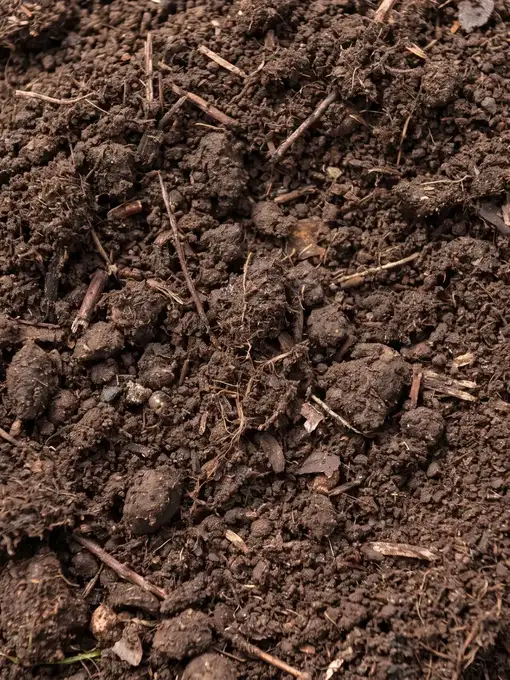
Bulk compost delivered in McAllen, TX. Dark brown color.
Starting from $614.73 delivered to McAllen for 2 yards, our minimum order
Growing in the Rio Grande Valley is a year-round job, and the soil takes a beating from heat, irrigation and salty water. Compost delivery in McAllen, TX gives local gardeners and landscapers a way to rebuild that soil without hauling heavy loads themselves. MyGravelBuddy sells compost by the cubic yard and brings it to your address.
Why the Valley's soil asks for compost
McAllen has a long, hot growing season and plenty of sun. Lawns, citrus, palms and vegetable beds all pull hard on the ground, and irrigation water can leave minerals behind. Organic matter softens that effect by holding moisture near roots and feeding the soil life that keeps nutrients available. In the part of the Valley around a city of about 140,000 people, many yards are builder-graded and thin on organic content, so a fresh layer makes a visible difference.
Where compost earns its keep
- Citrus and fruit trees: a ring of compost under the canopy, kept off the trunk.
- Vegetable gardens: a fall and winter planting does well in beds enriched before the cool season.
- New sod or seed: blend it into the top layer before laying turf.
- Flower and shrub borders: mix into fresh planting holes.
For raised beds, pair compost with Premium Screened Topsoil so the mix keeps its volume. Paths and edging between beds are a good place for Pea Gravel, which is ordered by the ton.
Compost delivery to your McAllen, TX property
The city page for delivery in McAllen covers how drop-offs are handled. Gardeners elsewhere in the state can browse Compost in Texas for other cities.
Choose a dumping spot on hard, level ground close to where you will spread it, since a wheelbarrow route of 20 feet beats one of 80. In the Valley's heavy summer downpours, a loose pile can wash toward the street, so keep it clear of storm drains and lay a few boards or a tarp edge on the downhill side.
Sizing your compost order
Work out the bed area in square feet, multiply by the depth you want in inches and divide the result by 324. That gives cubic yards. For example, four beds of 4 by 12 feet each at 3 inches deep add up to about 1.8 cubic yards. Our calculator handles the same arithmetic for other shapes if you swap in your own depth.
Typical depths are 1 to 2 inches over established turf, 3 inches worked into vegetable beds and 4 inches for tired ground. Orders below the minimum are not possible, so smaller yards often team up with a neighbor on a shared load.
Applying it in a hot climate
Work compost in during the cooler months when you can, and water it deeply afterward. In summer heat, shade and mulch matter more: a 2 inch layer of shredded bark over the compost slows evaporation. Avoid spreading in the middle of a hot afternoon, since the material dries and crusts at the surface.
Mixing compost with the right companions
Compost rarely goes in alone. Landscapers in the Valley usually blend it with screened soil at roughly one part compost to three parts soil for new beds, then top the area with mulch. If you are redoing a whole backyard, order the soil and compost for the planted areas in the same session, then handle any stone for walkways separately, since each material is priced and delivered on its own page.
Keep an eye on drainage too. Beds that sit lower than the surrounding lawn collect water in heavy rain, and compost alone will not fix that. Raise the grade a few inches with soil first, then add compost to the top layer.
What it costs
Compost is sold by the cubic yard with a 2 cubic yard minimum order. The delivered rate for your ZIP is calculated live, and ordering more lowers the rate per cubic yard.
Ready to order
Add your quantity to the cart from the product page and check out. If you are filling a bed for the fall garden season, time your bed prep so the ground is ready for planting.
About Compost
Compost is finished organic matter, dark brown and crumbly, that has been broken down until it no longer heats up or smells sharp. This one is sold by the cubic yard. A yard weighs about 1,000 lb, which is why a pickup bed or trailer cannot carry much of it at once and why delivery saves so much effort.
In a garden it does three jobs. It adds slow-release nutrients, it helps sandy ground hold water and it opens heavy ground so roots can spread. Use it mixed into the soil for new beds, or spread it on the surface around established plants as a feeding layer. It is not a stand-alone planting soil for containers and raised beds, so blend it with mineral soil there.
Your ZIP sets the delivered price, which appears live on the product page. Larger orders bring the rate per cubic yard down, and nothing under 2 cubic yards can be ordered.
What Compost costs in McAllen
Around McAllen, compost is quoted by the ton with delivery layered in based on distance from the closest yard. Send your ZIP and load size and we will send back a same-hour quote with the truck rate and the per-ton figure spelled out. Plan on roughly 216 sq ft of coverage per ton at 3 inches deep, which puts a single-car driveway in the 3 to 5 ton bracket.
How crews use Compost in McAllen
McAllen contractors keep compost on the order sheet for a short list of standard installs. Top of the list is planting bed gravel, where the material is rolled out in tight urban lots and infill builds and screeded to grade. McAllen sits at about 142,210 residents, which means we see steady weekday traffic from landscape crews and weekend pickups from owner-builders.
Delivery day in McAllen
Delivery in McAllen runs out of the nearest pit; you get a two hour arrival window the evening prior and a call when the driver leaves the scale. Plan for 12 ft of clear path for a tandem and 14 ft for a tri-axle, plus a level area at the dump point so the bed lifts straight. Standard lead time on this lane is Mon-Sat, with same-day windows held open for orders that hit the desk before 11 AM and clear payment.
Related materials we deliver in McAllen



Estimate how much you need
Work out your material
A planning figure, not a guarantee. Order roughly a tenth extra to cover settling and uneven ground.
Browse more
Available in nearby cities
Plan your project
Related guides
 GUIDEWhat to Put Under River Rock for Landscaping BedsHere is what to put under river rock landscaping: a compacted base where needed, then landscape fabric, then rock, to stop weeds and settling.Read guide →GUIDEHow to Clean River Rock and Restore Its ColorLearn how to clean river rock landscaping with rinsing, soap and vinegar methods, plus common mistakes to avoid for a brighter, longer lasting rock bed.Read guide →
 GUIDEHow to Lay a Gravel Driveway: Step-by-Step GuidePractical, field-tested guide: how to lay gravel driveway. Pulled from real US installer notes and 2026 supplier price data.Read guide →
 GUIDEDoes Gravel Stop Weeds? Honest Answer + What WorksPractical, field-tested guide: does gravel stop weeds. Pulled from real US installer notes and 2026 supplier price data.Read guide →
Frequently Asked Questions
Will compost help with salty irrigation water?
It can ease the effects. Organic matter improves drainage and gives salts somewhere to move other than the root zone, especially when you water deeply. It does not remove salt entirely, so give beds a long soak now and then, and choose plants that tolerate the Valley's water.
Is compost good for a St. Augustine lawn?
Yes, as a light top dressing. Rake a thin layer, about a quarter to a half inch, over the turf in warm weather and water it in. This feeds the soil without smothering the grass, and it works better than adding a thick layer in one go.
Can I use compost as mulch?
Not really. Compost feeds soil, while mulch protects the surface. Compost breaks down fast and does little against weeds, so it makes a poor substitute. Think of the two as different tools that work together, one for nutrition and one for shielding the ground.
How deep should I work compost into a bed?
Mix it into the top 6 inches, which covers the feeder roots of most vegetables and flowers. Deeper tilling brings little extra benefit. For trees, skip digging entirely and spread it on the surface so you do not cut shallow roots.
Is compost safe to use around vegetables?
Finished compost is safe for edible beds. It should look dark and crumbly with no sharp smell. Wash produce as usual. If you notice a sour or ammonia scent, the material is not fully cured, so let it sit on the surface a few weeks before planting.
Can compost replace fertilizer?
For many home gardens it covers most of the basic feeding, but heavy feeders such as tomatoes and corn may still want extra nitrogen mid-season. Compost works slowly, so think of it as building the soil rather than giving plants a quick jolt.
Do I need to remove old mulch first?
Not usually. Pull back thick mulch, spread the compost on the soil, then put the mulch back on top. If the old mulch has packed into a mat, rake it loose or replace it so water can reach the ground.
Can I use compost in pots and containers?
Mix it with potting soil rather than filling a container with compost alone, since pure compost packs down and stays wet. Container plants dry out fast in Valley heat, so a blend that holds some moisture helps them between waterings.