
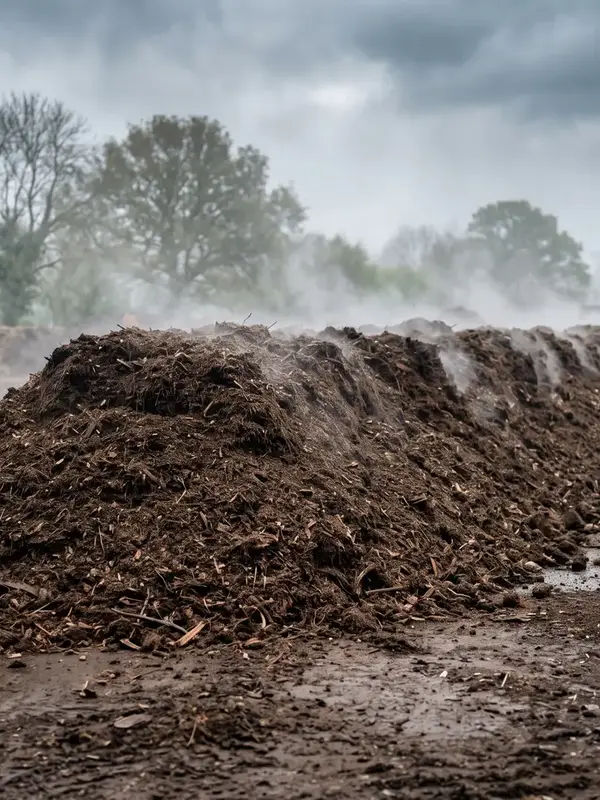
Compost Delivery in Tacoma, WA, Sold by the Yard
Bulk compost delivered in Tacoma, WA. Dark brown color.
Starting from $524.11 delivered to Tacoma for 2 yards, our minimum order
Tacoma's mix of hillside homes, older bungalows and wet Puget Sound winters makes compost one of the most useful loads you can have dropped at the curb. For compost delivery in Tacoma, WA, we sell by the cubic yard and show the delivered price for your ZIP on the product page. Other cities are listed under Compost in Washington.
Compost delivery in Tacoma, WA: how ordering works
Start with the page's ZIP box and quantity field. The delivered price appears before you commit, and the smallest order is 2 cubic yards. Larger orders get a lower rate per cubic yard, so a neighbor split, with two households sharing one bigger load, can be a sensible approach on a street of similar lots.
What Tacoma ground needs
Much of Tacoma sits on glacial till and gravelly outwash left behind by the last ice age. Till packs hard, drains poorly in spots and grows weeds before it grows tomatoes. Compost breaks that tight structure apart and gives it a living layer. In the rainy months, the same material helps soil absorb water instead of shedding it down the slope.
Common projects around Tacoma
- Raised vegetable beds in sunny backyards, where compost forms the fertile core of the fill.
- Replanting after a remodel, when construction traffic has left the soil compacted.
- Tree and shrub rings under maples and camellias, which respond well to a seasonal top-up.
- Lawn patching in shady spots where moss has taken over thin turf.
For raising grade or filling a low patch before you amend it, Premium Screened Topsoil is sold by the ton and blends well with compost. After planting, cover the bed with Mulch, sold by the cubic yard, to keep weeds down through the damp season.
Slope, drainage and the drop spot
Tacoma is full of grades, and compost does not like running downhill. Choose a flat drop spot, or put a board or tarp at the downhill edge so a hard rain cannot wash the pile into the street. Wet weather also softens lawns, so a driveway or hard pad beats grass for the delivery itself. Read about delivery in Tacoma for local notes before you place the order.
Seattle is about 28 miles north and Redmond about 36, so if you are working on several properties around the Sound, each address needs its own ZIP entered on the page.
How many cubic yards to order
Work out the area in square feet, multiply by the depth in inches you want, then divide by 324. As a sample, a 10 by 15 foot bed topped with 3 inches comes to just under 1.4 yards, so it would fall under the smallest order. Use the calculator to run your own numbers.
Rain compresses a fresh layer within weeks, so measure for the finished depth you want in spring, not the loose depth on delivery day.
Older lots and tight spaces
Many Tacoma neighborhoods have homes from the early 1900s, with narrow side yards, porches close to the lot line and foundation beds that have been planted for decades. Compost refreshes those beds without a big dig. Spread it by the bucket along the foundation, and pull it a few inches back from the siding. For the walkway beside the bed, pea gravel is sold by the ton, a different unit from compost, so its quantity is counted in tons.
Working in stages
Tacoma lots seldom have much spare space for staging a pile. Fill the beds nearest the drop spot first, then work outward. A tarp under the shovel loads keeps the lawn clean. Finishing one bed at a time also lets you judge how deep the layer needs to be before you commit to the rest.
A note on timing
Gardeners in Tacoma often spread compost in late winter before the spring planting rush, or in October so the rain can soak it in. Both windows suit the climate here, and the work goes faster when the soil is damp but not saturated.
About Compost
Compost is decomposed organic matter, made from plant material that has broken down into a dark brown, crumbly amendment. It adds nutrients and structure to soil and is not a replacement for soil in a deep fill.
The product is screened for an even texture and has a mild, earthy smell. It is heavy enough to stay put on level ground, yet far lighter than stone: about 1,000 pounds per cubic yard, which is why it is sold by volume.
Spread it 1 to 3 inches deep over beds and work it into the upper layer of soil. For lawns, use a thin dressing only. Keep it a few inches clear of trunks, stems and house siding to avoid trapped moisture. Because it is organic, it continues to break down and settle, so plan on periodic top-ups.
Compost suits flower beds, vegetable gardens, trees, shrubs and container mixes. It does not belong under pavers, on driveways or anywhere that needs a firm, stable surface.
What Compost costs in Tacoma
Around Tacoma, compost is quoted by the ton with delivery layered in based on distance from the closest yard. Send your ZIP and load size and we will send back a same-hour quote with the truck rate and the per-ton figure spelled out. Plan on roughly 216 sq ft of coverage per ton at 3 inches deep, which puts a single-car driveway in the 3 to 5 ton bracket.
How crews use Compost in Tacoma
Tacoma contractors keep compost on the order sheet for a short list of standard installs. Top of the list is planting bed gravel, where the material is rolled out in tight urban lots and infill builds and screeded to grade. Tacoma sits at about 220,000 residents, which means we see steady weekday traffic from landscape crews and weekend pickups from owner-builders.
Delivery day in Tacoma
Delivery in Tacoma runs out of the nearest pit; you get a two hour arrival window the evening prior and a call when the driver leaves the scale. Plan for 12 ft of clear path for a tandem and 14 ft for a tri-axle, plus a level area at the dump point so the bed lifts straight. Standard lead time on this lane is Mon-Sat, with same-day windows held open for orders that hit the desk before 11 AM and clear payment.
Related materials we deliver in Tacoma



Estimate how much you need
Work out your material
A planning figure, not a guarantee. Order roughly a tenth extra to cover settling and uneven ground.
Browse more
Available in nearby cities
Plan your project
Related guides
 GUIDEWhat to Put Under River Rock for Landscaping BedsHere is what to put under river rock landscaping: a compacted base where needed, then landscape fabric, then rock, to stop weeds and settling.Read guide →GUIDEHow to Clean River Rock and Restore Its ColorLearn how to clean river rock landscaping with rinsing, soap and vinegar methods, plus common mistakes to avoid for a brighter, longer lasting rock bed.Read guide →
 GUIDEHow to Lay a Gravel Driveway: Step-by-Step GuidePractical, field-tested guide: how to lay gravel driveway. Pulled from real US installer notes and 2026 supplier price data.Read guide →
 GUIDEDoes Gravel Stop Weeds? Honest Answer + What WorksPractical, field-tested guide: does gravel stop weeds. Pulled from real US installer notes and 2026 supplier price data.Read guide →
Frequently Asked Questions
Why is my Tacoma soil so hard to dig?
Much of the area has dense, compacted till that holds water in winter and bakes hard in summer. Adding compost year after year loosens it by building crumb structure. Dig a few inches in with a fork rather than rototilling, which can smear wet clay and make it worse.
Can compost fix a mossy lawn?
Compost alone will not remove moss, which usually signals shade, acidity or poor drainage. A thin topdressing after raking out the moss improves the soil and helps new grass compete. Pair it with overseeding and extra light, and you will see lasting results.
Is a cubic yard of compost much bigger than I expect?
Usually, yes. A cubic yard covers about 100 square feet at 3 inches deep, which is a lot of spreading by hand. Order only what you will spread within a few days, and have a wheelbarrow, shovel and rake ready before the truck arrives.
Should I rake or dig compost in?
It depends on the job. In new beds, dig it into the top 4 to 6 inches. In established beds, spread it on the surface and let worms and rain carry it down. Disturbing roots of shrubs and perennials does more harm than good.
Can I use compost in containers and planters?
Yes, but blend it. Mix about one third compost with potting soil or screened topsoil so the container drains well. Straight compost holds too much water in a pot, and it settles over a season, so refresh the top few inches each spring.
What if rain is in the forecast on delivery day?
Compost handles rain well, so a wet delivery day is not a problem. Choose a spot where the pile will not block a gutter or storm drain, and plan to spread it once the lawn firms up, since walking on soggy ground compacts it. Spreading on the first dry afternoon keeps your boots and the lawn in better shape.
Can compost be spread under trees?
Yes, and trees like it. Lay 2 to 3 inches out to the drip line, pulling it back several inches from the trunk. Mature trees have shallow feeder roots, and rain carries the nutrients down to them over the season. Top up the layer every year or two as it thins out.
How soon can I plant after spreading compost?
Right away in beds where the compost was mixed into the soil. If you laid it as a surface layer instead, set transplants through it into the ground below, and rake it fine before sowing seed. Water everything in well after planting so the compost and soil settle against each other.