
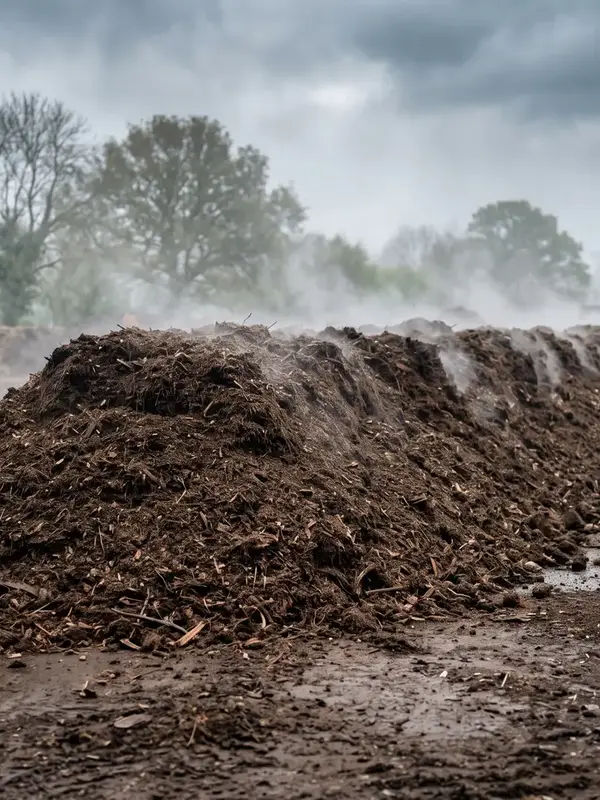
Bulk Dark Compost Delivery in Racine, WI
Bulk compost delivered in Racine, WI. Dark brown color.
Starting from $610.45 delivered to Racine for 2 yards, our minimum order
Compost delivery in Racine, WI puts a bulk load of dark brown compost at your property, measured in cubic yards, so you can cover a lawn, fill a new bed, or build up a vegetable plot in one visit. Racine is a lakeshore city of about 78,000 residents in southeastern Wisconsin. Kenosha is about 10 miles south, and Milwaukee and West Allis are each about 22 miles away.
When to spread compost in Racine
Late spring and early fall are the most comfortable seasons for topdressing, since the lawn is actively growing and the material can work into the soil before the weather turns. Skip days when the soil is frozen solid or sodden. Wet ground turns to mud under a loaded wheelbarrow, and the surface stays lumpy for the rest of the season.
Measuring the right amount for a Racine yard
Multiply the length of the area in feet by its width in feet, then multiply by the depth in inches and divide by 324. The result is cubic yards. A 2-inch layer across 500 square feet, for example, comes to about 3.1 cubic yards. Add roughly a tenth on top of that, because the material packs down somewhat once it is raked out and watered. The calculator runs the same numbers if you would rather type in the measurements.
Common compost projects in Racine
Typical jobs for a delivered load include:
- Topdressing an older lawn that has thinned out
- Building soil for a vegetable plot before planting
- Filling a new shrub or perennial bed
- Feeding the soil around established trees and hedges
Once the plants are in, Mulch laid around the new plants helps the soil stay damp between waterings.
Hydrangeas, hostas, daylilies, and most leafy vegetables are good candidates for a compost top dressing, since they like steady moisture and a supply of organic matter that breaks down over time. Woody plants with deep roots take longer to respond, so give them a wider ring of material rather than a thick pile at the base.
Drop spot, access, and sloped yards in Racine
Choose a drop spot on pavement, such as a driveway apron or a patio edge, close to the area you are working. A load left on grass smothers the lawn underneath and is slow to come back. Make sure the route from the street is clear of parked cars and that any gate is open before the load comes in.
A sloped front yard needs more care. Rain runs downhill and takes loose material with it, so keep the layer shallow on a slope and water it in gently. For a low corner that stays wet, Premium Screened Topsoil is the better fill, and it is sold by the ton in Racine.
Working compost into an existing bed in Racine
To fork compost into a cleared bed, mark it off in strips, empty one wheelbarrow load onto each strip, and turn it into the top half foot of soil with a spade. Finish with a rake to smooth the surface. Around perennials already in place, skip the turning and lay compost between them, leaving each crown uncovered.
Compost delivery in Racine, WI and how pricing works
Compost is sold by the cubic yard in Racine, and the delivered price for your ZIP is calculated live and shown on the page before you check out. Larger orders get a lower rate per cubic yard, so one bigger load usually works out better per yard than several small orders. The Racine compost minimum is 2 cubic yards. The delivery in Racine page has more on the service for this city.
Other options across Wisconsin
If you are comparing bulk materials, the statewide overview at Compost in Wisconsin is the place to start. Order only the volume your measurements call for.
About Compost
Compost is decomposed organic matter. This product arrives dark brown with a crumbly, earthy texture, and it is handled in cubic yards. Each cubic yard weighs roughly 1,000 pounds, which is half a ton, so a load is heavier than it looks when you are moving it by wheelbarrow.
The main value of compost is what it does for the soil around it. Organic matter helps sandy ground hold moisture and nutrients longer, and it gives heavy ground a looser structure that roots can push through. The changes build season by season rather than all at once.
Compost is a soil material, not a finished surface, so it usually goes down in a thin layer and gets mixed into the top of the bed. It suits lawns, shrub borders, perennial beds, and vegetable plots, and many homeowners use it as the first step before they plant or sod a new area.
What Compost costs in Racine
Around Racine, compost is quoted by the ton with delivery layered in based on distance from the closest yard. Send your ZIP and load size and we will send back a same-hour quote with the truck rate and the per-ton figure spelled out. Plan on roughly 216 sq ft of coverage per ton at 3 inches deep, which puts a single-car driveway in the 3 to 5 ton bracket.
How crews use Compost in Racine
Racine contractors keep compost on the order sheet for a short list of standard installs. Top of the list is planting bed gravel, where the material is rolled out in tight urban lots and infill builds and screeded to grade. Racine sits at about 78,057 residents, which means we see steady weekday traffic from landscape crews and weekend pickups from owner-builders.
Delivery day in Racine
Delivery in Racine runs out of the nearest pit; you get a two hour arrival window the evening prior and a call when the driver leaves the scale. Plan for 12 ft of clear path for a tandem and 14 ft for a tri-axle, plus a level area at the dump point so the bed lifts straight. Standard lead time on this lane is Mon-Sat, with same-day windows held open for orders that hit the desk before 11 AM and clear payment.
Related materials we deliver in Racine



Estimate how much you need
Work out your material
A planning figure, not a guarantee. Order roughly a tenth extra to cover settling and uneven ground.
Browse more
Available in nearby cities
Plan your project
Related guides
 GUIDEWhat Size Crushed Stone Goes Under a Concrete SlabMost slabs need 4 to 6 inches of compacted crushed stone underneath. What size crushed stone under a concrete slab needs, and why it matters.Read guide →
 GUIDEWhat Is Crushed Stone? Sizes, Uses and Buying BasicsCrushed stone is quarried rock crushed and screened into angular pieces sold by the ton. Here is what it is, how it is graded, and where to use it.Read guide →
 GUIDEHow Much Does Gravel Cost? A Practical Pricing GuideHow much does gravel cost and why does it vary? See the real factors behind ton pricing, delivery, and order size before you buy.Read guide →GUIDEGravel Size Chart: Pea Gravel to Crushed StoneA gravel size chart showing pea gravel, crushed stone and river rock diameters side by side, so you can match the right size to your project.Read guide →
Frequently Asked Questions
Does compost help heavy clay soil?
It does, though the change takes time. Clay holds water and packs down easily, and compost adds the organic matter that loosens it and gives roots room to grow. One load will not turn clay into loam, so plan to add compost each season for several years. Working it into the top layer helps it blend faster.
Can I mix compost into container soil?
Yes. Many gardeners blend compost with a bagged potting mix at roughly one part compost to two parts potting mix, which keeps the blend light while adding nutrients and structure. Containers dry out quickly, so the compost should be fully blended rather than layered on top. Refresh containers each spring and make sure the drainage holes stay open.
Can compost go down before sod on a new lawn?
It can, and it helps new roots settle in. Spread the compost evenly over the prepared soil, rake it smooth, and water it lightly so it sits firmly against the subsoil. Lay the sod the same day if you can, and keep the surface damp until the roots take hold. A lumpy surface makes sod sit unevenly, so smooth it first.
Will compost bring weed seeds into my yard?
Well-processed compost can still carry some weed seeds, but the heat of proper processing kills most of them. Expect a few sprouts in the first season, especially where the sun reaches open soil. Pulling new seedlings while they are small keeps them from going to seed, and that job is much easier when the soil is damp.
Do earthworms come back after compost goes down?
Often, yes. Earthworms feed on the organic matter in compost and pull it deeper into the soil, which improves air movement over time. Many lawns and beds show more worm activity within a season or two of regular additions. Harsh chemical treatments on the same area can reduce the worm population you are trying to build.
Should compost be watered after it is spread?
A light watering settles the material against the soil and keeps dust down while you work. Use a gentle spray so the compost is not washed into streaks. On a bed with new transplants, water at the base of each plant. After the first soaking, go back to the normal schedule for those plants, since compost holds moisture and rarely needs extra.
Can I store a delivered load on the property for a few days?
A short wait is fine if the pile sits off the lawn and away from the house foundation. Keep it level and out of walkways, and cover it with a tarp if rain is in the forecast so the pile does not soak through. Rake and spread it in sections as you go, since large piles are hard to move once they get wet.
Can I use compost on top of existing mulch?
You can, as long as the old mulch is thin and not matted down. Rake the existing layer loose first so the compost can reach the soil underneath. Spread the compost in a thin layer, then add fresh mulch over it if you want a finished look. Thick layers of old mulch can block water and slow the material from blending in.