
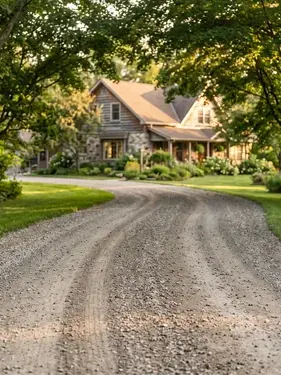
Driveway Gravel in Lexington, KY: Materials and Delivery
Material picks, pricing, and pro tips for driveway gravel projects in Lexington, KY.
A gravel drive in Lexington is a weekend-sized job when the base is laid properly and the stone arrives in one drop. This guide covers the driveway gravel questions Lexington, KY homeowners and small contractors ask most: which stone to pick, how deep to spread it, and how to size the order.
Driveway gravel in Lexington, KY: what the stone has to do
A driveway takes the heaviest, most repeated loads on a property: pickups, delivery vans, a trailer backed in on a wet morning. The stone has to lock together, shed water and stay put under tires. Lexington lots run from tight city frontages to long farm-style lanes, so the same material has to work at both scales. If you want a wider view of the topic first, start at the Driveway Gravel hub.
Choosing the stone
For this project we recommend #57 Crushed Stone. It is a clean, angular, washed-style stone about the size of a large marble, and the angular faces grip each other once traffic compacts them. Rounded pea gravel rolls underfoot and shifts into ruts, so crushed stone is the better call for anything a car drives on. It is sold by the ton here, and each ton is 2,000 lb.
Depth, base and how much to order
For a driveway that sees regular cars, spread a layer about 4 inches thick over a graded, firm subgrade. Heavier use or a soft spot in the yard calls for 6 inches. To turn that into tons, work out the cubic yards first: length in feet times width in feet times depth in inches, divided by 324. Then convert to tons for crushed stone, which weighs roughly 1.4 tons per cubic yard once loose. Skip the arithmetic with the gravel driveway calculator, which does the conversion for you.
The smallest order is 2 tons, which covers a short parking pad or a patched section. A full single-car drive usually runs well past that. Larger orders get a lower rate per ton, so one big drop beats several small ones.
Local conditions that affect the build
Central Kentucky soil can hold water and turn slick, so shape the drive with a slight crown or a one-sided fall toward a ditch or lawn edge. Pull the sod, level the dirt and tamp it before any stone goes down. A sheet of woven geotextile fabric under the stone keeps clay from pumping up into the layer and stretches the life of the surface.
Delivery and getting started
Stone comes by dump truck and is tipped in one pile, so clear an overhead path and a firm spot near the drive entrance. Check delivery in Lexington for how it works in the city. The delivered price is calculated for your ZIP and shown on the page before you order, so there is nothing to guess at checkout.
- Measure the drive and pick a depth.
- Enter the size in the calculator and note the tons.
- Add the tons to your order and enter your ZIP.
About Driveway Gravel projects
A gravel driveway is a compacted stone surface laid over graded soil to carry cars and light trucks. In Lexington, it suits suburban drives and long rural lanes alike, and it costs far less than paving. The key is a firm base, a crowned shape for drainage, and angular stone that locks together.
Recommended materials for driveway gravel

How a driveway gravel project goes
- Mark and measureStake the edges of the drive and measure length and width in feet. Note any wider turnaround or parking spot. Accurate measurements decide how many tons you need, so take them twice and write the numbers down before you start any digging.
- Strip and grade the subgradeRemove sod, roots and soft topsoil, then level the dirt with a slight crown or side fall so water leaves the surface. Fill low spots with compacted fill and run a hand tamper or plate compactor over the whole footprint until it feels firm.
- Lay fabric and edgingRoll out woven geotextile fabric across the graded base, overlapping seams by about a foot. Add timber, steel or stone edging along the sides if you want a crisp line. The fabric separates clay from stone and slows weed growth.
- Spread the crushed stoneHave the #57 crushed stone delivered near the entrance, then spread it with a rake or loader in layers, starting at the far end. Aim for roughly 4 inches deep, or 6 inches in two lifts for heavier loads, and keep the crown intact.
- Compact and finishRun a plate compactor or roll the stone with a vehicle in slow passes until it stops shifting. Rake out ruts, check drainage after the first rain, and add a thin top-up where the stone has settled or tire paths look thin.
Estimate your material
Work out your material
A planning figure, not a guarantee. Order roughly a tenth extra to cover settling and uneven ground.
Driveway gravel in Lexington's climate
What works in Lexington starts with how Kentucky weathers a year. Limestone bedrock and mild winters. Local aggregate is cheap and predictable on price. For driveway gravel work specifically, that means choosing material that handles local moisture and traffic loads without re-dressing every season.
The small market profile of Lexington also shapes how a project runs. Most jobs are residential, with the occasional school or municipal project. Truck access is usually wide and turnarounds run fast.
Where we deliver driveway gravel material in Lexington
Our delivery footprint around Lexington covers the core city plus a typical 35-mile radius. Recent driveway gravel drops have included:
- older single-family blocks in and around Lexington
- newer subdivisions on the outskirts in and around Lexington
- commercial pad sites near the freeway in and around Lexington
- horse properties on the rural edge in and around Lexington
If your address is outside that radius, send your ZIP through the contact form and we will confirm coverage within an hour.
Pricing for driveway gravel in Lexington
Here is what the recommended driveway gravel materials are running in Lexington right now. Full-truck orders (16 tons or more) typically save 15 to 20 percent off these per-ton rates.
| Material | Price from |
|---|---|
| #57 Crushed Stone Delivery in Lexington, KY | Quote on request |
Browse more
Recommended materials in Lexington
Same project in nearby cities
Tools to plan your project
Related guides
 GUIDEWhat to Put Under River Rock for Landscaping BedsHere is what to put under river rock landscaping: a compacted base where needed, then landscape fabric, then rock, to stop weeds and settling.Read guide →GUIDEHow to Clean River Rock and Restore Its ColorLearn how to clean river rock landscaping with rinsing, soap and vinegar methods, plus common mistakes to avoid for a brighter, longer lasting rock bed.Read guide →
 GUIDEHow to Lay a Gravel Driveway: Step-by-Step GuidePractical, field-tested guide: how to lay gravel driveway. Pulled from real US installer notes and 2026 supplier price data.Read guide →
 GUIDEDoes Gravel Stop Weeds? Honest Answer + What WorksPractical, field-tested guide: does gravel stop weeds. Pulled from real US installer notes and 2026 supplier price data.Read guide →
Frequently Asked Questions
Why spread the stone in two lifts instead of one pass?
Stone dumped and spread in a single deep pass only compacts at the top, which leaves loose pockets underneath that settle into ruts later. Spread about half, run a plate compactor or slow vehicle passes over it until it stops shifting, then add the rest and compact again. Soft spots benefit most from this.
Can I drive on the stone right after it is spread?
Yes, but fresh stone is loose and shifts under tires until it packs down. Drive slowly, vary your path so you do not cut one groove, and avoid sharp turns that scuff the stone sideways. The surface firms up as traffic compacts it, and any ruts that form early are easy to rake out.
Is #57 stone too rough to walk on or park on?
It is coarser than fine screenings, so bare feet and low sports cars notice it. For tires and work boots it is fine. If you want a smoother top, some owners finish the last inch with a finer stone after the #57 has been compacted, though that would be a separate order and a separate decision.
Will the gravel keep weeds from growing through?
Not by itself. Weeds sprout in the dust and leaves that collect between stones over time. Raking the surface now and then stops seeds from settling in, and hand-pulling the occasional weed is normal even on a well-built drive.
How do I stop the stone from washing out onto the street?
Hold the stone back from the apron with a straight edge or a border of timber or steel, so tires do not drag it onto the pavement. A short strip of larger or tightly packed stone where the drive meets the street also helps. Heavy rain moves loose stone fastest on steep sections, so a bit of extra compaction at the bottom of a slope pays off.
Can a regular homeowner spread the stone without a machine?
Yes, for a short drive. A wheelbarrow, a steel rake and a hand tamper handle a couple of tons. Longer drives go faster with a skid steer or a rented plate compactor. Whatever you use, spread in thin passes from the far end back toward the pile so you never drive over fresh stone.
How often does a gravel driveway need topping up?
Most drives lose some stone to tires, snow plowing and runoff, so expect to rake it back and add a thin layer every few years. The wheel paths and the spot where you turn in thin out first. Keeping a ton or two in reserve means a quick fix instead of a full project.
What if my order comes out smaller than the minimum?
A very small patch can still be worth ordering at the 2-ton minimum, since leftover stone is easy to use for filling ruts, edging a walkway or bedding a pad later. If your math says less than that, round up to 2 tons rather than shorting the depth, which is what causes bare spots.