
Fill Dirt Delivery in Waterbury, CT by the Ton
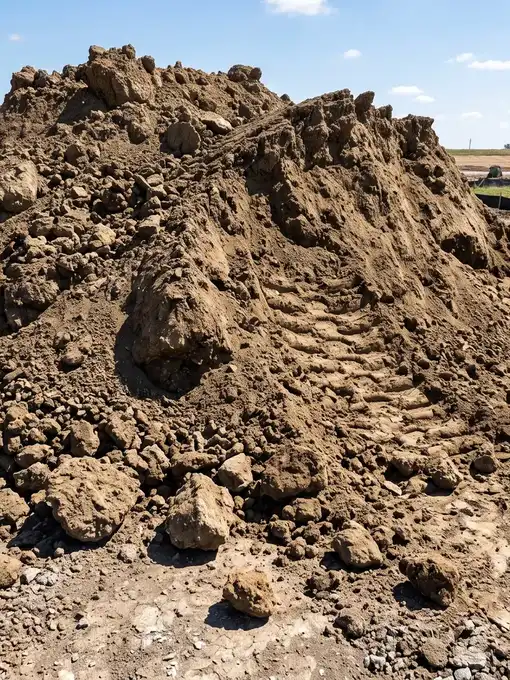
Bulk fill dirt delivered in Waterbury, CT. Brown color.
Starting from $477.18 delivered to Waterbury for 2 tons, our minimum order
Waterbury has about 105,000 residents and sits among the hills of west-central Connecticut, so a lot of yards here start with a slope that has to be dealt with before anything else goes in. Fill dirt delivery in Waterbury, CT is the bulk earth you bring in to build up a low side, square off a grade or set a level base for a project. This page covers the common local jobs, how to size an order, and how the price and checkout work. Statewide options are listed under Fill Dirt in Connecticut.
Sloped yards and uneven grade in Waterbury
Hillside lots tend to send water toward the lowest point, and that point is often a side yard, a rear corner or the strip along a driveway. Fill dirt raises those low points so the ground can be shaped to fall away from the house, a garage or a retaining wall. Once the new surface is shaped, rain moves off the property instead of sitting in one place. On a steep face, stop the new edge short of the slope break, because loose material slides downhill when it is wet and can undercut the edge you just built.
Common fill dirt jobs in Waterbury
- Leveling a rear corner where the lawn has sunk
- Building a flat pad for a shed, a patio or a child's play area
- Filling a trench left behind after a utility or drainage project
- Raising a garden bed that stays soggy in spring
Beds that will hold plants can finish with a top layer of Mulch. That material is measured by the cubic yard, so it needs its own quantity, worked out from the bed area.
Checking the high and low points
Walk the yard with a long straight board and a level, then flag the high and low points. Use the flags to set the order of spreading: start at the lowest corner and work toward the high side, so each pass lands on firm ground instead of a soft patch you have to revisit.
How much fill dirt to order
Take the length and width of the area in feet and the finished depth in inches. Multiply the three figures together and divide by 324 to get cubic yards, then multiply by 1.1 to get tons. For a 9 by 30 foot strip filled 5 inches deep, the result is about 4.2 cubic yards, or roughly 4.6 tons. Plan a little extra on a slope, since the low end of the fill usually takes more material than the plan shows.
The calculator can check the arithmetic if you want a second number. Orders begin at 2 tons, so the smallest patch still gets a 2-ton order.
When another material fits better
Fill dirt is the layer underneath, not the finished surface. A drive or parking pad is better served by Asphalt Millings, which is sold by the ton and packs into a firm, stable base. Pea gravel is sold by the ton in Waterbury too, and each one suits a different finish, so choose the surface first and then work backward to the fill underneath.
Fill dirt delivery in Waterbury, CT
Details for this city are on the delivery in Waterbury page. Middlebury is about 5 miles away, Woodbury about 9 miles, Brookfield about 20 miles and Easton about 24 miles.
Choose a drop spot that the truck can reach without crossing soft ground, and keep it away from the septic field, buried lines and the edge of any retaining wall. Mark it with a stake so the driver does not set the pile on a bed or a garden walk.
Pricing in Waterbury
Each delivered price is worked out for the ZIP you enter and shown on the page, so a hillside street and a valley address can show different figures. Larger orders get a lower rate per ton, and a bigger grade job may be worth pricing at a few different tonnages before you choose one.
Placing your order
Enter your ZIP and set the tonnage. Once the number works for you, continue to checkout and confirm the address.
About Fill Dirt
Fill dirt is a bulk earth material for building up and leveling ground. It is natural, not manufactured, and it is intended for underlying work rather than as a finished planting surface. It is not a topsoil and is not prepared for seeding.
Because it is dug from natural ground, the color and texture change somewhat from load to load. A mix of fine and coarse particles is typical, and a few small stones, root pieces or bits of organic debris can show up in the pile. These are normal for this material.
Fill dirt comes by the ton, with each ton weighing 2,000 lb. The material is heavy for its volume, so a ton of it covers less area than many buyers expect. Keep the tonnage, not the truckload, as the unit you plan around.
It works best as the layer that raises the grade. Whatever surface goes on top, whether turf, stone or pavers, is a separate choice that depends on how the area will be used.
What Fill Dirt costs in Waterbury
In the Waterbury market, fill dirt is sold by the ton and priced at the gate before delivery is added on. Send your ZIP and load size and we will send back a same-hour quote with the truck rate and the per-ton figure spelled out. One ton covers about 98 sq ft at a 3 inch finished depth, so a 400 sq ft driveway pad runs roughly 5 tons.
How crews use Fill Dirt in Waterbury
Crews working out of Waterbury tend to call for fill dirt on a few repeat jobs each week. The first is erosion control, typically laid in tight urban lots and infill builds with a base lift compacted before the finish course goes on. The second is driveway gravel, which lands here in dense neighborhoods where curb access is short and usually ships as a 4 to 8 ton order. With a population around 105,000, Waterbury pulls a mix of single-truck homeowner orders and contractor full-loads through the season.
Delivery day in Waterbury
On the day of the drop, the dispatcher pulls the closest yard, batches your ticket with other Waterbury stops, and sends a window the night before. Tandem-axle dumps need at least 12 ft of clear width and 14 ft overhead to set the bed; tri-axles need 14 ft of clearance on both counts and a level pad to tip safely. Standard lead time on this lane is Mon-Sat, with same-day windows held open for orders that hit the desk before 11 AM and clear payment.
Related materials we deliver in Waterbury
 Price by ZIP
- SizeScreened, no size grade
- Density2200 lb/yd³
- ColorDark brown
 Price by ZIP
- Density2000 lb/yd³
- ColorDark brown
 Price by ZIP
- Density1000 lb/yd³
- ColorDark brown
Estimate how much you need
Work out your material
A planning figure, not a guarantee. Order roughly a tenth extra to cover settling and uneven ground.
Browse more
Available in nearby cities
Plan your project
Related guides
 GUIDEDoes Gravel Stop Weeds? Honest Answer + What WorksPractical, field-tested guide: does gravel stop weeds. Pulled from real US installer notes and 2026 supplier price data.Read guide →
 GUIDEHow Much Gravel Do I Need? Quick Sizing GuidePractical, field-tested guide: how much gravel do i need. Pulled from real US installer notes and 2026 supplier price data.Read guide →
 GUIDEWhat Is #57 Stone? Uses, Size, and Cost ExplainedPractical, field-tested guide: what is 57 stone. Pulled from real US installer notes and 2026 supplier price data.Read guide →
 GUIDEHow Deep Should a Gravel Driveway Be? Layer GuidePractical, field-tested guide: how deep should gravel driveway be. Pulled from real US installer notes and 2026 supplier price data.Read guide →
Frequently Asked Questions
How much will the fill drop after it is in place?
Expect some drop, especially in the first season. The best way to limit it is to place the material in thin layers, wetting each one lightly and firming it before the next goes on. If you finish exactly at the target grade, the surface will likely sit low once it settles, so aim a little high.
Is spring a bad time to bring in fill dirt?
Not necessarily. Spring is when many yards stay soft and wet, which makes spreading messy. Pick a dry stretch, and let the fill rest a day or two before you walk on it. Frozen ground is harder to shape, so avoid winter jobs unless the weather is unusually mild.
What if the load arrives with rocks or trash mixed in?
Pick out anything oversized before you spread it, including large stones, roots, bricks, concrete chunks and bagged trash. Small stones are part of natural fill and rarely cause trouble. Put the bigger pieces in a separate pile for a fence line or a low edge, or haul them off so the finished surface stays clean.
Can I keep leftover fill dirt for later?
You can, but store it where it will not wash into a drain or pick up debris. A low, covered pile near the work area holds up for a few weeks. Leftovers also work well for a future dip or a shallow berm, so plan to spread them while the work area is still open.
Does grading a Waterbury yard need approval?
Small garden and lawn work usually does not. Raising grade near a property line, altering how water flows off the lot or filling near a watercourse may need approval. Ask the city planning or building office before you start, especially on a hillside, and ask what they expect for erosion control.
Can I seed grass straight into fill dirt?
Plain fill has very little organic matter, so grass usually thins out or fails when seeded straight into it. Spread a layer of topsoil as the part that actually feeds the roots.
Is fill dirt suitable under a concrete slab?
Contractors do put it beneath slabs to make a level base, but only when the ground under the fill is firm and even. Ask the concrete contractor what base depth they want, and keep the fill thickness consistent across the footprint. A slab set on uneven fill can crack where the layer is thinnest.
Should I put a tarp over a fresh fill pile?
Covering a pile that will sit for several days is a good idea, since a tarp keeps rain from turning it to mud and stops wind from carrying off the dry surface. Weigh down the edges with boards or bricks. Pull the cover back on a dry day so the material can drain before you spread it.