
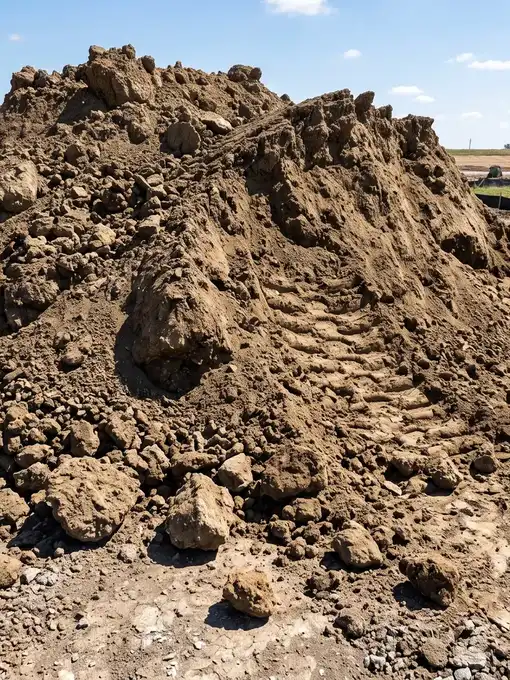
Fill Dirt Delivery in South Bend, IN for Grading Jobs
Bulk fill dirt delivered in South Bend, IN. Brown color.
Starting from $462.17 delivered to South Bend for 2 tons, our minimum order
Fill dirt delivery in South Bend, IN puts a bulk load of brown, general-purpose earth on your property without the trips to a yard. Fill Dirt is sold by the ton and is meant for building ground up: raising a low corner, backing a retaining wall, or setting a base under a patio or shed. This page covers where the material fits on a South Bend lot, how to work out how much to order, and how ordering goes from here.
The usual reasons people order it are ordinary ones: a backyard low spot that holds water after rain, a garage pad that sits below the driveway, or a trench that needs refilling before the concrete goes in.
Where fill dirt delivery works best in South Bend
South Bend is the core city of the South Bend-Mishawaka metro area and has roughly 100,000 residents, so the properties here range from older lots to newer builds. Fill dirt suits most of them when the ground needs height or support. It is a structural material, not a decorative one, so pick it for jobs where the surface will be covered or where nobody will look at the fill itself.
- Low spots: fill a dip so the finished surface slopes away from the house instead of toward it.
- Pad and slab bases: build up the grade under a garage, shed or patio before forms or a slab go in.
- Backfill: refill around a footing, a utility trench or the back of a block wall.
- Raised beds and berms: add height under a planting area, then cover the fill with topsoil.
If the surface will grow lawn or beds, put Premium Screened Topsoil over the fill, because the grass or plants root into that top layer. For a stone drain bed, fill dirt is the wrong choice, and Pea Gravel is the material people usually reach for there.
Estimating how much fill dirt to order
Start with the footprint of the area in feet, then decide the depth you want once the job is finished, in inches. Multiply length by width by depth in inches, and divide the result by 324 to get cubic yards. This material weighs about 2,200 lb per cubic yard, so multiply the yardage by about 1.1 to reach tons. A 20 ft by 15 ft area filled 6 inches deep comes to about 5.6 cubic yards, or roughly 6 tons.
If you would rather not do the arithmetic, the calculator can run the numbers for a rough estimate. Treat its answer as a starting point and check it against the measurements you wrote down.
Fill settles and packs down as it is worked, so the load will not stay at the depth it lands at. Plan the order around the finished grade after the surface has been tamped or rolled, and add a small margin for uneven ground.
Placing your fill dirt delivery
Before you order, check where the truck can stop and where the pile will land. Choose a reasonably flat spot close to the work area, confirm the route in is clear of branches and wires, and keep the pile off the lawn, septic lines and any buried utilities. Once the load is down, rake it into a rough shape before any spreading starts, so the thick and thin parts are easy to see from the edge.
In South Bend, timing matters more than most people expect. Wet fill is heavy, sticks to the shovel and will not pack well, so schedule the delivery for a stretch of dry weather and skip days when the ground is frozen or saturated. In spring, wait until the yard has drained after snowmelt or heavy rain before you start moving material around.
How ordering and delivered pricing work
The price you see is delivered, and it is calculated for your ZIP code before you check out. Larger orders get a lower rate per ton, so if a project needs several loads, ordering them as one order is worth checking against the per-ton rate shown for that order. For South Bend fill dirt, the smallest order is 2 tons.
For local delivery details, see delivery in South Bend. To compare other fill options across Indiana, start at Fill Dirt in Indiana.
About Fill Dirt
Sold by the ton, this brown, general-purpose Fill Dirt suits South Bend yards that need low spots built up. It is made for bulk work such as raising grades, filling holes and building up pads, and it is not blended or screened for growing lawns and gardens.
Because it is a natural material, the color and texture can shift a little from one load to the next, and small stones or bits of root and organic matter may show up in the pile. Expect a few pieces to be bigger than the rest, and plan to pick out anything that would sit in the middle of a slab or a footing. A ton weighs 2,000 lb, and a cubic yard of this material weighs about 2,200 lb, so the two units are close but not interchangeable on a scale ticket.
Fill is a practical choice when a project needs volume and firm footing more than a finished surface. It stacks well, it stays in place once it has been worked, and it gives you a neutral base for the material that will be seen later, such as topsoil, mulch, pavers or gravel.
What Fill Dirt costs in South Bend
Local South Bend yards quote fill dirt by the ton; the delivered number includes fuel, the truck, and the haul. Send your ZIP and load size and we will send back a same-hour quote with the truck rate and the per-ton figure spelled out. A ton of this material spreads across about 98 sq ft when laid 3 inches deep, useful when you are sizing a patio base or a walkway run.
How crews use Fill Dirt in South Bend
In and around South Bend, fill dirt shows up most often on two project types. The most common deployment is erosion control, often in tight urban lots and infill builds in two to three inch lifts. Second on the list is driveway gravel, which we see in dense neighborhoods where curb access is short on partial-truck deliveries. At roughly 103,168 people, the South Bend order mix leans toward 3 to 8 ton residential drops with the occasional 16 ton job for a contractor.
Delivery day in South Bend
A typical South Bend drop is dispatched from the closest yard with a two hour window and a heads-up call once the truck is loaded. Tandem trucks want a 12 ft lane in and out; tri-axles need 14 ft, and both want firm ground at the tipping spot so the load releases cleanly. Standard lead time on this lane is Mon-Sat, with same-day windows held open for orders that hit the desk before 11 AM and clear payment.
Related materials we deliver in South Bend
 Price by ZIP
- SizeScreened, no size grade
- Density2200 lb/yd³
- ColorDark brown
 Price by ZIP
- Density2000 lb/yd³
- ColorDark brown
 Price by ZIP
- Density1000 lb/yd³
- ColorDark brown
Estimate how much you need
Work out your material
A planning figure, not a guarantee. Order roughly a tenth extra to cover settling and uneven ground.
Browse more
Available in nearby cities
Plan your project
Related guides
 GUIDEWhat Is #57 Stone? Uses, Size, and Cost ExplainedPractical, field-tested guide: what is 57 stone. Pulled from real US installer notes and 2026 supplier price data.Read guide →
 GUIDEHow Deep Should a Gravel Driveway Be? Layer GuidePractical, field-tested guide: how deep should gravel driveway be. Pulled from real US installer notes and 2026 supplier price data.Read guide →
 GUIDEHow Much Does River Rock Cost? By Ton or YardRiver rock cost depends on your ZIP code, order size, and whether you buy by the ton or the cubic yard. Here is how pricing works.Read guide →
 GUIDEWhat Size Crushed Stone Goes Under a Concrete SlabMost slabs need 4 to 6 inches of compacted crushed stone underneath. What size crushed stone under a concrete slab needs, and why it matters.Read guide →
Frequently Asked Questions
Can fill dirt be used to build a berm?
Yes. A berm is just fill shaped into a long, low mound, and it works for screening a view or steering runoff. Keep the sides gentle so the slope does not slump, and compact the core as you build. Cover the finished shape with sod or ground cover soon after, so rain does not wash it down.
Can I grow vegetables in fill dirt?
Not directly. Fill dirt is not prepared for food crops, and its makeup changes from load to load. If you want a vegetable bed, use a raised bed mix made for food crops rather than the fill itself. A simple soil test through a local extension office can confirm the mix before you plant.
Can fill dirt go under a concrete slab?
Fill is commonly used to bring the grade up under a slab, shed or patio. Whether a specific pad is adequate depends on the size of the structure, the load it carries and the drainage around it. Place the fill in thin layers, pack each one, and ask your local building office what base the pad needs.
Why does the fill look different from one load to the next?
Fill is dug from natural ground, so each load reflects the soil it came from. Color can range from light tan to dark brown, and the mix of clay, sand and silt changes with it. That variation does not change how the material performs for general fill work, but it is a good reason to spread a little from the first load and check it before the rest arrives.
What should I do with leftover fill dirt?
Keep it in one pile away from the house, and cover it with a tarp if rain is in the forecast so it does not turn into mud. Spread leftovers thin across a low area you plan to fill later, or use them to top up a garden edge. Small amounts go a long way when they are spread out and worked into the ground instead of left in a heap.
Do I need a permit before I regrade my yard in South Bend?
It depends on the size of the change and where it sits on the lot. Work near a property line, a drainage easement, a stream or a floodplain can need approval, and large grading jobs sometimes do too. Check with your local building or planning office before you order, since the rules decide whether the project can move ahead and where the finished grade may sit.
Can I spread fill dirt by hand, or do I need equipment?
Small jobs, such as filling a shallow dip or a few planting holes, can be done with a wheelbarrow, a shovel and a rake. Larger pads and driveways are usually easier with a skid steer or a compact loader, which can move material quickly and keep the surface level. Hand work is slow and tiring, so match the method to the size of the area and the amount on the truck.
When should I bring in an engineer instead of ordering fill?
Get a professional opinion if the ground has already moved, if a wall is holding back soil, or if the fill will sit under a foundation or a structure with heavy loads. Fill can fix a low spot, but it cannot correct a structural problem on its own. A short consultation before the order can prevent a second, more expensive project later.