
Fill Dirt Delivery in Yonkers, NY
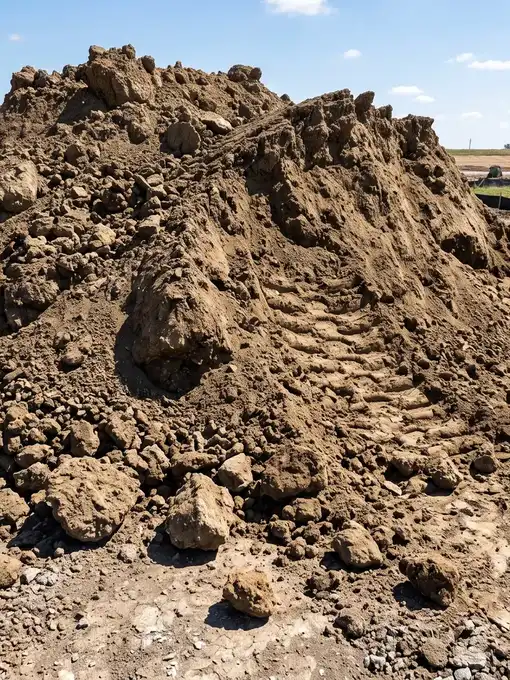
Bulk fill dirt delivered in Yonkers, NY. Brown color.
Starting from $473.47 delivered to Yonkers for 2 tons, our minimum order
Hillside lots and fill dirt delivery in Yonkers, NY
Yonkers climbs from the Hudson up a series of steep streets, so a lot here often needs fill to make a flat spot out of a slope. Fill dirt delivery in Yonkers, NY is sold by the ton. With roughly 211,000 residents in older, tightly built neighborhoods, most jobs are small to mid-size and the driveway is narrow.
What homeowners and small crews do with it
- Level a terrace behind a retaining wall before the blocks go in.
- Backfill a foundation or a trench after a sewer, water or drain tile repair.
- Bring a sunken yard up to the grade of a new walkway.
- Build a stable pad under a shed, a stoop or a set of steps.
The material is subsoil, so it compacts and holds shape but does not grow much. For a finished surface, a layer of topsoil goes over it. For a firm driveway or work-area surface, a top course of #57 Crushed Stone works well, and Asphalt Millings make a budget-minded cap that binds as it settles.
Working out the tons
Take the length and width of the area in feet and the fill depth in inches, multiply the three, and divide by 324 for cubic yards. Multiply that by about 1.1 and you have tons. For a 12 by 10 foot terrace filled 8 inches deep, the answer is near 3 cubic yards, or about 3.3 tons. Tamped fill loses volume, so round up by about one tenth.
The calculator will do the same arithmetic if you enter your dimensions. The smallest order is 2 tons, so even a modest backfill is easy to order.
Access on tight Yonkers streets
Before you order, look at the approach. A dump truck needs a clear lane, overhead clearance for the bed and a spot that will carry its weight. Overhanging wires and parked cars are the usual snags on residential blocks here. If the pile cannot go exactly where you want it, set it at the curb end of the driveway and move it by wheelbarrow. Our page on delivery in Yonkers covers the local details.
Mark the spot with cones or chalk. Keep the pile off the sidewalk and away from catch basins so runoff does not carry soil into the street.
Where fill dirt fits in a layered job
Most yard projects in Yonkers are built in layers, and fill dirt is the one that does the heavy lifting. It makes up the deep part of the build, anywhere the fill runs thicker than a few inches, because it is meant to be moved in volume. The other materials are best kept for thin top layers where the surface matters, such as a stone course under a walkway or topsoil for a lawn. Planning the job this way keeps each load matched to its purpose and keeps the order list short.
Compacting on a slope
Place fill in lifts about 6 inches thick and tamp each one. On a slope, cut small steps into the existing ground first so the new fill locks in and does not slide. Slope the finished surface gently away from any wall. Plan to let it settle for a few weeks before you set pavers or pour concrete.
Projects across the river and county line
Yonkers sits about 6 miles from Westchester County, about 12 from Bergen County in New Jersey and about 17 from New York City, with Paterson and Long Island a little farther out. Contractors who work across that stretch often handle several small jobs in a week, from a Westchester retaining wall to a Bergen County driveway. Knowing the tonnage for each job in advance lets you order the right amount for each address.
Reading the price
Fill Dirt is sold per ton, and the figure the product page gives is the delivered price for your ZIP. Orders for more tons are cheaper per ton, which is worth knowing if you share a delivery with a neighbor's project.
Next steps
If you are comparing the same job across the state, see Fill Dirt in New York. When your numbers are ready, enter the ZIP, choose the tons and check out.
About Fill Dirt
Fill dirt is the clay, sand and silt that lies under the topsoil if you want a lawn.
The unit here is the ton, and a cubic yard weighs about 2,200 lb. The truck dumps the load loose. Your ZIP sets the delivered price shown on the page, and orders of more tons carry a lower per-ton rate.
What Fill Dirt costs in Yonkers
Around Yonkers, fill dirt is quoted by the ton with delivery layered in based on distance from the closest yard. Send your ZIP and load size and we will send back a same-hour quote with the truck rate and the per-ton figure spelled out. Plan on roughly 98 sq ft of coverage per ton at 3 inches deep, which puts a single-car driveway in the 4 to 7 ton bracket.
How crews use Fill Dirt in Yonkers
Yonkers contractors keep fill dirt on the order sheet for a short list of standard installs. Top of the list is erosion control, where the material is rolled out in tight urban lots and infill builds and screeded to grade. Right behind that is driveway gravel, common in dense neighborhoods where curb access is short and often paired with edging or fabric below the lift. Yonkers sits at about 211,040 residents, which means we see steady weekday traffic from landscape crews and weekend pickups from owner-builders.
Delivery day in Yonkers
Delivery in Yonkers runs out of the nearest pit; you get a two hour arrival window the evening prior and a call when the driver leaves the scale. Plan for 12 ft of clear path for a tandem and 14 ft for a tri-axle, plus a level area at the dump point so the bed lifts straight. Standard lead time on this lane is Mon-Sat, with same-day windows held open for orders that hit the desk before 11 AM and clear payment.
Related materials we deliver in Yonkers
 Price by ZIP
- SizeScreened, no size grade
- Density2200 lb/yd³
- ColorDark brown
 Price by ZIP
- Density2000 lb/yd³
- ColorDark brown
 Price by ZIP
- Density1000 lb/yd³
- ColorDark brown
Estimate how much you need
Work out your material
A planning figure, not a guarantee. Order roughly a tenth extra to cover settling and uneven ground.
Browse more
Common uses for Fill Dirt in Yonkers
Available in nearby cities
Plan your project
Related guides
 GUIDEHow Much Gravel Do I Need? Quick Sizing GuidePractical, field-tested guide: how much gravel do i need. Pulled from real US installer notes and 2026 supplier price data.Read guide →
 GUIDEWhat Is #57 Stone? Uses, Size, and Cost ExplainedPractical, field-tested guide: what is 57 stone. Pulled from real US installer notes and 2026 supplier price data.Read guide →
 GUIDEHow Deep Should a Gravel Driveway Be? Layer GuidePractical, field-tested guide: how deep should gravel driveway be. Pulled from real US installer notes and 2026 supplier price data.Read guide →
 GUIDEHow Much Does River Rock Cost? By Ton or YardRiver rock cost depends on your ZIP code, order size, and whether you buy by the ton or the cubic yard. Here is how pricing works.Read guide →
Frequently Asked Questions
Will the color match the soil already in my yard?
Not necessarily. Fill dirt is sourced as subsoil, so shade and texture vary from load to load, and it will rarely match the dark ground already in your yard. That does not matter under a patio, wall or shed pad.
How much does a ton of fill dirt cover?
A ton covers a little under one cubic yard, since a yard weighs around 2,200 lb. At 4 inches deep, one yard spreads over roughly 80 square feet. Wet material weighs more, so a rainy week can change how far a ton goes.
Can I pour a patio over new fill?
Yes. Many people add a layer of crushed stone between the fill and the concrete or pavers, which gives water a path out and keeps the surface flatter. Check local building rules, since some slabs need a compaction test before the pour. A cracked or sinking patio usually traces back to the base, not the surface material.
What can I do with leftover fill dirt?
Leftover fill dirt from a Yonkers job rarely goes to waste. Spread it into low spots along a fence line, crown a garden path, or build up the edge of a bed. If you want to save it for a later repair, cover the pile with a tarp so rain does not turn it to mud. Dry fill stays loose and is easy to scoop with a shovel or move by wheelbarrow.
How wet is too wet to compact?
Squeeze a handful. If it crumbles after you open your hand, it is workable. If water drips out or it smears like putty, let the pile dry before you spread and tamp it. Compacting soggy dirt just pushes the water around, and the surface stays spongy. Spreading a wet pile thin on a dry day speeds this up.
What goes behind a retaining wall?
Many builders place a strip of clean crushed stone directly behind the blocks for drainage and use fill dirt for the bulk behind it. Follow the wall manufacturer's or engineer's instructions, since taller walls usually need a plan. Order the stone and the fill as separate products so each load is sized to its layer.
How do I stop erosion on a steep fill?
Compact the surface, keep the slope gentle, and cover bare dirt quickly with sod, seed with straw, or mulch. On steeper banks, small stepped terraces or a short wall break up the flow. Bare, loose dirt on a slope washes out in the first heavy storm.
How do I measure an irregular area?
Split the area into rectangles, measure each one, and work out the volume of each before adding them together. For a sloped bank, measure the fill depth at the top and the bottom and use the average. Sketching the shape on paper with the dimensions marked makes it easy to check your figures.