
Mulch Delivery in Kettering, OH by the Cubic Yard
Bulk mulch delivered in Kettering, OH. Brown, black, red color.
Starting from $665.85 delivered to Kettering for 2 yards, our minimum order
Kettering sits right against Dayton, and most of its streets are lined with mid-century ranches and tidy lawns that need fresh beds every year or two. This page covers the colors, the math and how ordering works. Mulch here is sold by the cubic yard, and the delivered price for your address appears as soon as you enter your ZIP.
Mulch delivery in Kettering, OH for established yards
With a city of about 57,000 people, Kettering has a lot of older lots with mature trees, foundation plantings and edging that fades over a few seasons. A dump-truck load dropped at the curb saves dozens of bag trips and keeps the whole job moving. For a wider look at what we carry statewide, see Mulch in Ohio, and for how drop-offs work in town, read about delivery in Kettering.
Where mulch earns its keep around town
- Foundation and shrub beds: a layer around hydrangeas and boxwoods holds moisture through humid Ohio summers.
- Tree rings: a wide, flat ring keeps mower damage off the trunks of the older maples and oaks.
- Vegetable and flower plots: a thin cover suppresses weeds between rows.
- Play areas and paths: a thicker bed softens the ground under swing sets and between stepping stones.
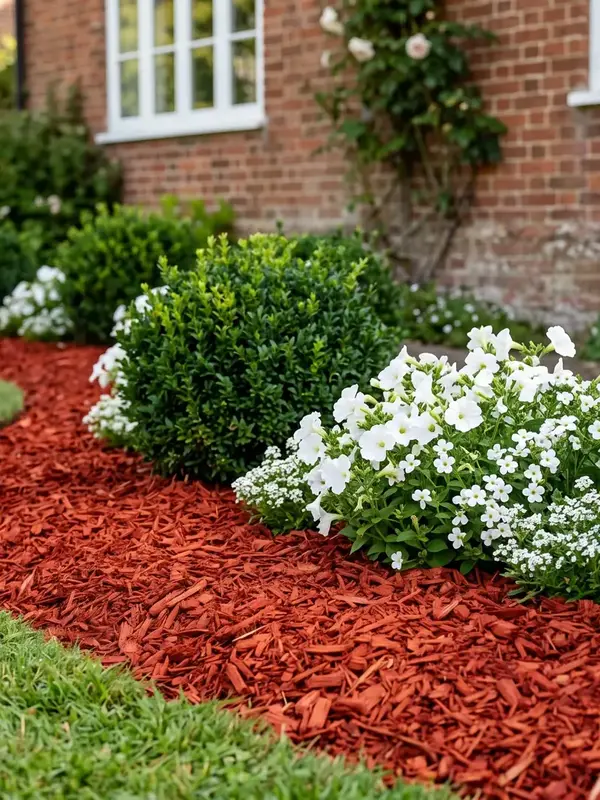
Kettering yards can be finished in brown, black or red. Brown blends with most siding and stone, black makes green foliage stand out, and red gives a bolder look against light brick.
Figuring out how much you need
Measure the bed in feet, then work out the depth you want in inches. Multiply the length by the width by the depth, and divide the result by 324. That gives cubic yards. A bed 20 feet long and 10 feet wide at 3 inches deep comes to about 1.85, so you would round up to 2 cubic yards, which is also our smallest order. The mulch calculator does the same arithmetic if you would rather type in your numbers.
Mulch is light, around 800 lb per cubic yard, so a full order takes up more space than it weighs.
Pricing, in plain terms
We do not post a flat sticker figure, because freight changes with the address. Enter your ZIP and the engine shows the delivered price for your Kettering location. Larger orders get a lower rate per cubic yard, so one bigger drop for the front and back yards usually beats two small ones.
Pairing mulch with other materials
Many Kettering projects need more than mulch. Beds that sag or sit in clay often get a layer of topsoil in Kettering first, and drainage trenches or paver bases can call for Pea Gravel. All of these can be priced for the same ZIP.
Laying it down once it arrives
Kettering lawns often have neat, defined edges, so cut a clean trench along the bed line with a flat spade before you spread anything. Pull out the weeds you can reach, rake the surface level, and scoop the mulch in from the pile with a wheelbarrow. Work from the far end of the bed back toward the driveway so you never step on finished ground.
Fan the mulch out to an even depth and pull it a few inches back from the base of every plant. Mulch piled against stems stays wet and can cause rot, which is a common mistake around foundation shrubs. Where the bed meets a sidewalk, keep the layer slightly below the edge so a heavy rain does not push it onto the concrete.
If you have an older bed with a tired layer, you do not always need to remove it. Break up any matted crust with a rake, then add one to two inches on top. That keeps the order smaller and still renews the color.
Placing your order
Start with the color you like and pick a quantity of 2 cubic yards or more. Dayton is only about 5 miles up the road, which is the nearest big city.
About Mulch
Mulch is a shredded wood product spread over soil to hold in moisture, block weeds and keep roots at a steadier temperature. It also tidies up planting beds and slowly breaks down into the soil, which feeds plants over time.
Kettering orders are measured in cubic yards, and the color choices are brown, black and red. A cubic yard weighs roughly 800 lb, light enough to move with a wheelbarrow and a few trips. Brown suits most homes, black sharpens the green of leaves and flowers, and red adds warmth next to pale brick or stone.
Spread it two to three inches deep, keep it clear of trunks and siding, and top it up every year or two as it thins. In Kettering, the delivered price for your ZIP appears on the page, and bigger loads get a lower rate per cubic yard. Kettering's smallest order is 2 cubic yards.
What Mulch costs in Kettering
Around Kettering, mulch is quoted by the ton with delivery layered in based on distance from the closest yard. Send your ZIP and load size and we will send back a same-hour quote with the truck rate and the per-ton figure spelled out. Plan on roughly 270 sq ft of coverage per ton at 3 inches deep, which puts a single-car driveway in the 3 to 5 ton bracket.
How crews use Mulch in Kettering
Kettering contractors keep mulch on the order sheet for a short list of standard installs. Kettering sits at about 57,028 residents, which means we see steady weekday traffic from landscape crews and weekend pickups from owner-builders.
Delivery day in Kettering
Delivery in Kettering runs out of the nearest pit; you get a two hour arrival window the evening prior and a call when the driver leaves the scale. Plan for 12 ft of clear path for a tandem and 14 ft for a tri-axle, plus a level area at the dump point so the bed lifts straight. Standard lead time on this lane is Mon-Sat, with same-day windows held open for orders that hit the desk before 11 AM and clear payment.
Related materials we deliver in Kettering


Estimate how much you need
Work out your material
A planning figure, not a guarantee. Order roughly a tenth extra to cover settling and uneven ground.
Browse more
Available in nearby cities
Plan your project
Related guides
 GUIDEHow Much Does Gravel Cost? A Practical Pricing GuideHow much does gravel cost and why does it vary? See the real factors behind ton pricing, delivery, and order size before you buy.Read guide →GUIDEGravel Size Chart: Pea Gravel to Crushed StoneA gravel size chart showing pea gravel, crushed stone and river rock diameters side by side, so you can match the right size to your project.Read guide →
 GUIDEThe Different Types of Gravel and How to ChooseA plain-language guide to the main types of gravel, covering pea gravel, crushed stone, river rock and decomposed granite.Read guide →
 GUIDEWhat Are Screenings? A Guide to Crushed Stone FinesScreenings are fine crushed stone used for paver bases, joint fill and walkways. See what screenings are, common types, and mistakes to avoid.Read guide →
Frequently Asked Questions
How long does a mulch layer last before it needs topping up?
Shredded wood breaks down slowly, so most beds look thin after a year or two. Sun, rain and foot traffic speed that up. When the soil starts to show through or the color has faded, rake the old layer loose and add a fresh inch or two on top.
What is the smallest amount I can order?
In Kettering, the smallest load is 2 cubic yards. That covers roughly 650 square feet at one inch deep, or a couple of modest foundation beds at three inches. If your bed needs less, round up and use the extra for touch-ups later in the season.
Which mulch colors can I choose?
Brown, black and red. Brown is the most common pick for homes with tan or gray siding, black gives strong contrast around green plantings, and red suits light brick. Color does not change how the mulch performs, so choose the look you like best.
How deep should I spread mulch?
In Kettering, two to three inches works for most beds. Thinner layers let weeds through, while anything past three inches smothers roots. Settle on one depth for the whole bed so it looks even and weathers evenly.
How do I estimate cubic yards for an odd-shaped bed?
Break the bed into rectangles, measure each, and add the totals. For a curved border, average the width along its length. When you are between two numbers, order the larger one.
Can I get topsoil or gravel in the same order?
Topsoil and Pea Gravel are listed separately and are sold by the ton, while mulch is sold by the cubic yard. You can price each one for your ZIP on its own page and decide what combination suits your project.
How close to the house should mulch go?
Leave a gap of a few inches between the mulch and siding, vents and the foundation wall. Mulch held against the house keeps that wall damp and gives insects an easy path, so keep a narrow bare strip or a band of stone along the edge.
Where will the driver unload the mulch?
Usually on the driveway or curb, in one pile. Pick a flat, clear spot with open space overhead. Cover the pile with a tarp if rain is in the forecast, then move it to beds with a wheelbarrow.