
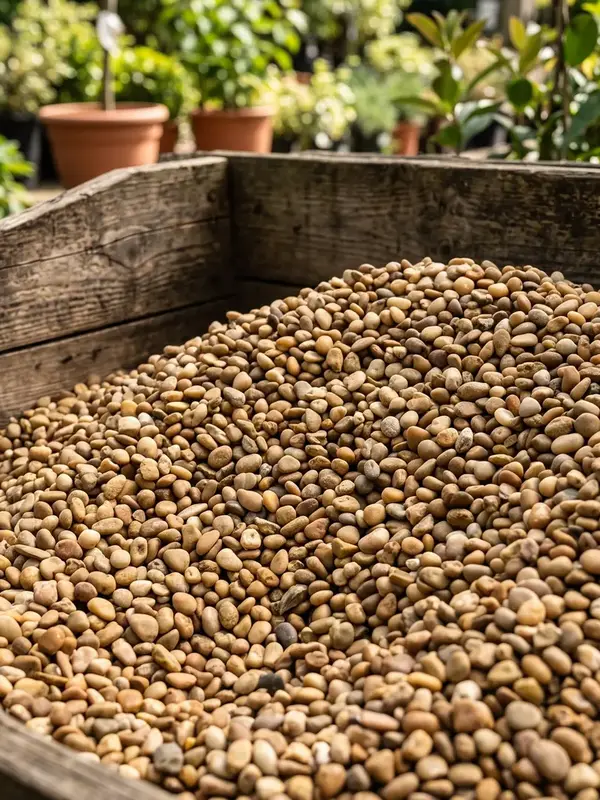
Pea Gravel Delivery in Mountain View, CA by the Ton
Bulk pea gravel delivered in Mountain View, CA. Stone size 1/4 - 3/8. Tan / mixed color.
Starting from $624.82 delivered to Mountain View for 2 tons, our minimum order
Mountain View is a city of about 87,000 people in Santa Clara County, and many of its homes have compact yards, side paths and small courtyards that need a neat, low-maintenance surface. Pea gravel delivery in Mountain View, CA brings a water-worn stone, about 1/4 to 3/8 inch across and tan and mixed in color, to the address you give.
Pea gravel delivery in Mountain View, CA
Compared with poured concrete, a gravel path is quicker to lay, easier to change later and kinder to the drainage around a house, which is why it is a common choice for garden walks.
Water-worn pieces have soft edges, so the stone feels gentle under bare feet and does not catch on shoes or pet paws the way sharp chips can. The rounded shape also lets the pieces roll slightly when raked, which is why a bed looks fresh after a quick pass with a rake. The same movement is why pea gravel belongs on paths and borders rather than under a parked car.
Common yard projects in Mountain View
Courtyards and entry walks are the most common jobs in tighter lots, since a gravel surface stays cool, drains well and looks finished with little work. A border around a shed or a strip along a fence line also suits the stone, and a dry creek bed that carries runoff from a downspout is a popular choice for homeowners dealing with a wet corner.
Planting beside the gravel is a separate job with separate materials. Mulch holds moisture around the plants, and Premium Screened Topsoil fills a bed that needs more depth before anything goes in. Keep the stone itself for paths, borders and seating spots.
Delivery to Mountain View addresses
The nearest neighbors are Palo Alto, about 4 miles away, and Cupertino, about 6 miles away. Milpitas, Redwood City and San Jose each sit about 11 miles off. Those mileages are only for orientation. What counts is the address you enter when you order.
For more on how orders reach this city, see our delivery in Mountain View page.
If you are comparing options, the Pea Gravel in California hub lists the other cities we serve with this stone.
Estimating tons for your Mountain View project
Take a 12 by 15 foot bed laid 1.5 inches deep. Multiplying 12 by 15 by 1.5 gives 270, and dividing by 324 turns that into about 0.83 cubic yards. Pea gravel weighs about 2,800 lb per cubic yard, which is 1.4 tons, so the bed needs roughly 1.2 tons. Any other bed follows the same steps with its own numbers. A deeper layer or a larger area raises the total in the same proportion, and the stone keeps sinking into the base for a while after install, so a small margin on top of your figure is sensible.
To run the same numbers with less effort, use the calculator on the pea gravel page.
Pricing for Mountain View pea gravel
The delivered price for your ZIP is calculated live and shown on the page, so you see the full figure before you commit. In Mountain View, pea gravel is sold by the ton. Larger orders get a lower rate per ton, which means a bigger project costs less per ton than a small top-up. The smallest order is 2 tons, so an estimate of 1.2 tons still ships as a 2-ton order.
Placing your Mountain View order
On the pea gravel product page, your ZIP and a quantity in tons are the two entries that matter, and the delivered price appears once both are in. Settle on a drop spot before you finish: a flat, open patch near the work area saves a lot of wheelbarrow trips. Check that the route to that spot is clear of parked cars and low branches. A dry forecast for the spread day helps too, because wet stone is heavy and clumps in the bucket.
About Pea Gravel
Pea gravel is a water-worn stone, sized at roughly 1/4 to 3/8 inch and smoothed by years of tumbling. The tan and mixed tones shift a little from load to load, which is part of how natural stone looks. Its size and shape make it comfortable to walk on and easy to spread with a rake or a shovel. The pieces do not compact into a hard crust the way fine material can, and they stay put better than loose mulch on a slope.
Common uses include garden paths, patio edges, drainage trenches, dry creek beds and planting bed toppings. The stone is sold by the ton, and the order is built in tons from the first screen to the final cart. Because water moves through the layer rather than sitting on top, the stone suits spots that need to stay open after a storm.
Pea gravel is a surface material rather than a structural base. It handles foot traffic and garden tools well, but it is not designed to carry vehicle loads. Anything heavier than a wheelbarrow calls for a different base beneath the stone.
What Pea Gravel costs in Mountain View
Local Mountain View yards quote pea gravel by the ton; the delivered number includes fuel, the truck, and the haul. Send your ZIP and load size and we will send back a same-hour quote with the truck rate and the per-ton figure spelled out. A ton of this material spreads across about 77 sq ft when laid 3 inches deep, useful when you are sizing a patio base or a walkway run.
How crews use Pea Gravel in Mountain View
In and around Mountain View, pea gravel shows up most often on two project types. The most common deployment is patio gravel, often in tight urban lots and infill builds in two to three inch lifts. Second on the list is walkway gravel, which we see in dense neighborhoods where curb access is short on partial-truck deliveries. At roughly 87,316 people, the Mountain View order mix leans toward 3 to 8 ton residential drops with the occasional 16 ton job for a contractor.
Delivery day in Mountain View
A typical Mountain View drop is dispatched from the closest yard with a two hour window and a heads-up call once the truck is loaded. Tandem trucks want a 12 ft lane in and out; tri-axles need 14 ft, and both want firm ground at the tipping spot so the load releases cleanly. Standard lead time on this lane is Mon-Sat, with same-day windows held open for orders that hit the desk before 11 AM and clear payment.
Related materials we deliver in Mountain View
 Price by ZIP
- Size3/8″
- Density2800 lb/yd³
- ColorMixed earth
 Price by ZIP
- Size1 - 3″
- Density2700 lb/yd³
- ColorMixed natural
 Price by ZIP
- Size0 - 1/4″
- Density3000 lb/yd³
- ColorTan, gold
Estimate how much you need
Work out your material
A planning figure, not a guarantee. Order roughly a tenth extra to cover settling and uneven ground.
Browse more
Available in nearby cities
Plan your project
Related guides
GUIDEGravel Size Chart: Pea Gravel to Crushed StoneA gravel size chart showing pea gravel, crushed stone and river rock diameters side by side, so you can match the right size to your project.Read guide →GUIDEThe Different Types of Gravel and How to ChooseA plain-language guide to the main types of gravel, covering pea gravel, crushed stone, river rock and decomposed granite.Read guide →GUIDEHow Much Does Gravel Cost? A Practical Pricing GuideHow much does gravel cost and why does it vary? See the real factors behind ton pricing, delivery, and order size before you buy.Read guide →GUIDEHow to Clean River Rock and Restore Its ColorLearn how to clean river rock landscaping with rinsing, soap and vinegar methods, plus common mistakes to avoid for a brighter, longer lasting rock bed.Read guide →Frequently Asked Questions
Can I set pavers or stepping stones into pea gravel?
Yes, and in Mountain View pea gravel is a common choice around stepping stones. Set the stones on a compacted bed first, level with each other, then spread the gravel around them so the tops stay visible. The gravel fills the gaps and keeps the path from looking like bare dirt. Leave a small gap between stone and gravel line so a rake can pass cleanly.
Does pea gravel get hot in the afternoon sun?
It warms up in direct sun, but the pieces are small and shed heat quickly once shade arrives. Tan and mixed tones stay cooler than dark stone. Pets and bare feet usually handle it fine, though a south-facing strip at midday can feel warm. A tree or an awning over the path keeps the surface comfortable.
Is pea gravel a good surface for a dog run?
It works well because water drains straight through and the stone does not turn to mud. The smooth pieces are gentler on paws than sharp chips. Scoop waste often and rinse the area with a hose, since the stone lets liquid pass into the ground. Add fresh stone where dogs dig holes or wear a bare track.
How do I keep leaves and debris out of a gravel bed?
A leaf blower on a low setting lifts light debris and leaves the heavy stone in place. For wet leaves, a wide plastic rake with soft tines works better than a metal one, which digs into the layer. Clear the surface before leaves break down, because the decayed material feeds weed seeds that blow in.
Can I use pea gravel between raised garden beds?
Yes. A gravel aisle keeps the ground from turning to mud around the boxes and gives you a firm place to kneel or push a cart. Lay landscape fabric first if you want to hold back weeds. The stone also lets water pass, so runoff from watering does not pool along the base of each box.
Do I have to dig out the soil before laying pea gravel?
A shallow dig helps. Removing an inch or two of loose soil and tamping the ground flat gives the stone a firm footing, so it stays put rather than sinking. Skipping this step works for a thin decorative layer, but a walkway that sees daily use holds up better with a tamped base underneath.
Can strollers, bikes or wheelchairs roll over pea gravel?
Loose stone makes wheels sink and drag, so a deep, soft layer is hard going for a stroller or a wheelchair. A shallow layer over a tamped base rolls much better. If a path needs steady wheeled traffic, a firmer surface along the main route is more practical, with the gravel used on the sides.
What should I do with leftover stone after the job?
Pile it in a corner, or tuck it behind a shed so it is ready for touch-ups. Pea gravel does not spoil, so it keeps for years. Spare stone also fills a low spot near a downspout or a gap in a border. A small stash that matches your bed saves you from hunting for a new color later.