
Pea Gravel Delivery in South San Francisco, CA by the Ton
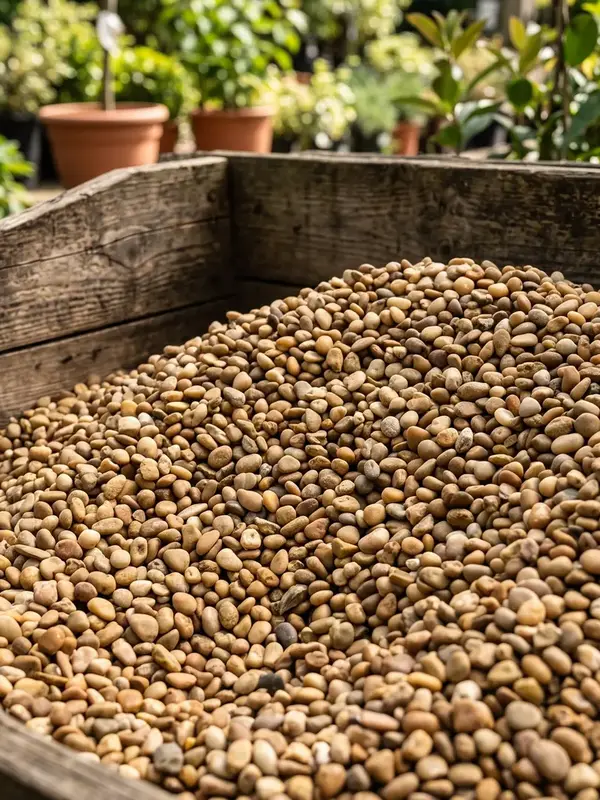
Bulk pea gravel delivered in South San Francisco, CA. Stone size 1/4 - 3/8. Tan / mixed color.
Starting from $624.82 delivered to South San Francisco for 2 tons, our minimum order
Steep side strips, shaded garden corners and narrow walks are common on the Peninsula, where South San Francisco's roughly 65,000 residents often need a surface that water can move through. Pea gravel delivery in South San Francisco, CA gives you that surface in bulk, measured by the ton and delivered to your address.
Cities near South San Francisco on our list are Daly City, San Francisco, and Alameda (each about 9 miles away), followed by Oakland and San Leandro (about 12 miles each).
Why South San Francisco yards use pea gravel
Pea gravel suits the places where soil stays damp or where a sloped strip needs a firm, attractive cover. The loose stone lets water pass through rather than pooling on top, and it does not compact into a hard crust the way bare dirt can after repeated use. A stone bed also cuts down on the mud that tracks onto steps and walkways after rain, a common complaint in shaded yards with heavy foot traffic.
- Garden paths: a route between beds that stays passable after a wet spell.
- Drainage strips: a band along a fence line or house wall where runoff needs a place to go.
- Decorative beds: a clean ground cover around shrubs and rocks.
For the full product range across the state, visit Pea Gravel in California, which links out to each city.
Ordering pea gravel in South San Francisco, CA
Enter the quantity in tons, then review the cart before you check out. The smallest order is 2 tons, and you can increase the amount from that point. More detail on the city's drop area is available on the delivery in South San Francisco page.
Choose a spot that is level and close to where the stone will sit, and check that the route to it is open. Soft ground makes the spreading and raking much slower, so a dry day is the better choice for the drop.
How big a South San Francisco order should be
Note the length, width and average depth on paper before you do any math, which keeps the numbers traceable if the plan changes later.
Multiply the length of the area by its width in feet, then by the depth in inches, and divide by 324 to find cubic yards. Each cubic yard of pea gravel weighs about 2,800 pounds, so multiply the yard total by 1.4 to get tons.
Add a small margin to the number, since loose stone sinks slightly into the soil and a thin layer often needs topping up after the first season. The calculator runs this conversion if you want to check your figure against the stone you have in mind.
What the delivered price means for your ZIP
The live price engine shows the delivered cost for the ZIP you enter. Because the figure is delivered, use the amount you see in the cart as the number to plan around, and read the total before you confirm the order.
Pea gravel in South San Francisco gets a lower rate per ton on bigger orders. A project that is ordered in one batch therefore costs less per ton than the same stone bought in several smaller pieces.
Mulch and topsoil for South San Francisco beds
Some projects pair the stone with other bulk goods. On a sloped lot you might line the path with gravel, spread Mulch over the shrub beds beside it, ordered by the cubic yard, and fill low spots with Premium Screened Topsoil, ordered by the ton like the gravel.
Keeping pea gravel tidy over time
Foot traffic leaves marks, so a rake pulled across the surface every few weeks keeps the bed looking even. Leaves that settle into the gaps are easiest to lift out before they break down, and a thin patch can be refilled with a light layer. Where the stone thins along a slope, rake it back uphill instead of adding more to the low spot.
About Pea Gravel
Pea gravel is a smooth, rounded stone that runs about 1/4 to 3/8 inch across. The tan and mixed colors blend with stone veneer, cedar fencing and concrete pavers, so the material looks settled in almost any setting.
Each piece is round and none of them lock together, which keeps the finished surface loose and easy to adjust. A cubic yard weighs about 2,800 pounds, and we sell the stone by the ton, so every quantity in the cart is counted in tons.
Pea gravel is a good fit for garden paths, drainage strips and decorative beds. It is not designed for vehicles or heavy equipment, and the page below covers how to pick the right amount for the space you plan to fill.
What Pea Gravel costs in South San Francisco
Local South San Francisco yards quote pea gravel by the ton; the delivered number includes fuel, the truck, and the haul. Send your ZIP and load size and we will send back a same-hour quote with the truck rate and the per-ton figure spelled out. A ton of this material spreads across about 77 sq ft when laid 3 inches deep, useful when you are sizing a patio base or a walkway run.
How crews use Pea Gravel in South San Francisco
In and around South San Francisco, pea gravel shows up most often on two project types. The most common deployment is patio gravel, often in tight urban lots and infill builds in two to three inch lifts. Second on the list is walkway gravel, which we see in dense neighborhoods where curb access is short on partial-truck deliveries. At roughly 64,660 people, the South San Francisco order mix leans toward 3 to 8 ton residential drops with the occasional 16 ton job for a contractor.
Delivery day in South San Francisco
A typical South San Francisco drop is dispatched from the closest yard with a two hour window and a heads-up call once the truck is loaded. Tandem trucks want a 12 ft lane in and out; tri-axles need 14 ft, and both want firm ground at the tipping spot so the load releases cleanly. Standard lead time on this lane is Mon-Sat, with same-day windows held open for orders that hit the desk before 11 AM and clear payment.
Related materials we deliver in South San Francisco
 Price by ZIP
- Size3/8″
- Density2800 lb/yd³
- ColorMixed earth
 Price by ZIP
- Size1 - 3″
- Density2700 lb/yd³
- ColorMixed natural
 Price by ZIP
- Size0 - 1/4″
- Density3000 lb/yd³
- ColorTan, gold
Estimate how much you need
Work out your material
A planning figure, not a guarantee. Order roughly a tenth extra to cover settling and uneven ground.
Browse more
Available in nearby cities
Plan your project
Related guides
GUIDEGravel Size Chart: Pea Gravel to Crushed StoneA gravel size chart showing pea gravel, crushed stone and river rock diameters side by side, so you can match the right size to your project.Read guide →GUIDEThe Different Types of Gravel and How to ChooseA plain-language guide to the main types of gravel, covering pea gravel, crushed stone, river rock and decomposed granite.Read guide →GUIDEHow Much Does Gravel Cost? A Practical Pricing GuideHow much does gravel cost and why does it vary? See the real factors behind ton pricing, delivery, and order size before you buy.Read guide →GUIDEHow to Clean River Rock and Restore Its ColorLearn how to clean river rock landscaping with rinsing, soap and vinegar methods, plus common mistakes to avoid for a brighter, longer lasting rock bed.Read guide →Frequently Asked Questions
Is pea gravel safe to walk on barefoot in South San Francisco?
Most people walk on pea gravel without trouble, but the rounded pieces can roll underfoot and feel uneven for bare feet. Rake the surface regularly to keep sharp debris out of the gaps, and walk the path in bare feet yourself before letting small children try it.
Can pea gravel handle a shaded, damp corner?
It handles damp ground better than bare soil because the stone drains. Shade does not stop the stone from working, but moss can grow on top where leaves stay wet. Clear debris more often in shaded spots, and add a barrier beneath the stone if the soil below stays soft.
Should I put landscape fabric under pea gravel?
A weed barrier slows weeds that push up from beneath the stone, and it helps keep the soil from mixing into the gravel. It will not stop seeds that land on top. If you install fabric, overlap the seams and pin it firmly so the stone cannot shift it.
Can I mix pea gravel with pavers?
Yes, pea gravel often fills the joints between pavers or runs alongside them as a border. Keep the stone a little below the paver top so it does not spill onto the surface.
Is pea gravel a good choice for a play area?
Many families choose it for play zones, though loose pieces can be thrown and can end up in small children's eyes or mouths. Supervise young kids. Some parents prefer a softer surface beneath play equipment, so check what suits your children's ages.
Does pea gravel need to be sealed?
No. Pea gravel is left loose, which is why it drains and can be raked. Sealing would bind the pieces into a hard surface that loses its look and its drainage. If the stone gets dusty, rinse it with a garden hose and let it dry before you walk on it.
Can pea gravel be used around a deck or stairs?
It works as a border around the base of a deck or the edge of a stair run. Keep the stone away from wood posts and steps where it can trap moisture and rot the wood. A clear gap between the gravel and the structure keeps both dry and easier to maintain.
How do I stop pea gravel from spreading onto the lawn?
Set a rigid edge along the lawn side, such as steel, plastic or stone, so the stone has a clear limit. Rake the outer row back into the bed every few weeks. Stones that work their way onto the lawn should be collected by hand so they do not damage the mower.