
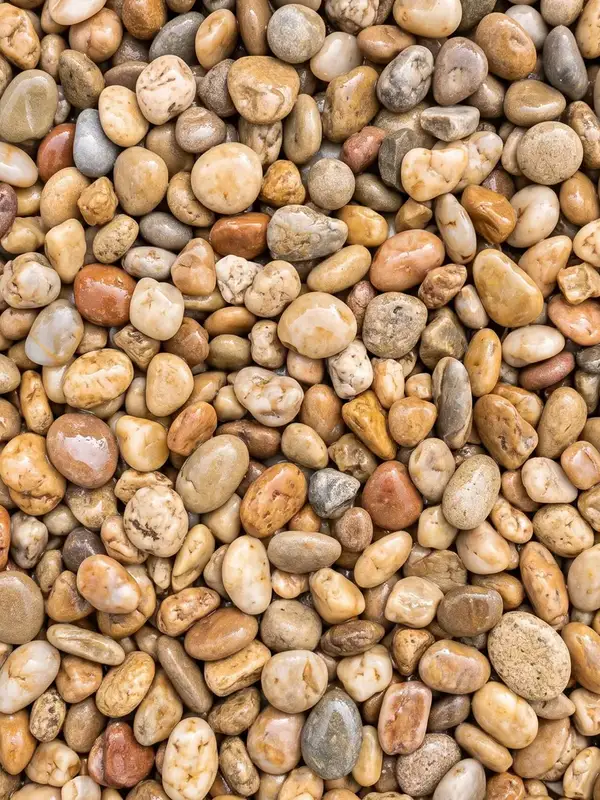
Pea Gravel Delivery in Palatine, IL by the Ton
Bulk pea gravel delivered in Palatine, IL. Stone size 1/4 - 3/8. Tan / mixed color.
Starting from $601.56 delivered to Palatine for 2 tons, our minimum order
Palatine has about 66,000 residents and sits in the northwest suburbs of Chicago. Pea gravel delivery in Palatine, IL gives homeowners a practical way to fix a wet corner, frame a garden path, or dress up a bare strip beside the driveway. The stone arrives loose, so the work is spreading and raking rather than hauling bags.
Sizing a pea gravel order for Palatine yards
Measure the surface in feet, then pick a depth in inches. Multiply the length by the width, multiply that by the depth, and divide by 324 to reach cubic yards. Each cubic yard works out to about 1.4 tons, so convert your yardage before you enter the order. Prefer to skip the math? Run the numbers in the calculator.
Pea gravel delivery in Palatine, IL: pricing by ZIP
The delivered price for your ZIP code shows on the order page as you build the order, so you know the total before you commit. Palatine pea gravel is sold by the ton. Bigger orders move to a lower rate per ton, which rewards one full project over several small top-ups. Every order starts at 2 tons, the smallest size you can place.
Where pea gravel fits in a Palatine yard
A stone-filled trench is a common job. It carries rainwater off a patio or downspout, and the stone keeps the soil from crusting over the drain line. Give the trench a steady fall away from the foundation so the runoff has somewhere to go on a typical Palatine lot.
Pea gravel also suits dry creek beds, garden paths and border strips around evergreens. Its open spaces let rain soak through quickly, and the loose surface is easy to rake back into shape after storms.
- Drainage trenches along patios and foundations
- Dry creek beds and downspout runs
- Garden paths and border strips
Keeping the stone where it belongs
Give the stone a few weeks to settle after it lands. It drops a little in the first rain or two, so a light second pass with a rake fills the low spots. Edging does the rest: a buried plastic or aluminum border along the lawn side stops stone from drifting into the grass.
What a finished Palatine bed looks like
Set pea gravel around low perennials and the stone reads as a soft, even field rather than a hard line. Ornamental grasses and hostas hold their shape well against it, and the tan tone frames bright flowers without competing with them. A bed of the stone also looks tidy beside a stone wall or a cedar fence, since the rounded pieces give the surface a soft finish. Plant spacing matters too, since a crowded clump hides the stone it is meant to set off.
Pairing pea gravel with other landscape materials
Flagstone steps set into a field of pea gravel give a clear path, and a band of river rock along the edge adds a second texture. Pavers make a crisp line where a walk meets the stone.
Small crews and contractors
A small crew can use one stone for several tasks on the same property: backfill around a perforated drain line, a finish layer over a French drain, and a walkway surface nearby. Ordering one material for all of it keeps the list short and the crew moving between sites.
Ordering pea gravel in Palatine, IL
Choose a drop spot the truck can reach, and check that the route is clear of low wires, tight turns and soft ground. A dry week is the easier window for the truck.
The delivery in Palatine page covers local details, and the Pea Gravel in Illinois hub lists the other Illinois towns.
Nearby towns and related materials
Arlington Heights is about 3 miles from Palatine, and Hoffman Estates and Schaumburg are each about 6 miles away. Mount Prospect sits around 7 miles off, and Des Plaines is about 9 miles.
Beds that need more than stone can use Mulch (sold by the cubic yard) or Premium Screened Topsoil (sold by the ton).
About Pea Gravel
This pea gravel is a smooth, washed stone with rounded edges, sized from about 1/4 to 3/8 inch. The color is tan with mixed tones, which warms up brick and light siding and blends with the natural mulch shades common in Illinois gardens.
Loose stone is heavy. A cubic yard comes in around 2,800 pounds, and a ton is 2,000 pounds, so the ton is the unit that matches how the stone is priced and ordered. Plan your tonnage from the volume you need, not from a bag count.
Pea gravel is a finish and drainage material. It is not a structural base for vehicles, but it handles foot traffic, garden beds and decorative fill with ease, and it stays loose enough to rake into shape again after a season of use.
What Pea Gravel costs in Palatine
Local Palatine yards quote pea gravel by the ton; the delivered number includes fuel, the truck, and the haul. Send your ZIP and load size and we will send back a same-hour quote with the truck rate and the per-ton figure spelled out. A ton of this material spreads across about 77 sq ft when laid 3 inches deep, useful when you are sizing a patio base or a walkway run.
How crews use Pea Gravel in Palatine
In and around Palatine, pea gravel shows up most often on two project types. The most common deployment is patio gravel, often in tight urban lots and infill builds in two to three inch lifts. Second on the list is walkway gravel, which we see in dense neighborhoods where curb access is short on partial-truck deliveries. At roughly 65,951 people, the Palatine order mix leans toward 3 to 8 ton residential drops with the occasional 16 ton job for a contractor.
Delivery day in Palatine
A typical Palatine drop is dispatched from the closest yard with a two hour window and a heads-up call once the truck is loaded. Tandem trucks want a 12 ft lane in and out; tri-axles need 14 ft, and both want firm ground at the tipping spot so the load releases cleanly. Standard lead time on this lane is Mon-Sat, with same-day windows held open for orders that hit the desk before 11 AM and clear payment.
Related materials we deliver in Palatine
 Price by ZIP
- Size3/8″
- Density2800 lb/yd³
- ColorMixed earth
 Price by ZIP
- Size1 - 3″
- Density2700 lb/yd³
- ColorMixed natural
 Price by ZIP
- Size0 - 1/4″
- Density3000 lb/yd³
- ColorTan, gold
Estimate how much you need
Work out your material
A planning figure, not a guarantee. Order roughly a tenth extra to cover settling and uneven ground.
Browse more
Available in nearby cities
Plan your project
Related guides
GUIDEGravel Size Chart: Pea Gravel to Crushed StoneA gravel size chart showing pea gravel, crushed stone and river rock diameters side by side, so you can match the right size to your project.Read guide →GUIDEThe Different Types of Gravel and How to ChooseA plain-language guide to the main types of gravel, covering pea gravel, crushed stone, river rock and decomposed granite.Read guide →GUIDEHow Much Does Gravel Cost? A Practical Pricing GuideHow much does gravel cost and why does it vary? See the real factors behind ton pricing, delivery, and order size before you buy.Read guide → GUIDEDoes Gravel Stop Weeds? Honest Answer + What WorksPractical, field-tested guide: does gravel stop weeds. Pulled from real US installer notes and 2026 supplier price data.Read guide →
Frequently Asked Questions
Is pea gravel better than crushed stone for a path?
It depends on the use. Pea gravel feels softer underfoot and rakes easily, which suits a casual garden walk. Crushed stone usually wins, and for a relaxed garden path, pea gravel is the friendlier choice.
How is pea gravel different from river rock?
River rock works well as a decorative feature in a bed you mostly look at, while pea gravel suits spaces where people walk, rake or dig.
Do I need a weed barrier under pea gravel?
A barrier is optional. Fabric slows weeds, but it is not required, and a thicker stone layer also helps shade the soil. If you use it, cut the fabric a few inches wider than the border and tuck the edges under the stone at the sides. Skip it in beds you plan to plant through often, since cutting holes gets tedious.
What depth works for a decorative bed?
A decorative bed usually looks finished with a layer about two inches deep. A bed under a shrub or next to a tall planting may need a bit more, while a narrow strip can get by with less. Thicker layers hold up better over time, but very deep stone can hide the soil and make planting harder.
Does pea gravel stay clean under a tree?
Leaves and seed pods settle into the gaps and hold moisture, which can leave a dull film on the surface. Sweep or blow off debris in autumn, and pull any sprouts while they are small. A light rake with flexible tines lifts leaves without digging into the stone.
Is pea gravel easy to dig through for planting?
Yes, though you will need to push the stone aside first. Clear a small circle down to the soil, set the plant, then pull the stone back around the stem. A thin layer is quicker to work with than a deep one, and a trowel makes the job faster in a crowded bed.
Does pea gravel hold up through the winter?
Stone stays loose through the cold months, and it does not hold water on the surface the way a wood mulch bed can. Snow piles push stone toward the edges, so plan a spring raking to bring the surface back into shape. Any stone that drifts onto a walk can be swept back with a stiff broom.
Can pea gravel be used indoors?
Pea gravel is a landscape material, so keep it outdoors. Stones tracked onto hard floors turn into grit that scratches finishes and stays underfoot. If you need a stone surface for a covered patio or a shed floor, talk through the options with a flooring or landscape professional before spreading anything.