
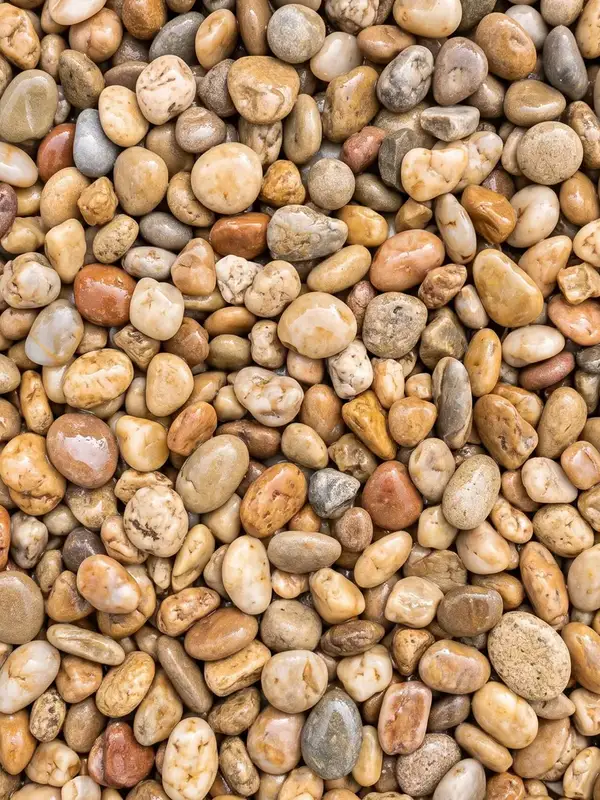
Bulk Pea Gravel Delivery in Muncie, IN by the Ton
Bulk pea gravel delivered in Muncie, IN. Stone size 1/4 - 3/8. Tan / mixed color.
Starting from $565.50 delivered to Muncie for 2 tons, our minimum order
Pea gravel delivery in Muncie, IN can go straight to your address, so you skip the store run and the pickup loading. Muncie has about 65,000 residents, and the same stone suits a single entry walk as well as a wide garden bed or a drainage strip along a back fence. The sections below cover local context, the best uses, delivery, sizing, pricing and ordering.
Local overview for Muncie, Indiana
Muncie sits in east central Indiana. Lots in the city vary, so the stone has to suit both flat yards and ones with a noticeable grade.
The nearby cities listed for Muncie are Anderson at about 17 miles, Noblesville at about 34, Fishers at about 37, Westfield at about 39 and Carmel at about 41. If you want the statewide view first, begin with Pea Gravel in Indiana.
Best uses for pea gravel in Muncie
Pea gravel earns its keep in a handful of common settings, and each one puts the rounded shape to use in its own way.
- Front walks and side paths: a loose surface that drains quickly and rakes back into line by hand, which suits the narrow runs that follow the side of a house.
- Planting beds: a decorative top layer that keeps the look neat between perennials and shrubs.
- Drainage strips: a band of stone along a downspout or fence line that carries runoff away from the house.
- Paver borders: a clean edge where a patio meets the lawn.
Grade is the single biggest variable for these spots. Ground that tilts toward the house pushes water and stone against the foundation, so set the finished surface to fall away from the structure.
Delivery to your Muncie address
Your load is dropped at the address you give, and the delivered price for that ZIP comes up on this page. More detail on city service is at delivery in Muncie.
Pick a drop spot with firm footing, a straight approach and enough room to swing a wheelbarrow. Trim low branches and move any vehicle that would block the truck, since a blocked route pushes the load to a worse spot.
Sizing your pea gravel order
Multiply the length in feet by the width in feet and by the depth in inches, then divide the product by 324 to reach cubic yards. Pea gravel is sold by weight, so convert the yards: a yard of this stone runs about 1.4 tons at 2,800 lb per yard against 2,000 lb to the ton.
Muncie yards with a grade swallow more stone than a flat sketch predicts, so pad the result by about 10 percent and you will not come up short on the last corner.
Depth is the other half of the sizing choice, and it should follow how the area gets used. A thin layer of about an inch looks light on a border, but it thins out fast under foot traffic. Two inches holds up better on a walk, and a bed with healthy soil underneath can get away with the thinner layer.
A 12 foot by 15 foot border laid at 2 inches comes to about 1.1 cubic yards, or about 1.6 tons, which the smallest order of 2 tons covers, so you would order 2 tons.
The calculator will run the conversion for you if you would rather not do it by hand.
Pricing notes
Pea gravel carries a per-ton price that includes delivery to your address, so the figure you see is the figure you pay for the load. Bigger loads come with a lower rate per ton, so try a few tonnage values to see where the rate steps down before you lock in a number.
Mulch is measured in cubic yards, so use its page for yard quantities. Premium Screened Topsoil is measured in tons, and its Muncie page carries its own figures.
Ordering pea gravel in Muncie, IN
Order when the ground is dry if you can. A truck crossing saturated turf can cut ruts that are a chore to fill, so choose a day after the ground has firmed up.
Enter the tonnage, check the total, and confirm the drop spot before you check out. Stay available on delivery day to direct the truck and rake the first pile into place, since loose stone migrates quickly.
About Pea Gravel
This pea gravel is a small, rounded stone sized to about 1/4 to 3/8 inch. Its tan and mixed tones give a walkway or planting bed a warm, even finish, and the pieces are uniform enough to rake into a clean surface.
Because the pieces are round, they shift when stepped on or raked hard. That makes the stone best for surfaces people walk across lightly, for borders that hold it in place, and for dry creek beds where a natural look matters more than firm footing.
Muncie homeowners and small contractors use it for front walks, side yard paths and the change between lawn and garden. The stone arrives loose, so there are no bags to open, and you order it by the ton like the other bulk products in the lineup.
What Pea Gravel costs in Muncie
In the Muncie market, pea gravel is sold by the ton and priced at the gate before delivery is added on. Send your ZIP and load size and we will send back a same-hour quote with the truck rate and the per-ton figure spelled out. One ton covers about 77 sq ft at a 3 inch finished depth, so a 400 sq ft driveway pad runs roughly 6 tons.
How crews use Pea Gravel in Muncie
Crews working out of Muncie tend to call for pea gravel on a few repeat jobs each week. The first is patio gravel, typically laid in tight urban lots and infill builds with a base lift compacted before the finish course goes on. The second is walkway gravel, which lands here in dense neighborhoods where curb access is short and usually ships as a 4 to 8 ton order. With a population around 65,320, Muncie pulls a mix of single-truck homeowner orders and contractor full-loads through the season.
Delivery day in Muncie
On the day of the drop, the dispatcher pulls the closest yard, batches your ticket with other Muncie stops, and sends a window the night before. Tandem-axle dumps need at least 12 ft of clear width and 14 ft overhead to set the bed; tri-axles need 14 ft of clearance on both counts and a level pad to tip safely. Standard lead time on this lane is Mon-Sat, with same-day windows held open for orders that hit the desk before 11 AM and clear payment.
Related materials we deliver in Muncie
 Price by ZIP
- Size3/8″
- Density2800 lb/yd³
- ColorMixed earth
 Price by ZIP
- Size1 - 3″
- Density2700 lb/yd³
- ColorMixed natural
 Price by ZIP
- Size0 - 1/4″
- Density3000 lb/yd³
- ColorTan, gold
Estimate how much you need
Work out your material
A planning figure, not a guarantee. Order roughly a tenth extra to cover settling and uneven ground.
Browse more
Available in nearby cities
Plan your project
Related guides
GUIDEGravel Size Chart: Pea Gravel to Crushed StoneA gravel size chart showing pea gravel, crushed stone and river rock diameters side by side, so you can match the right size to your project.Read guide →GUIDEThe Different Types of Gravel and How to ChooseA plain-language guide to the main types of gravel, covering pea gravel, crushed stone, river rock and decomposed granite.Read guide →GUIDEHow Much Does Gravel Cost? A Practical Pricing GuideHow much does gravel cost and why does it vary? See the real factors behind ton pricing, delivery, and order size before you buy.Read guide → GUIDEWhat Size Crushed Stone Goes Under a Concrete SlabMost slabs need 4 to 6 inches of compacted crushed stone underneath. What size crushed stone under a concrete slab needs, and why it matters.Read guide →
Frequently Asked Questions
How do I rake pea gravel so it lies flat?
Work in short passes with a flat rake, pulling the stone toward low spots rather than pushing it in heaps. Keep the rake head nearly level so you do not dig into the layer below. Stones that have rolled into a border can be scooped back with a hand trowel. Finish with a light pass across the whole surface so the depth looks even from one end to the other.
How should I lay pea gravel on a sloped Muncie lot?
Work across the slope in short sections and keep each section edged on its low side so the stone cannot slide downhill as a single sheet. Use a modest depth on the incline, because a thick layer shifts more than a thin one. Check the lower end after the first few rainstorms and rake any stone that has drifted back up to where it started.
How deep should a drainage strip of pea gravel be?
A strip along a downspout or fence usually works at about 3 to 4 inches, deep enough that water sinks in and moves along instead of running over the top. Dig the trench so the bottom falls gently away from the house, then fill it level with the surrounding soil. Keep leaves and soil off the stone so the gaps between pieces stay open.
How wide should a pea gravel walk to the front door be?
About 3 feet suits a single walker and lets two people pass with a little courtesy. Go closer to 4 feet if you carry groceries or push a stroller along it. Keep the width the same from end to end so the edging runs straight, and widen the spot at the door or gate where people tend to pause and turn around.
Can I shovel snow off a pea gravel path in winter?
You can, but it takes a lighter touch than on pavement. Use a plastic shovel or a push-style blower with the blade lifted slightly, so you take the snow without scooping up much stone. Expect to find a few pieces on the lawn in spring, and rake them back into the path once the ground has thawed and dried out.
Will pea gravel suit a brick or stone house?
Usually yes. The tan and mixed tones are warm and light, so they sit well beside brick and natural stone without fighting the color. Choose a darker edging material if you want the border to stand out, or a matching tone if you want the bed to blend into the foundation line. A quick look at the house before ordering helps you pick.
Does pea gravel sink into the soil over time?
Some of it will, especially over soft ground that was never firmed up. Tamp or roll the subgrade before the stone goes down so it has a stable base to sit on. A layer of 2 inches or so also gives the stone enough thickness to stay visible. If the surface looks thin after a season, add a light top-up and rake it flat.
Can I order a small amount for one planter?
Orders start at 2 tons, which is more stone than most planters hold. For a few containers, a bag of decorative stone from a garden center may suit better. Bulk delivery works best for beds, borders and paths, where a single load covers a large area at once and avoids repeat bag runs.