
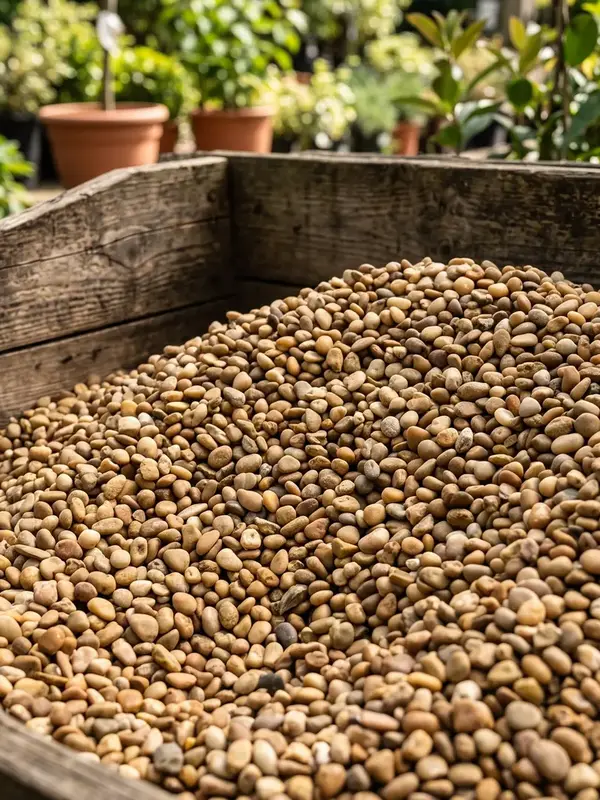
Pea Gravel Delivery in Jersey City, NJ: Tonnage and Timing
Bulk pea gravel delivered in Jersey City, NJ. Stone size 1/4 - 3/8. Tan / mixed color.
Starting from $643.43 delivered to Jersey City for 2 tons, our minimum order
Where Pea Gravel Fits Best in Jersey City
Jersey City's density shapes almost every use for pea gravel here, since most lots are small, fenced and wedged between neighbors rather than open and sprawling. Common jobs include:
- Rear courtyard beds behind rowhouses in the Heights and Journal Square
- Rooftop and podium planters where a lightweight loose fill beats poured concrete
- Narrow drainage channels along foundation walls close to the waterfront
- Small dog runs tucked behind multi-family buildings
- Decorative borders around street trees where soil has been compacted by foot traffic
Because so much of downtown Jersey City sits on filled land near the Hudson, a bed that drains fast rather than holding water against a foundation matters more here than it does further inland.
Pea Gravel Delivery in Jersey City, New Jersey: The City Itself
Jersey City is New Jersey's second largest city, home to about 303,000 people packed onto a waterfront peninsula directly across the Hudson River from lower Manhattan. Pea gravel delivery in Jersey City, NJ has to account for a skyline of high rises downtown giving way to older rowhouse blocks in the Heights and Journal Square just a short distance inland. New York City sits about 3 miles across the water, Newark is roughly 8 miles west, Elizabeth is close to 9 miles southwest, Bergen County starts around 14 miles north and Paterson is about 17 miles northwest, so trucks serving this stretch of the Hudson waterfront often cover several of these stops on one route. For rates and scheduling anywhere else in the state, see Pea Gravel in New Jersey.
Working Out How Much Pea Gravel a Jersey City Lot Needs
Multiply a bed's length and width in feet by its depth in inches, then divide by 324, and the result is the cubic yardage to order. A small rear patio bed 8 feet by 5 feet at 4 inches deep, common behind a Jersey City rowhouse, works out to a little under half a cubic yard. Pea gravel weighs close to 2,800 pounds per cubic yard, so that same patio converts to close to seven tenths of a ton once it is ordered. The pea gravel calculator handles the conversion automatically for an oddly shaped courtyard or a raised planter bed.
Pricing Notes for Jersey City Orders
Pricing here runs strictly by the ton, the same way it does for crushed stone, river rock and topsoil. Mulch is the one exception on this site, priced instead by the cubic yard. The rate for pea gravel steps down three times as the order size grows.
| Order size | Price per ton | Delivery |
|---|---|---|
| 3 tons or more | $252 | 1 to 2 business days |
| 8 tons or more | $163 | Same or next day |
| 15 tons or more | $135 | Free delivery |
Checkout asks for a ZIP code because the exact delivered rate for a Jersey City address depends on the drop location, not just the tonnage ordered.
Delivery and Lead Times for Jersey City
A 3 ton order to a Jersey City address typically ships within 1 to 2 business days of being scheduled. Moving up to 8 tons usually shortens that window to same day or next day. At 15 tons the delivery fee drops away and the order ships free. Loading docks, doorman buildings and metered streets are common downtown, so noting a specific entrance or a freight elevator ahead of time helps the driver land the load without circling the block. Full scheduling detail for the city lives on the delivery in Jersey City page.
Placing a Pea Gravel Order in Jersey City
An order needs a ZIP code, a tonnage tier and a delivery window that matches the site. A rooftop planter or a single rear courtyard bed usually lands in the 3 to 8 ton range, while a larger podium deck or a multi-unit building project can clear 15 tons to reach the lowest rate. Flagging the exact drop point in advance matters more here than in a suburb, since a freight elevator, a loading dock reservation or a narrow gate access can decide whether delivery happens in one trip. Ordering slightly past the calculator's minimum leaves room for the bed to settle after a few weeks.
About Pea Gravel
Pea gravel is a small stone, about a quarter inch to three eighths of an inch across, rounded smooth by moving water rather than crushed into sharp fragments. That is the main difference from crushed stone, which comes off a rock crusher with hard, angular edges built to lock together. Pea gravel is sold in a mixed tan and buff color, and a cubic yard of it weighs close to 2,800 pounds. Because the pieces are round instead of angular, they will not bind into a solid base, so it is a poor fit for a driveway or anywhere that has to carry vehicle weight.
What it does well is move water fast. On a filled waterfront lot like much of downtown Jersey City, a bed of loose stone drains a heavy rain far quicker than compacted soil or turf, which helps keep water away from a foundation or a below grade entrance. It shows up most in rooftop and podium planters, narrow drainage channels along foundation walls, and rear courtyard beds behind rowhouses in the Heights. A metal or plastic edge along any bed keeps the stone contained, which matters more than usual on small, fenced Jersey City lots where a few inches of drift can put gravel into a neighbor's yard.
What Pea Gravel costs in Jersey City
Around Jersey City, pea gravel is quoted by the ton with delivery layered in based on distance from the closest yard. Send your ZIP and load size and we will send back a same-hour quote with the truck rate and the per-ton figure spelled out. Plan on roughly 77 sq ft of coverage per ton at 3 inches deep, which puts a single-car driveway in the 4 to 8 ton bracket.
How crews use Pea Gravel in Jersey City
Jersey City contractors keep pea gravel on the order sheet for a short list of standard installs. Top of the list is patio gravel, where the material is rolled out in tight urban lots and infill builds and screeded to grade. Right behind that is walkway gravel, common in dense neighborhoods where curb access is short and often paired with edging or fabric below the lift. Jersey City sits at about 302,824 residents, which means we see steady weekday traffic from landscape crews and weekend pickups from owner-builders.
Delivery day in Jersey City
Delivery in Jersey City runs out of the nearest pit; you get a two hour arrival window the evening prior and a call when the driver leaves the scale. Plan for 12 ft of clear path for a tandem and 14 ft for a tri-axle, plus a level area at the dump point so the bed lifts straight. Standard lead time on this lane is Mon-Sat, with same-day windows held open for orders that hit the desk before 11 AM and clear payment.
Related materials we deliver in Jersey City
 Price by ZIP
- Size3/8″
- Density2800 lb/yd³
- ColorMixed earth
 Price by ZIP
- Size1 - 3″
- Density2700 lb/yd³
- ColorMixed natural
 Price by ZIP
- Size0 - 1/4″
- Density3000 lb/yd³
- ColorTan, gold
Estimate how much you need
Work out your material
A planning figure, not a guarantee. Order roughly a tenth extra to cover settling and uneven ground.
Browse more
Common uses for Pea Gravel in Jersey City
Available in nearby cities
Plan your project
Related guides
GUIDEGravel Size Chart: Pea Gravel to Crushed StoneA gravel size chart showing pea gravel, crushed stone and river rock diameters side by side, so you can match the right size to your project.Read guide →GUIDEThe Different Types of Gravel and How to ChooseA plain-language guide to the main types of gravel, covering pea gravel, crushed stone, river rock and decomposed granite.Read guide →GUIDEHow Much Does Gravel Cost? A Practical Pricing GuideHow much does gravel cost and why does it vary? See the real factors behind ton pricing, delivery, and order size before you buy.Read guide → GUIDEWhat Is #57 Stone? Uses, Size, and Cost ExplainedPractical, field-tested guide: what is 57 stone. Pulled from real US installer notes and 2026 supplier price data.Read guide →
Frequently Asked Questions
What is pea gravel best used for around Jersey City?
It suits the small, fenced lots and rooftop spaces that are common across the city, especially where pouring concrete is not practical. Typical jobs include rooftop and podium planters, narrow drainage channels along a foundation wall, and rear courtyard beds behind rowhouses in the Heights. The rounded stone stays comfortable underfoot while draining far faster than compacted soil.
What separates pea gravel from crushed stone?
Pea gravel is rounded by moving water into smooth pieces, while crushed stone is broken by a rock crusher and keeps sharp, angular edges. The angular stone locks together into a firm base, which is why it suits a driveway, while pea gravel stays loose and is better reserved for beds, paths and drainage rather than anywhere that has to carry vehicle weight.
Is an edge or border necessary on a small Jersey City lot?
Yes, and it matters even more on a small lot than a large one. Loose stone drifts with foot traffic and rain, and on a fenced courtyard or a rooftop planter there is very little room for it to spread before it reaches a neighbor's space. A metal or plastic edge keeps the bed contained and cuts down on raking.
How does the pricing tier system work?
Pea gravel is priced and delivered strictly by the ton, with the rate stepping down as the order size increases across three tiers, from a smaller order up through a full bulk load where the delivery fee is waived. Entering a ZIP code at checkout surfaces the exact delivered rate for a given Jersey City address, since the fee depends on the drop location.
How quickly can delivery reach a Jersey City address?
A 3 ton order is typically scheduled 1 to 2 business days out. Stepping up to 8 tons often tightens that window to same day or next day service. Choosing a firm delivery window at checkout is the most reliable way to plan around the truck, especially on a downtown block where curb space and loading docks are limited.
What helps a delivery go smoothly at a high rise or rowhouse?
Flagging a loading dock reservation, a freight elevator or a specific building entrance ahead of time makes the biggest difference downtown, while a rowhouse delivery mostly needs a clear path from the curb to the drop point. Marking the exact spot before the truck arrives saves time, since a full load is heavy to move far by hand.
Does Jersey City's waterfront location affect drainage needs?
It does. Much of downtown sits on filled land close to the Hudson River, and a bed that drains fast keeps water away from a foundation or a below grade entrance better than compacted soil or turf. That is part of why loose stone shows up so often in drainage channels and rooftop planters across the city.
Can pea gravel be used on a rooftop or podium deck?
Yes, in a planter or contained bed with proper drainage underneath, though its own weight should be checked against the structure's load limits before ordering a large quantity. Because it stays loose rather than compacting into a solid mass, it works well in a raised planter as long as an edge keeps it from spilling over the side.