
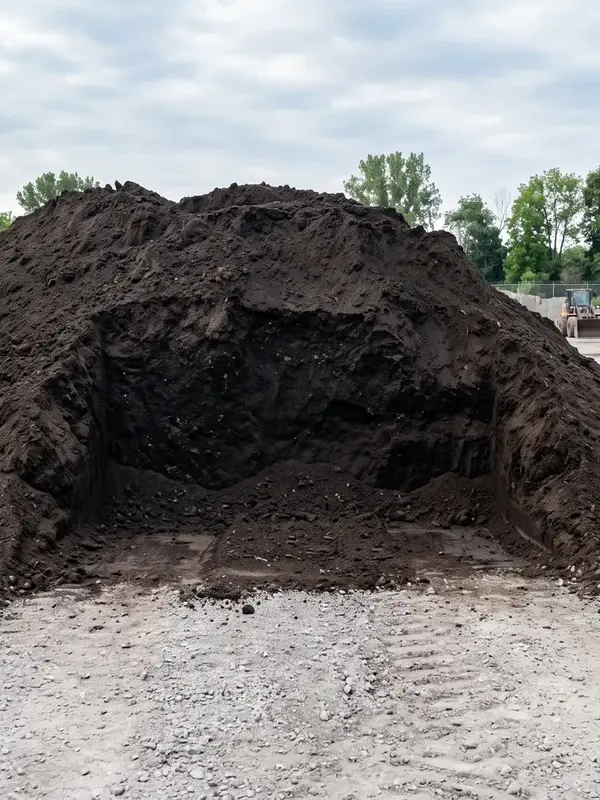
Premium Screened Topsoil Delivery in Coconut Creek, FL
Bulk premium screened topsoil delivered in Coconut Creek, FL. Stone size screened. Dark brown color.
Starting from $536.84 delivered to Coconut Creek for 2 tons, our minimum order
Topsoil delivery in Coconut Creek, FL solves a few common yard problems: a lawn that thins out under heavy shade, a new flower bed beside a driveway, or a low corner that stays soggy after a summer storm. Premium Screened Topsoil in Florida is a dark brown material sold by the ton, and it gives grass and plants a deeper growing layer than the thin fill that often covers a newly built lot.
Where topsoil fits in Coconut Creek yards
Coconut Creek has about 60,000 residents, and plenty of its homes sit on lots that were cleared and graded during construction. Crews often leave a thin cover over sandy or rocky fill, so the ground struggles to hold seed and water. A new layer of topsoil helps with jobs like these:
- Overseeding or sodding a yard where construction traffic packed the ground.
- Building up a raised bed for vegetables, herbs or a row of shrubs.
- Filling bare patches under shade trees where the grass has given up.
- Raising a planting strip along a fence line or a walkway.
Slope and drainage matter as much as depth. Where rain collects, spread the topsoil in thin passes and shape the surface so water runs away from the house. One deep mound will only shed rain onto the next yard.
Many Coconut Creek lawns are warm-season grasses such as St. Augustine or Bahia. Those grasses spread by runners above the ground, so a level layer of topsoil gives the runners a smooth bed to root into. Thin areas often fill in from the edges once the surface is even, which can spare you from reseeding the whole yard.
Foundation beds around a home lose soil over the years, because rain splashes the top layer away from the mulch line and the plants sit lower each season. Refilling those beds restores the planting depth shrubs and groundcovers need. A bed that sits even with the lawn edge also looks tidier from the street, and it is easier to edge and mow.
How much topsoil Coconut Creek projects need
To estimate a load, multiply the length and width of the area in feet, then multiply that by the depth in inches and divide by 324. The result is cubic yards. Each cubic yard of this material weighs about 2,200 lb, which works out to roughly 1.1 tons, so the ton count is the figure you order by. Our topsoil calculator runs the same steps if you would rather type in your dimensions.
Loose topsoil settles once it is watered and walked on, so round up for a low spot or a deep fill rather than ordering the bare number.
Ordering topsoil delivery in Coconut Creek, FL
The smallest order is 2 tons. Larger orders get a lower rate per ton, so one bigger load usually beats two small ones. Enter your ZIP code to see the delivered price for your address before you order, since that figure is what you pay. For city details, see delivery in Coconut Creek.
Pick a drop spot the truck can reach on a driveway or hard pad, because a loaded truck can sink into soft lawn and leave ruts. Look for overhead lines and low limbs along the route, and mark where the pile should go so the driver can place it on the first pass.
Other materials for Coconut Creek projects
Not every job calls for topsoil. Once the new layer is in, many homeowners finish beds with Mulch, which is sold by the cubic yard rather than by the ton. Pea Gravel is sold by the ton and suits paths or a drainage trench where water needs to move quickly.
Homeowners in nearby Margate, about 3 miles away, and Deerfield Beach, about 4 miles away, can use the same steps. Pompano Beach and Coral Springs are each about 5 miles off, and Tamarac is about 7 miles away.
Timing your topsoil work in Coconut Creek
The summer rainy season brings storms most afternoons, and soaked topsoil is heavy to move and slow to firm up. Aim for a stretch of dry mornings to spread the material, and keep vehicles off the spread area while it is still wet.
About Premium Screened Topsoil
Premium Screened Topsoil is a dark brown, natural soil that has been screened to remove rocks, roots and large clods before it is loaded. What remains is a mix of mineral particles and organic matter that holds moisture better than plain sand and gives plant roots a workable place to grow. The fine, even texture spreads in a thin layer and rakes out smooth, which helps seed make firm contact with the surface.
Topsoil is the growing layer itself, so it works differently from compost is often blended into it for beds that need extra organic matter, while mulch is spread on top to slow evaporation and crowd out weeds. The material serves as the planting medium for shrubs, perennials and new turf alike.
What Premium Screened Topsoil costs in Coconut Creek
In the Coconut Creek market, premium screened topsoil is sold by the ton and priced at the gate before delivery is added on. Send your ZIP and load size and we will send back a same-hour quote with the truck rate and the per-ton figure spelled out. One ton covers about 98 sq ft at a 3 inch finished depth, so a 400 sq ft driveway pad runs roughly 5 tons.
How crews use Premium Screened Topsoil in Coconut Creek
Crews working out of Coconut Creek tend to call for premium screened topsoil on a few repeat jobs each week. The first is planting bed gravel, typically laid in tight urban lots and infill builds with a base lift compacted before the finish course goes on. The second is erosion control, which lands here in dense neighborhoods where curb access is short and usually ships as a 4 to 8 ton order. With a population around 59,721, Coconut Creek pulls a mix of single-truck homeowner orders and contractor full-loads through the season.
Delivery day in Coconut Creek
On the day of the drop, the dispatcher pulls the closest yard, batches your ticket with other Coconut Creek stops, and sends a window the night before. Tandem-axle dumps need at least 12 ft of clear width and 14 ft overhead to set the bed; tri-axles need 14 ft of clearance on both counts and a level pad to tip safely. Standard lead time on this lane is Mon-Sat, with same-day windows held open for orders that hit the desk before 11 AM and clear payment.
Related materials we deliver in Coconut Creek


Estimate how much you need
Work out your material
A planning figure, not a guarantee. Order roughly a tenth extra to cover settling and uneven ground.
Browse more
Available in nearby cities
Plan your project
Related guides
 GUIDEHow Much Gravel Do I Need? Quick Sizing GuidePractical, field-tested guide: how much gravel do i need. Pulled from real US installer notes and 2026 supplier price data.Read guide →
 GUIDEWhat Is #57 Stone? Uses, Size, and Cost ExplainedPractical, field-tested guide: what is 57 stone. Pulled from real US installer notes and 2026 supplier price data.Read guide →
 GUIDEHow Deep Should a Gravel Driveway Be? Layer GuidePractical, field-tested guide: how deep should gravel driveway be. Pulled from real US installer notes and 2026 supplier price data.Read guide →
 GUIDEHow Much Does River Rock Cost? By Ton or YardRiver rock cost depends on your ZIP code, order size, and whether you buy by the ton or the cubic yard. Here is how pricing works.Read guide →
Frequently Asked Questions
What is the difference between topsoil and fill dirt?
Fill dirt is often the better match. For seeding, planting beds or a thin top-dress, topsoil gives the better result.
Can topsoil go under pavers or a driveway?
No. Topsoil holds water and shifts over time, so it is a poor base for pavers, patios or driveways. Those projects need a compacted base material, such as crushed stone, with a proper bedding layer on top. Use topsoil only in the planting areas around a hardscape edge, where grass and roots can actually use it.
Should I water the topsoil right after it is spread?
Yes, but lightly at first. A gentle watering soaks the top few inches so seed and new roots have moisture to start. Water in short sessions across the day rather than one heavy soak, which can wash the surface off a slope. Once seed has sprouted, switch to deeper, less frequent watering so roots grow down into the new layer.
Can I mix compost into topsoil before planting?
You can, and many gardeners do. A blend of roughly one part compost to three parts topsoil gives beds more organic matter, which helps the soil hold moisture and nutrients. Mix it thoroughly with a shovel or tiller and break up any wet clumps first. For a lawn that only needs a fresh surface, plain topsoil is usually enough.
Do I need to remove the old grass before adding topsoil?
Not always. If the existing lawn is healthy and only needs a fresh surface, you can spread a thin layer over it and rake it in. If the grass is dead, matted or heavily weedy, remove as much as you can first, because a layer over dead turf will not root well. Mow the area short before you start so the new material sits evenly.
How deep should a vegetable bed be?
Most vegetables do well in a bed at least 8 to 10 inches deep, which gives roots room to grow. Deeper beds drain better and warm up sooner in spring. If your yard sits over hard fill, a deeper bed also keeps roots out of the poor ground beneath it. You can build up the depth in stages over a season.
Is topsoil safe for growing vegetables?
It can be, but the answer depends on what the soil contains and what grew there before. Check the material's details before you use it on food crops, and consider a soil test through your local county extension office. A test shows nutrient levels and pH, which tell you whether to add lime, compost or fertilizer.
What is the difference between topsoil and potting soil?
Potting soil is a bagged mix made for containers, usually with peat or coir, bark and perlite added for drainage and lightness. Topsoil is a natural soil that is screened to remove debris and sold in bulk for ground-level planting. It is heavier and denser than potting mix, so it is a poor choice for pots but a good match for in-ground beds and lawns.