
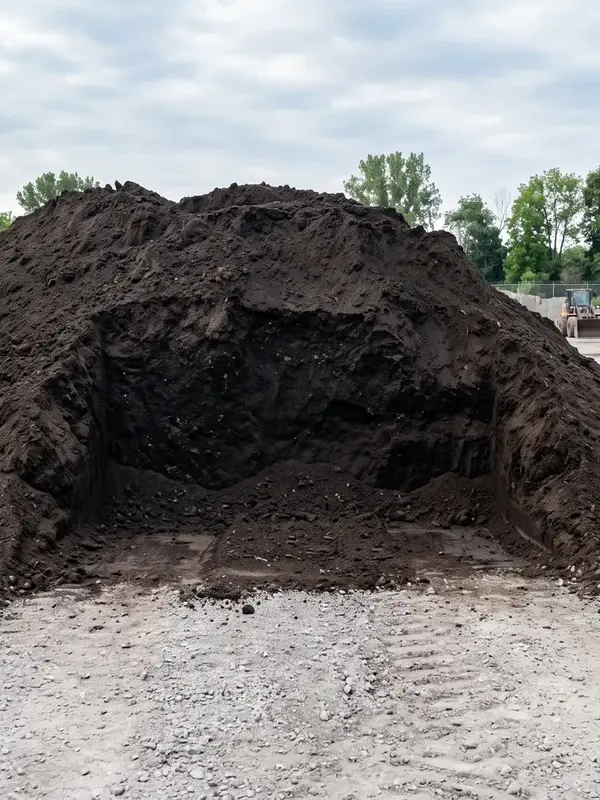
Premium Screened Topsoil Delivery in Corvallis, OR
Bulk premium screened topsoil delivered in Corvallis, OR. Stone size screened. Dark brown color.
Starting from $523.77 delivered to Corvallis for 2 tons, our minimum order
Many Corvallis lots were scraped down to subsoil during building work, and the grass that follows stays thin. Topsoil delivery in Corvallis, OR suits those yards, in a city of about 62,000 residents in the Willamette Valley. A screened layer gives grass seed and new plantings a clean place to start.
Topsoil delivery in Corvallis, OR
A load arrives as one pile, so the drop point needs planning. Choose a level area on the driveway or along the paved edge, and check the route for overhanging limbs, fences and soft ground a heavy truck could sink into. Tell the driver about any tight turns when you order, since that shapes where the pile can go.
The delivery in Corvallis page explains the city-level details, and the product page handles the rest of the order.
Best uses for topsoil in Corvallis
Screened topsoil usually earns its place in a Corvallis yard in these situations:
- Repairing a lawn with bare patches after heavy foot traffic
- Raising vegetable beds in a sunny side yard
- Backfilling around young shrubs and small trees
- Creating a planting strip along a front walk
- Leveling a low corner beside the garage
Early fall is the common planting window in this part of Oregon, since autumn rain helps seed germinate and roots establish before winter. Before spreading, rake the old surface lightly so the new material bonds with it. Thick mats of old turf should be cut back or removed first.
Pricing for Corvallis orders
Your ZIP sets the delivered price, which the site calculates live and displays before you check out. Bigger orders bring the rate per ton down, so compare a few tonnage levels before you commit to one.
In Corvallis, Premium Screened Topsoil is sold by the ton. Two tons is the least you can order, and every quote here already includes delivery to the address you enter.
Calculating the soil you need in Corvallis
Volume in cubic yards equals length in feet times width in feet times depth in inches, divided by 324. Each cubic yard weighs about 2,200 pounds, which converts to roughly 1.1 tons. Expect the soil to compress a little after it is watered and walked on, so round the total up rather than down.
A 10 by 30 foot strip at 3 inches deep works out to 2.8 cubic yards, or about 3 tons. The calculator keeps that arithmetic in one place, so run your own dimensions through it.
Finishing the surface in Corvallis
Finishing takes more attention than spreading. Work the soil with the back of a rake to knock down the peaks, pick out any stray stones the screen missed, and check the surface with a long straight board so low spots show up before you plant. Edges along walks and driveways deserve a few extra minutes, because a thin line of soil there is the first place a gap appears. A steady hand on the rake makes the difference between a lawn that looks finished and one that looks patched.
Matching the soil to the job
Lawns and planting beds ask different things of the soil. A lawn needs a surface that stays even under mowing and foot traffic, while a bed needs loose material that roots can explore without fighting. If you are doing both on one property, sort the work by area before you order, so each section gets the amount it needs instead of one large pile split by guesswork.
Corvallis sits about 10 miles from Albany, about 31 miles from Salem, roughly 38 miles from Eugene and about 39 miles from Springfield. A split-level lot with a sloped front and a flat back often needs two different depths, so measure each part separately.
Ordering your Corvallis topsoil
Open the product page, choose the tonnage, enter your ZIP and check out. If you want the statewide picture before ordering, the Premium Screened Topsoil in Oregon page covers it.
Once the beds are shaped, Mulch is sold by the cubic yard and suits the shrub borders around a Corvallis porch, while Pea Gravel is sold by the ton and works for a side-yard walkway to the garden gate.
About Premium Screened Topsoil
Screened topsoil is ground material that has been run through a screen to remove the larger clods, rocks and roots. Premium Screened Topsoil arrives as loose, dark brown soil, and the screening keeps the surface easy to rake to an even finish.
The product weighs about 2,200 pounds per cubic yard. For ordering, the quantity is counted in tons, and one ton is 2,000 pounds, so a ton is a little less than one cubic yard of this soil. Plan your square footage around that difference rather than around a loose guess.
This is a surface material meant for growing. Use it for lawns, garden beds, planters and shallow grade changes. For a firm surface under a patio, a shed or a driveway, a crushed base material is the better choice, since soil alone will shift and settle under weight.
What Premium Screened Topsoil costs in Corvallis
Around Corvallis, premium screened topsoil is quoted by the ton with delivery layered in based on distance from the closest yard. Send your ZIP and load size and we will send back a same-hour quote with the truck rate and the per-ton figure spelled out. Plan on roughly 98 sq ft of coverage per ton at 3 inches deep, which puts a single-car driveway in the 4 to 7 ton bracket.
How crews use Premium Screened Topsoil in Corvallis
Corvallis contractors keep premium screened topsoil on the order sheet for a short list of standard installs. Top of the list is planting bed gravel, where the material is rolled out in tight urban lots and infill builds and screeded to grade. Right behind that is erosion control, common in dense neighborhoods where curb access is short and often paired with edging or fabric below the lift. Corvallis sits at about 61,993 residents, which means we see steady weekday traffic from landscape crews and weekend pickups from owner-builders.
Delivery day in Corvallis
Delivery in Corvallis runs out of the nearest pit; you get a two hour arrival window the evening prior and a call when the driver leaves the scale. Plan for 12 ft of clear path for a tandem and 14 ft for a tri-axle, plus a level area at the dump point so the bed lifts straight. Standard lead time on this lane is Mon-Sat, with same-day windows held open for orders that hit the desk before 11 AM and clear payment.
Related materials we deliver in Corvallis


Estimate how much you need
Work out your material
A planning figure, not a guarantee. Order roughly a tenth extra to cover settling and uneven ground.
Browse more
Available in nearby cities
Plan your project
Related guides
 GUIDEWhat Is #57 Stone? Uses, Size, and Cost ExplainedPractical, field-tested guide: what is 57 stone. Pulled from real US installer notes and 2026 supplier price data.Read guide →
 GUIDEHow Deep Should a Gravel Driveway Be? Layer GuidePractical, field-tested guide: how deep should gravel driveway be. Pulled from real US installer notes and 2026 supplier price data.Read guide →
 GUIDEHow Much Does River Rock Cost? By Ton or YardRiver rock cost depends on your ZIP code, order size, and whether you buy by the ton or the cubic yard. Here is how pricing works.Read guide →
 GUIDEWhat Size Crushed Stone Goes Under a Concrete SlabMost slabs need 4 to 6 inches of compacted crushed stone underneath. What size crushed stone under a concrete slab needs, and why it matters.Read guide →
Frequently Asked Questions
How is screened topsoil different from unscreened fill?
Unscreened fill can carry stones, clumps and debris of mixed sizes, which makes it hard to rake to a smooth finish. Screening removes most of that larger material, leaving a more uniform soil that is easier to spread and shape. Fill is often used for filling deep depressions, while screened topsoil is meant for the top layer where plants and grass grow. Choosing the right one depends on whether the job is structural or for growing.
Can I plant seed directly into the new layer?
Yes. After the surface is raked level, scatter seed evenly across it and rake lightly so the seed touches the soil. Keep the top layer damp until the seed sprouts, watering in short sessions rather than one heavy soak. Once the grass is established, cut back on frequency so the roots reach deeper.
Is topsoil a good base for a new driveway or patio?
No. Soil is organic, and it compresses and shifts under weight, so it is a poor base for paved surfaces. A compacted crushed base is the standard choice under driveways, patios and walkways, with the topsoil reserved for the planted areas around them. Using soil under pavers can lead to uneven surfaces within a few seasons.
Does topsoil work for containers and potted plants?
Screened topsoil packs down in pots and can stay waterlogged, which roots dislike. A potting mix holds air and moisture in a better balance for containers. You can use screened soil as one part of a homemade blend, mixed with compost and a lighter material, but a straight load is too dense for most pots. Save the bulk order for beds and lawns.
Can I split one order between two addresses?
No. Each order is priced for a single ZIP code, so a second address needs its own order and gets its own delivered price. Work out the tons each site needs before checkout, so neither pile ends up short.
Can the pile sit on the lawn for a few days?
A short wait is fine, but a pile left on live grass smothers the turf underneath. When you move it, the grass often shows a yellow outline where the soil sat. If the lawn is the only spot available, put down a sheet of plywood or a heavy tarp first, which keeps the grass alive. Moving the soil promptly, in small loads, is the best way to avoid the patch.
What weeds should I expect after spreading?
Weed seeds can come with almost any soil, so a few sprouts in the first weeks are normal. Pull small weeds by hand while the roots are shallow, since they come out easily. Mulch around the plants you want to keep blocks new seeds from germinating. Treat aggressive patches early, before they set seed, because a missed weed can scatter seed across the new layer.
How long does spread soil stay usable?
Once spread, the layer keeps its structure for many seasons, but it breaks down a little each year as roots and organic matter cycle through it. Top it off with a thin layer of fresh material every few years to keep beds level. Beds that get heavy foot traffic may need more frequent touch-ups, while planting areas that stay undisturbed hold up for longer.