
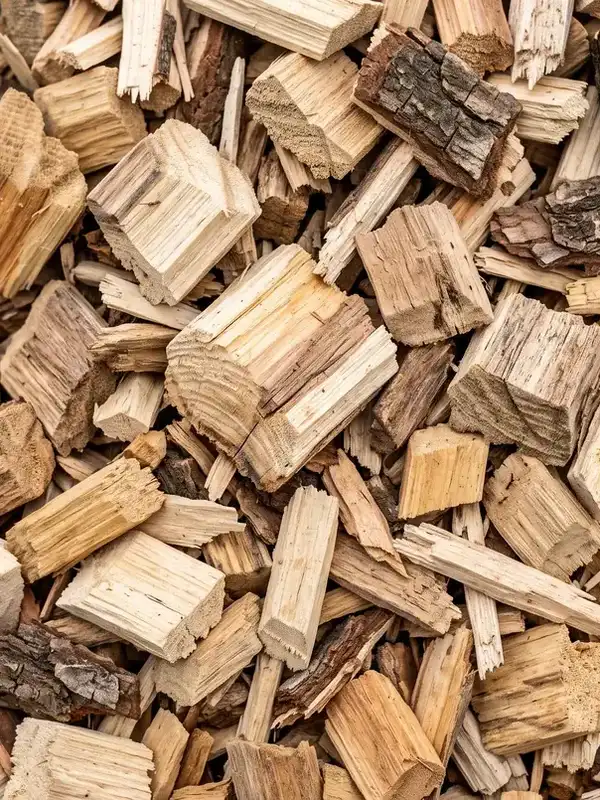
Wood Chips Delivery in Lexington, KY by the Cubic Yard
Bulk wood chips delivered in Lexington, KY. Natural wood color.
Starting from $768.42 delivered to Lexington for 2 yards, our minimum order
Lexington sits in the heart of the Bluegrass, and many of its yards have deep planting beds, mature trees and long fence lines that need mulch every year. This page covers wood chips delivery in Lexington, KY: what the material works for, how to work out how much to order, and how pricing and ordering work for a Lexington address.
Local Overview: Wood Chips Delivery in Lexington, KY
Lexington is the seat of Fayette County and home to about 320,000 people. The city mixes dense older neighborhoods with newer subdivisions and larger lots near the edges. Older blocks tend to have established trees and narrow beds that are easy to fill from a wheelbarrow, while the bigger lots often need a full load for one long border or a walking path.
The soil under many Lexington lawns is heavy clay, which holds water after a storm and drains slowly. A layer of wood chips over clay keeps the surface from crusting and cuts down on the splash that bares the roots of plants. Shade from older trees also means some beds stay damp longer than beds in open sun, so the mulch you choose should suit the spot as well as the look you want.
Frankfort is the nearest listed city, about 24 miles away. For other cities across the state, see Wood Chips in Kentucky.
Best Uses for Wood Chips in Lexington
Wood chips suit the jobs where a homeowner wants a mulch that stays put through a full season of mowing, weeding and weather. The coarse, warm-toned pieces hold their shape longer than fine shredded mulch, so they fit beds that are not replanted each spring and paths where a finer mulch would scatter. Common uses on Lexington properties include:
- A ring around shade trees, kept back from the trunk
- Pathways through wooded side yards and back lots
- Shrub and perennial beds along fences and foundations
- Play areas, where chips give a softer footing than bare dirt
How Much Wood Chips You Need
Wood chips are sold by the cubic yard, and one cubic yard weighs about 600 pounds. To estimate the amount, multiply the bed length by its width in feet, multiply that result by the depth in inches, then divide by 324. Chips compact and settle over the first few weeks, so order about a tenth more than the number you get. To check your own measurements against a second method, try the calculator.
Delivery in Lexington
Pick a drop spot the truck can reach without backing across a lawn or over a buried line. Look at the gate width, any low branches over the drive, and whether the ground will hold a loaded truck after rain. On a slope, chips wash downhill, so set a border at the low end of the bed or choose a flat area for the pile. Good drainage keeps the chips where you put them and stops them from spilling onto a sidewalk or into a storm drain. For the city service details, see delivery in Lexington.
Pricing Notes for Wood Chips in Lexington
The price you see is delivered and calculated live for the ZIP you enter, so the trip to your address is already part of the number. Larger orders get a lower rate for each unit, which makes a full bed or a long border cost less than a small top-up. The live price tells you exactly what the order will cost before you commit.
Ordering Wood Chips in Lexington, KY
Most of the ordering happens on the product page, and it takes only a few steps.
- In Lexington, enter your ZIP code to see the delivered wood chips price for your address.
- Choose your quantity. In Lexington, the smallest wood chips order is 2 cubic yards.
- Confirm your drop spot, then check out.
Spring is the busiest stretch for mulch, so order early in the season if you plan a full refresh of the beds. If you also need material for a walkway edge or a planting mix, Pea Gravel and Premium Screened Topsoil are both available in Lexington.
About Wood Chips
About this material
Wood chips are a natural wood mulch made from larger pieces than shredded bark, so they stay in place for a long stretch. The color is a warm natural wood tone that looks finished in beds, around trees and along paths without needing a stain or a dye.
Gardeners use wood chips for shrub beds, tree rings, walkways and play areas. The chips suppress weeds while they last and help the soil hold moisture on warm days. You can match the order to the size of the space rather than buying bags by the dozen.
What Wood Chips costs in Lexington
Local Lexington yards quote wood chips by the ton; the delivered number includes fuel, the truck, and the haul. Send your ZIP and load size and we will send back a same-hour quote with the truck rate and the per-ton figure spelled out. A ton of this material spreads across about 360 sq ft when laid 3 inches deep, useful when you are sizing a patio base or a walkway run.
How crews use Wood Chips in Lexington
In and around Lexington, wood chips shows up most often on two project types. The most common deployment is planting bed gravel, often in tight urban lots and infill builds in two to three inch lifts. Second on the list is weed barrier gravel, which we see in dense neighborhoods where curb access is short on partial-truck deliveries. At roughly 322,570 people, the Lexington order mix leans toward 3 to 8 ton residential drops with the occasional 16 ton job for a contractor.
Delivery day in Lexington
A typical Lexington drop is dispatched from the closest yard with a two hour window and a heads-up call once the truck is loaded. Tandem trucks want a 12 ft lane in and out; tri-axles need 14 ft, and both want firm ground at the tipping spot so the load releases cleanly. Standard lead time on this lane is Mon-Sat, with same-day windows held open for orders that hit the desk before 11 AM and clear payment.
Related materials we deliver in Lexington


Estimate how much you need
Work out your material
A planning figure, not a guarantee. Order roughly a tenth extra to cover settling and uneven ground.
Browse more
Available in nearby cities
Plan your project
Related guides
 GUIDEGravel Size Chart: Pea Gravel to Crushed StoneA gravel size chart showing pea gravel, crushed stone and river rock diameters side by side, so you can match the right size to your project.Read guide →
 GUIDEThe Different Types of Gravel and How to ChooseA plain-language guide to the main types of gravel, covering pea gravel, crushed stone, river rock and decomposed granite.Read guide →
 GUIDEWhat Are Screenings? A Guide to Crushed Stone FinesScreenings are fine crushed stone used for paver bases, joint fill and walkways. See what screenings are, common types, and mistakes to avoid.Read guide →
 GUIDEWhat to Put Under River Rock for Landscaping BedsHere is what to put under river rock landscaping: a compacted base where needed, then landscape fabric, then rock, to stop weeds and settling.Read guide →
Frequently Asked Questions
How far should wood chips sit from a tree trunk?
Keep the chips a few inches back from the bark rather than piling them against the trunk. A ring about three to four feet wide, kept thin near the base, holds moisture without trapping it against the bark. Rake away any mounds that build up against the tree over time, since those can keep the bark damp.
Do wood chips attract termites to a house?
Wood mulch can draw wood-destroying insects if it sits against siding, sills or a wood deck. Keep a clear gap of several inches between the chips and the foundation, and look for signs of insect damage each year. A local pest control company can tell you which insects are common in your neighborhood.
How long do wood chips last in a bed?
Wood chips break down more slowly than shredded mulch because the pieces are larger. Most beds need a top-up every year or two, depending on how much rain the spot gets and how often foot traffic or pets disturb the layer. Raking the chips back into an even layer each spring keeps the bed looking full.
Can I use wood chips in a vegetable garden?
Yes, but use them on paths and around the edges rather than mixing them into the soil. Fresh chips can tie up some nitrogen while they break down, which can slow plant growth where the roots are. Keep a few inches of soil or compost between the chips and the root zone.
How much area does one cubic yard cover?
One cubic yard covers about 160 square feet at 2 inches deep and about 110 square feet at 3 inches deep, before settling. Those numbers work well for a quick estimate of a long border. For a bed with an odd shape, measure it in sections and add the totals together.
Can I spread wood chips myself with a wheelbarrow?
A small job works fine by hand with a wheelbarrow, a rake and a shovel. Plan on several trips for a single cubic yard, and lay the chips on bare soil or over a weed barrier if the bed needs one. A larger border goes faster with a rented spreader or with a helper who can hold the wheelbarrow steady.
Do I need to remove old mulch before adding new chips?
Usually not, unless the old layer is matted, moldy or thicker than about four inches. Rake the old material loose, pull out any that is compacted or smells sour, and add the new chips on top. Pulling weeds before you add the layer keeps them from growing through and saves work later in the season.
What should I do with leftover wood chips?
Keep the extra chips covered and dry until you need them, since wet chips can start to mold. Leftovers work well as a topdressing for beds you already have, or as a path refresh later in the year. Store the pile away from the house so it does not hold water against the siding.