
Compost Delivery in Santa Fe, NM, Sold by the Cubic Yard
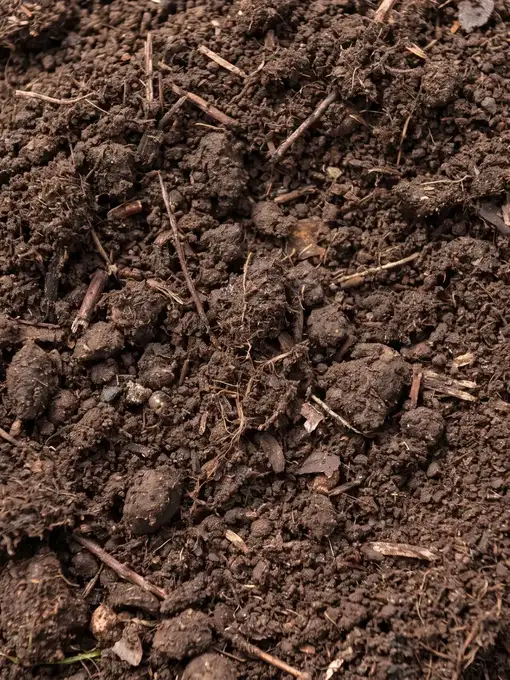
Bulk compost delivered in Santa Fe, NM. Dark brown color.
Starting from $631.17 delivered to Santa Fe for 2 yards, our minimum order
Santa Fe gardens sit around 7,000 feet above sea level, where the nights run cold, the sun is strong, and the soil dries out fast. Compost delivery in Santa Fe, NM gives those gardens organic matter quickly. This page covers how the product is sold, where it works best, and how to size an order for the beds you have.
Soil and Growing Conditions Around Santa Fe
Santa Fe has about 91,000 residents and a short growing season, and the high desert sun works quickly on exposed ground. Many yards have thin, sandy or rocky soil where the organic layer is shallow. Compost fills that gap by adding material that holds water and nutrients close to the roots instead of letting them drain away.
Spring winds across the mesas dry out bare ground quickly, and that makes a thin, exposed bed hard on new transplants. Compost holds more water in the top layer, so the soil stays workable longer between sessions with the hose. Yards that were graded during construction can also have uneven fill, and a layer of fresh material helps the grade look consistent.
Where Compost Works Around Santa Fe
- Planting beds: dig compost into the top several inches so new perennials and shrubs settle in faster. Native shrubs want lighter applications.
- Vegetable plots: mix it into the bed before sowing, then keep the surface loose with a rake.
- Containers: add a few handfuls to potting mix for herbs and patio flowers.
- Lawn patches: a thin topdressing helps thin turf fill in.
Topsoil and mulch work alongside compost on many Santa Fe projects. Mulch is sold by the cubic yard and works well as a surface cover over new beds. Premium Screened Topsoil, sold by the ton, makes a solid base for raised planters.
How Compost Is Sold for Santa Fe Orders
Orders are placed in cubic yards. The delivered price for your ZIP appears live on the page, so you see the real total before you commit. Larger orders qualify for a lower rate per cubic yard. Two cubic yards is the smallest quantity you can order.
Sizing a Compost Order for Santa Fe Beds
Use the usual bed arithmetic: feet times feet times inches of depth, divided by 324. Keep the depth realistic for the planting, because a shallow top-up can look fine on the day and then thin out after a season of wind and watering. Err toward the deeper end for new beds. If your Santa Fe beds are long and narrow, the calculator will handle the multiplication for you.
Compost for Raised Beds and Containers
Raised beds are where compost does the most work in Santa Fe. Mark the bed edges before filling so the blend lands where you want it. Because native ground is often poor or stony, a raised bed filled with a blend of topsoil and compost gives roots a consistent medium from the start. Check the blend by squeezing a handful: it should hold together briefly and then crumble when you open your hand. A blend that stays muddy or pours straight through needs more of one ingredient or the other. Walk the bed once after filling to firm the edges.
What to Look for When the Load Arrives
Look at the material before you start spreading. Good compost is dark, loose and fairly uniform, with no strong sour or rotten smell. Pull out any large sticks or stones you see, and spread a small test patch to check how the material behaves once it is watered. If the pile looks wet and clumped, let it air out in a shaded spot before you work it in.
Ordering Compost in Santa Fe, NM
Enter your ZIP to start, then choose the quantity. Pick a flat spot close to the planting area, away from low ground where runoff collects, and confirm the truck can turn around without crossing planted beds.
Spread on a calm day, since the strong sun and wind dry the top layer quickly at this elevation. Water lightly afterward so the surface stays in place.
Read delivery in Santa Fe for the city service, or return to Compost in New Mexico to compare other New Mexico cities.
About Compost
Compost is finished organic matter, dark brown and loose, with an earthy smell that shows it has broken down. Expect a cubic yard to weigh around 1,000 pounds when dry, and more once it has been rained on.
In high desert gardens, compost adds the organic matter that dry, sandy or rocky ground often lacks. It gives roots a looser medium, improves how the soil holds water and nutrients, and keeps working into the bed as it slowly breaks down.
Use it to amend planting beds, dress lawns, or build a planting mix for containers. Compost belongs in the planting zone, while stone and fill handle the jobs that need a firm, load-carrying layer.
What Compost costs in Santa Fe
In the Santa Fe market, compost is sold by the ton and priced at the gate before delivery is added on. Send your ZIP and load size and we will send back a same-hour quote with the truck rate and the per-ton figure spelled out. One ton covers about 216 sq ft at a 3 inch finished depth, so a 400 sq ft driveway pad runs roughly 2 tons.
How crews use Compost in Santa Fe
Crews working out of Santa Fe tend to call for compost on a few repeat jobs each week. The first is planting bed gravel, typically laid in tight urban lots and infill builds with a base lift compacted before the finish course goes on. With a population around 90,551, Santa Fe pulls a mix of single-truck homeowner orders and contractor full-loads through the season.
Delivery day in Santa Fe
On the day of the drop, the dispatcher pulls the closest yard, batches your ticket with other Santa Fe stops, and sends a window the night before. Tandem-axle dumps need at least 12 ft of clear width and 14 ft overhead to set the bed; tri-axles need 14 ft of clearance on both counts and a level pad to tip safely. Standard lead time on this lane is Mon-Sat, with same-day windows held open for orders that hit the desk before 11 AM and clear payment.
Related materials we deliver in Santa Fe



Estimate how much you need
Work out your material
A planning figure, not a guarantee. Order roughly a tenth extra to cover settling and uneven ground.
Browse more
Available in nearby cities
Plan your project
Related guides
 GUIDEHow Much Does River Rock Cost? By Ton or YardRiver rock cost depends on your ZIP code, order size, and whether you buy by the ton or the cubic yard. Here is how pricing works.Read guide →
 GUIDEWhat Size Crushed Stone Goes Under a Concrete SlabMost slabs need 4 to 6 inches of compacted crushed stone underneath. What size crushed stone under a concrete slab needs, and why it matters.Read guide →
 GUIDEWhat Is Crushed Stone? Sizes, Uses and Buying BasicsCrushed stone is quarried rock crushed and screened into angular pieces sold by the ton. Here is what it is, how it is graded, and where to use it.Read guide →
 GUIDEHow Much Does Gravel Cost? A Practical Pricing GuideHow much does gravel cost and why does it vary? See the real factors behind ton pricing, delivery, and order size before you buy.Read guide →
Frequently Asked Questions
How many cubic yards for a 12 by 15 foot vegetable bed?
Multiply 12 by 15 by 4 inches, then divide by 324. The result is about 2.2 cubic yards. If you want the bed a little richer, add another inch of depth and rerun the numbers. Keep the arithmetic in one place so you can compare the depths quickly.
Is compost better than fertilizer for new beds?
They do different jobs. Compost adds organic matter and improves the structure of the soil, while fertilizer supplies specific nutrients quickly. Many gardeners build the bed with compost and add fertilizer only when a soil test or the look of the plants shows a need.
Can compost be used for starting seeds?
Straight compost is usually too rich and dense for fine seeds. Blend it with a lighter mix so the seedlings get room for their roots and enough air around them. Use the blend in trays or small pots, and keep the surface moist but not soggy until the first true leaves appear.
Will compost attract rodents or insects to my yard?
Finished compost that has heated through is less attractive to pests than raw food scraps. Rake the delivered pile flat soon after it arrives and work it into the bed, so it does not sit damp and loose against a fence or foundation. Once it is spread and watered in, it is rarely a draw for rodents or insects.
Can I spread compost around a newly planted tree?
Yes, spread it out to the drip line and keep it a few inches off the trunk. A thick mound pressed against the bark holds moisture where it can cause rot. A wide, shallow layer lets water reach the roots while the trunk stays dry.
How far does a cubic yard of compost go at 2 inches deep?
A cubic yard holds 27 cubic feet. Spread 2 inches deep, that volume covers about 160 square feet. At 4 inches deep, the same yard covers about 80 square feet. Use those two figures as a quick check against the size of your planting areas.
Is compost acidic or alkaline?
Finished compost usually lands near neutral, but the reading depends on the source material and how the batch was processed. A soil test on your own yard tells you far more than any general number, and it is the best guide when you are choosing amendments for specific plants.
Do I need gloves or a mask when handling compost?
Gloves are a good idea, since compost can hold sharp bits and microbes. A dust mask helps when you shovel dry material, especially on a windy day. Wash your hands after the job, and keep children and pets clear of the pile while you work.