
Fill Dirt Delivery in Santa Rosa, CA by the Ton
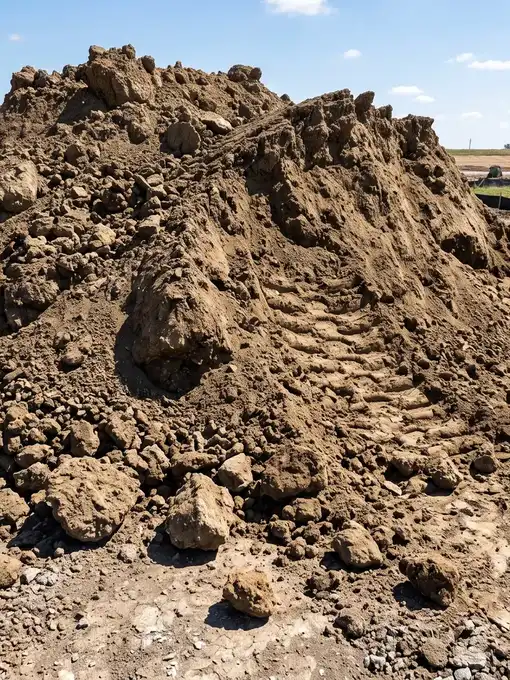
Bulk fill dirt delivered in Santa Rosa, CA. Brown color.
Starting from $453.17 delivered to Santa Rosa for 2 tons, our minimum order
Fill dirt delivery in Santa Rosa, CA
Sonoma County lots are full of slopes, old orchards and clay pockets, and a load of Fill Dirt is how most Santa Rosa crews even things out. We sell it by the ton and deliver it to the job, so you are not borrowing a trailer or paying for a rented truck. For Santa Rosa crews, the statewide Fill Dirt overview is at Fill Dirt in California.
What Santa Rosa projects use it for
- Terracing a hillside backyard so there is a flat area to use.
- Filling old pools and abandoned tanks after the shell is broken up and drained.
- Raising low corners where winter rain collects.
- Foundation backfill for additions, garages and rebuilt homes.
- Road shoulders and ranch driveways that need a firm sub-base.
Rural properties on the edge of town often add a stone surface afterward. #57 Crushed Stone works well as a drainage layer over compacted dirt, and Pea Gravel suits paths and patio bases laid on top of a prepared fill.
Working out the tonnage
Here is a quick way to size a Santa Rosa order. Measure the length and width of the area, decide how deep the fill needs to go, and run the numbers through the calculator. Fill dirt weighs about 2,200 pounds per cubic yard, so a 10 by 20 foot patch filled 6 inches deep, about 3.7 cubic yards, comes to roughly 4 tons.
The minimum is 2 tons. Slopes are the part people miscount: measure the deepest point and the shallowest, then average them, instead of using one number for the whole footprint. Add a margin for compaction, since loose fill loses volume once it is rolled or tamped.
Price and ordering
You buy Fill Dirt here by the ton. The page works out the delivered price from the ZIP you enter, so what you see covers getting it to your address. Order more tons and the rate per ton comes down, which matters on a large fill like a pool or a terrace.
The closest towns we list are American Canyon at 36 miles, Vallejo at 38 miles and Fairfield at 44 miles. The details for how loads reach this city are on the page for delivery in Santa Rosa.
Access and placement on hilly lots
Many streets in older Santa Rosa neighborhoods and the hills east of downtown are narrow and steep. Tell us if a truck must back up a grade or squeeze past parked cars, because that decides where the pile can land. If the only flat ground is at the street, expect to move the dirt by wheelbarrow or skid steer.
Soil and site notes for Sonoma County
Santa Rosa sits on a mix of valley floor and rolling hills, and the ground changes quickly from one lot to the next. Valley soils tend to be heavy and slow to drain, while hillside lots can be rocky with a thin layer over bedrock. Dirt added to either should be placed so that water has somewhere to go: leave a gentle fall away from buildings, and avoid creating a basin that holds winter rain against a wall.
Before you begin, strip the grass and any loose organic matter from the area. Grass left underneath decays and leaves a spongy layer, so the surface drops unevenly later. Where you are building on a slope, cut small steps into the existing ground, called benching, so the new material locks into the hill instead of sliding over it.
Pairing dirt with the rest of the build
Large earthwork rarely stops at dirt. After the fill is compacted, most owners need a drainage layer, a path or a parking area, and each of those uses a different material. Our River Rock page covers swales and decorative dry creek beds, a popular fix for runoff on Sonoma County properties, and Asphalt Millings are a common top for long rural driveways.
Who orders here
Buyers range from vineyard and ranch owners filling washouts to remodelers backfilling an addition and homeowners recovering from a rebuild. Whatever the size, work out the area first.
About Fill Dirt
Fill Dirt is a brown, mixed earth used to build up grade rather than to grow plants. It contains clay, silt, sand and fine rock in varying proportions, and it is not screened to a fine finish. That is what makes it inexpensive for large volumes and what lets it lock together when it is compacted.
Typical uses include backfilling foundations and retaining walls, filling pits and old pools, leveling low yards, and building pads for slabs and sheds. It has too little organic matter to support a healthy lawn by itself, so put topsoil over it where plants will go.
For the best result, place it in layers a few inches thick and compact each layer at a moisture level that feels like a wrung-out sponge. Fill Dirt is sold by the ton here, and a ton is 2,000 pounds.
What Fill Dirt costs in Santa Rosa
In the Santa Rosa market, fill dirt is sold by the ton and priced at the gate before delivery is added on. Send your ZIP and load size and we will send back a same-hour quote with the truck rate and the per-ton figure spelled out. One ton covers about 98 sq ft at a 3 inch finished depth, so a 400 sq ft driveway pad runs roughly 5 tons.
How crews use Fill Dirt in Santa Rosa
Crews working out of Santa Rosa tend to call for fill dirt on a few repeat jobs each week. The first is erosion control, typically laid in tight urban lots and infill builds with a base lift compacted before the finish course goes on. The second is driveway gravel, which lands here in dense neighborhoods where curb access is short and usually ships as a 4 to 8 ton order. With a population around 177,524, Santa Rosa pulls a mix of single-truck homeowner orders and contractor full-loads through the season.
Delivery day in Santa Rosa
On the day of the drop, the dispatcher pulls the closest yard, batches your ticket with other Santa Rosa stops, and sends a window the night before. Tandem-axle dumps need at least 12 ft of clear width and 14 ft overhead to set the bed; tri-axles need 14 ft of clearance on both counts and a level pad to tip safely. Standard lead time on this lane is Mon-Sat, with same-day windows held open for orders that hit the desk before 11 AM and clear payment.
Related materials we deliver in Santa Rosa
 Price by ZIP
- SizeScreened, no size grade
- Density2200 lb/yd³
- ColorDark brown
 Price by ZIP
- Density2000 lb/yd³
- ColorDark brown
 Price by ZIP
- Density1000 lb/yd³
- ColorDark brown
Estimate how much you need
Work out your material
A planning figure, not a guarantee. Order roughly a tenth extra to cover settling and uneven ground.
Browse more
Common uses for Fill Dirt in Santa Rosa
Available in nearby cities
Plan your project
Related guides
 GUIDEHow Much Does River Rock Cost? By Ton or YardRiver rock cost depends on your ZIP code, order size, and whether you buy by the ton or the cubic yard. Here is how pricing works.Read guide →
 GUIDEWhat Size Crushed Stone Goes Under a Concrete SlabMost slabs need 4 to 6 inches of compacted crushed stone underneath. What size crushed stone under a concrete slab needs, and why it matters.Read guide →
 GUIDEWhat Is Crushed Stone? Sizes, Uses and Buying BasicsCrushed stone is quarried rock crushed and screened into angular pieces sold by the ton. Here is what it is, how it is graded, and where to use it.Read guide →
 GUIDEHow Much Does Gravel Cost? A Practical Pricing GuideHow much does gravel cost and why does it vary? See the real factors behind ton pricing, delivery, and order size before you buy.Read guide →
Frequently Asked Questions
Can I fill an old swimming pool with fill dirt?
Usually yes, but the pool shell needs to be broken up or drilled for drainage first, and many cities require a permit and an inspection of the fill. Place the dirt in compacted lifts rather than dumping it in one go, or the surface will sink over the following seasons. Confirm requirements with the city building office before ordering.
How steep a slope can I build with fill dirt?
Loose fill holds at a much gentler angle than undisturbed ground. A common rule of thumb is to keep new slopes at about 3 feet of run for each foot of rise, or flatter, and to plant or cover them quickly. Steeper banks need retaining walls or engineered design.
Do winter rains affect a fill dirt project in Sonoma County?
Wet weather makes fill hard to spread and impossible to compact properly, because saturated soil squeezes instead of packing. Many local crews schedule big earthwork for the dry months. If you must work in rain, cover stockpiles and let the dirt drain and firm up before compacting.
Is fill dirt suitable for a vegetable garden?
What is the smallest delivery I can schedule?
Two tons is the minimum. That covers small repairs such as a sunken trench line, a low corner of a lawn or the base of a modest planter. Anything smaller is likely a hand-shovel job that soil already on the property can cover.
How long should fill settle before I build on it?
It depends on how it was placed. Fill spread in thin compacted lifts can often take a light load soon, while loose fill keeps settling through the first wet season. For a slab, wall or anything structural, ask your engineer or the building office what they require before you pour.
Can I use fill dirt behind a retaining wall?
For general backfill, yes, but a wall needs free-draining stone against its back face so water does not build up behind it. Place the stone first, then the dirt, and follow the wall maker's or engineer's guidance on layer thickness and compaction, especially on a hillside lot.
How should I check the fill after it is placed?
Walk it and press with a heel: if it leaves deep prints, it needs more compaction. A string line or a long level across the area shows high and low spots. Fix dips by adding a little dirt and tamping, and wait before you pour concrete or lay stone on top.