
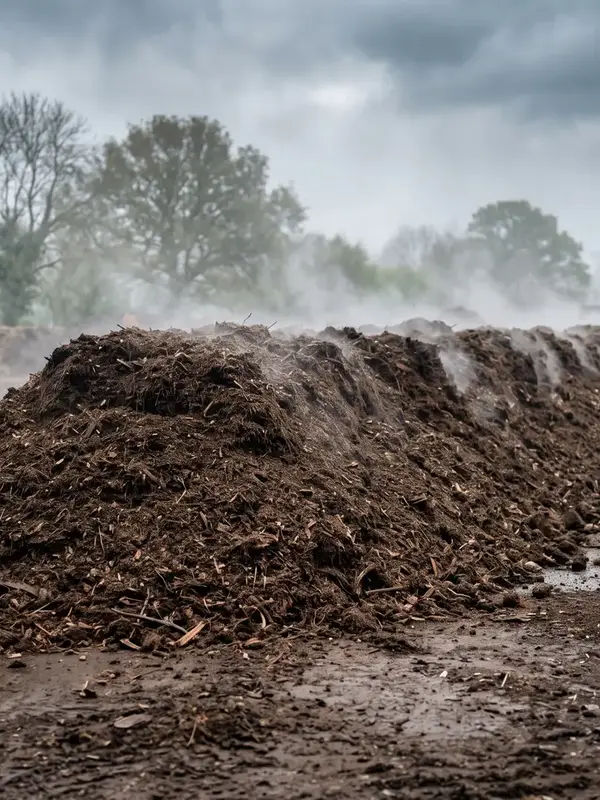
Bellevue, WA Compost Delivery by the Cubic Yard
Bulk compost delivered in Bellevue, WA. Dark brown color.
Starting from $528.23 delivered to Bellevue for 2 yards, our minimum order
Bellevue yards are small, sloped and shaded by tall evergreens, which is why compost delivery in Bellevue, WA is usually a conversation about beds, not acreage. MyGravelBuddy sells compost by the cubic yard, with the delivered price worked out for your ZIP and shown right on the page. Browse the rest of our Compost in Washington coverage if you are comparing cities.
Compost for Bellevue's wet, acidic soil
Bellevue sits in the Puget Sound rain belt, and decades of fir and cedar litter leave many lots with acidic, compacted ground. Finished compost loosens that ground, adds organic matter and gives roots something to hold. It is the standard fix for the heavy glacial till found under many neighborhoods east of Lake Washington.
The color is dark brown and the texture is crumbly. A fresh load should smell earthy, never sour.
Where compost earns its keep
- Raised beds: blend it into your bed mix so vegetables start with real fertility.
- Lawn repair: a thin topdressing after aeration helps patchy turf recover from summer dry spells.
- Rhododendrons and hydrangeas: a ring of compost out to the drip line feeds shrubs that Bellevue gardens favor.
- New planting areas: work it into the top several inches before setting plants.
Condo and townhome communities with shared landscaping often order a few yards at once, then split them across common beds.
Compost delivery in Bellevue, WA: getting the load to you
Compost arrives by truck and is tipped in one pile. Many Bellevue driveways are steep and narrow, so decide ahead of time where the truck can safely stop, and keep branches and parked cars clear of the path. Details for the area are on our page for delivery in Bellevue.
On a hillside driveway, a pile on a tarp at the bottom, moved by wheelbarrow, is a common solution here.
Neighbors in Redmond (about 5 miles away), Seattle (about 10), Renton (about 12), Kent (about 16) and Federal Way (about 23) are all in the same metro area, but each address is priced by its own ZIP.
Timing a Bellevue compost project
The Eastside's wet season does half the work for you. Compost spread in October or November gets watered in by autumn rain and is ready for spring planting, while a March delivery suits gardeners who want to plant by May. Summer is the hardest season to spread it, since dry weather leaves the top layer powdery until it is watered. Dry days between showers make the loading and raking easier on both you and the lawn.
How much compost you need
Compost is measured in cubic yards. Multiply the bed length by its width in feet, then by the depth in inches, and divide by 324. A 4 by 12 foot raised bed filled 10 inches deep, for example, comes to roughly a yard and a half. Put your own measurements into the calculator for a quick check, and keep in mind the minimum order is 2 cubic yards.
Because compost is a living material, it shrinks as it breaks down. Order a little over the figure you calculated.
Pricing notes
The price shown for compost is the delivered price for your ZIP, so there is no separate math to do. Larger orders get a lower rate per cubic yard, which makes it worth planning a whole-yard project at once, such as a new backyard planting scheme, instead of ordering in several small rounds.
Pairing compost with stone
Garden work in Bellevue often includes a hard surface. Paths and drainage trenches next to your beds do well with #57 Crushed Stone, which is sold by the ton. For a rough parking pad or a service lane beside the garden, Asphalt Millings are also sold by the ton. Compost stays in cubic yards, so keep the two units straight when you total your order.
Placing your order
Enter your ZIP on the product page, pick your quantity in cubic yards and check the delivered price. If anything about your site is unusual, such as a gate, a slope or a tight turn, say so in your order notes.
About Compost
Compost is decomposed plant matter, screened to a dark brown, crumbly texture. Compost in Bellevue is not soil by itself. Think of it as a soil amendment that feeds the ground and improves how it holds water and air.
Good compost has an earthy smell, with no ammonia or sour odor, and breaks apart easily in the hand. Because it is lighter than rock, a cubic yard weighs about 1,000 pounds, far less than a cubic yard of gravel, which is why it is sold by volume here.
Use it as a top layer over existing beds, blended into native soil before planting, or mixed with other components for container and raised-bed fills. Spread it 1 to 3 inches thick for most garden uses. Avoid piling it against tree trunks or the stems of woody shrubs, since constant moisture there can cause rot.
On its own, compost does not make a firm base. It is meant for growing areas, not for walking or driving surfaces.
What Compost costs in Bellevue
Local Bellevue yards quote compost by the ton; the delivered number includes fuel, the truck, and the haul. Send your ZIP and load size and we will send back a same-hour quote with the truck rate and the per-ton figure spelled out. A ton of this material spreads across about 216 sq ft when laid 3 inches deep, useful when you are sizing a patio base or a walkway run.
How crews use Compost in Bellevue
In and around Bellevue, compost shows up most often on two project types. The most common deployment is planting bed gravel, often in tight urban lots and infill builds in two to three inch lifts. At roughly 154,377 people, the Bellevue order mix leans toward 3 to 8 ton residential drops with the occasional 16 ton job for a contractor.
Delivery day in Bellevue
A typical Bellevue drop is dispatched from the closest yard with a two hour window and a heads-up call once the truck is loaded. Tandem trucks want a 12 ft lane in and out; tri-axles need 14 ft, and both want firm ground at the tipping spot so the load releases cleanly. Standard lead time on this lane is Mon-Sat, with same-day windows held open for orders that hit the desk before 11 AM and clear payment.
Related materials we deliver in Bellevue



Estimate how much you need
Work out your material
A planning figure, not a guarantee. Order roughly a tenth extra to cover settling and uneven ground.
Browse more
Available in nearby cities
Plan your project
Related guides
 GUIDEHow Much Does River Rock Cost? By Ton or YardRiver rock cost depends on your ZIP code, order size, and whether you buy by the ton or the cubic yard. Here is how pricing works.Read guide →
 GUIDEWhat Size Crushed Stone Goes Under a Concrete SlabMost slabs need 4 to 6 inches of compacted crushed stone underneath. What size crushed stone under a concrete slab needs, and why it matters.Read guide →
 GUIDEWhat Is Crushed Stone? Sizes, Uses and Buying BasicsCrushed stone is quarried rock crushed and screened into angular pieces sold by the ton. Here is what it is, how it is graded, and where to use it.Read guide →
 GUIDEHow Much Does Gravel Cost? A Practical Pricing GuideHow much does gravel cost and why does it vary? See the real factors behind ton pricing, delivery, and order size before you buy.Read guide →
Frequently Asked Questions
Can compost help the clay-heavy soil on my Bellevue lot?
Yes. Working a few inches of compost into clay opens it up over time, helping water drain and roots spread. Do it in stages: mix in a layer, then plant. One heavy dose is less effective than steady additions, because clay structure improves slowly as the organic matter feeds soil life.
How thick should I spread compost over an existing lawn?
Keep it to about a quarter to a half inch for lawns. Rake it across the turf after aeration so it falls into the holes and the grass blades still show through. Thicker layers can smother grass. Beds are different, and can take an inch or two without trouble.
Is compost the same as mulch?
No. Compost feeds the soil and breaks down into it, while mulch sits on top to hold moisture and block weeds. Many gardeners use both: compost first, then a layer of bark or wood chips over it. Mulch eventually thins out and needs replacing, while compost is absorbed and keeps feeding the soil.
Can I use compost for a vegetable garden right away?
Yes, finished compost is safe to plant into. For best results, blend it with native soil rather than planting in pure compost, which can hold too much water or too many salts for seedlings. A mix of roughly one part compost to two or three parts soil suits most vegetables.
What happens if I order more than I need?
Leftover compost keeps well in a pile, and extra yards are rarely wasted. Put them toward the beds that look thinnest, fill low spots in planting areas, or spread a ring around shrubs that look tired by midsummer. A surplus also gives you material for patching a bare corner of lawn next spring.
Can someone else take the delivery if I am at work?
Yes, as long as the drop spot is clear and clearly marked, since compost is simply tipped in a pile. Leave a note about where you want it. Whoever is home only needs to confirm the load matches the order and that the pile landed where you asked, because no one has to help unload.
Does compost need to be kept dry before use?
Not really. It is a moist material by nature, and rain will not harm it. The concern is runoff in heavy downpours, which can wash fine particles across pavement. A tarp is optional, though it does keep airborne weed seeds from settling on a pile that will sit for a while.
How often should I add compost to the same bed?
Once a year is typical for vegetable beds, which use up organic matter quickly and benefit from an inch or two each round. Ornamental beds with established shrubs can often go two years between top-ups. Watch the surface: if it has gone pale and thin, or the soil beneath has started to crust, it is time.