
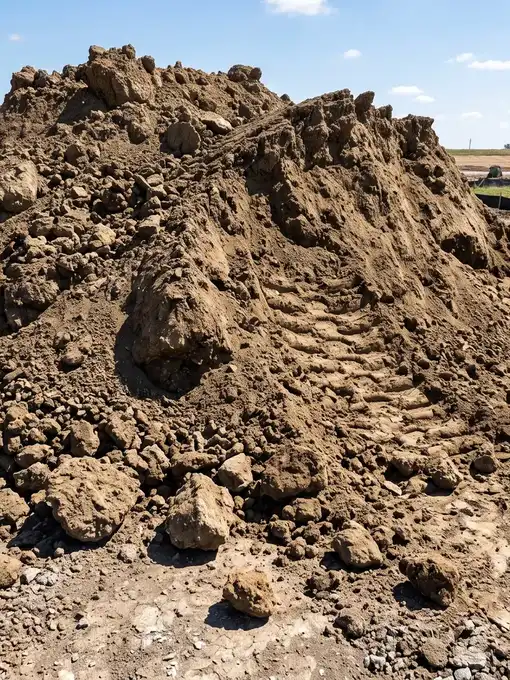
Fill Dirt Delivery in Bellevue, WA
Bulk fill dirt delivered in Bellevue, WA. Brown color.
Starting from $474.50 delivered to Bellevue for 2 tons, our minimum order
Many Bellevue lots are sloped, so a lot of yards here need grade rebuilt before anything else can happen. Here is what to know about fill dirt delivery in Bellevue, WA: what the material does, how to size an order, and how the delivered price works. You can also see delivery in Bellevue for the wider picture, or step up to Fill Dirt in Washington.
What fill dirt does on a Bellevue lot
Fill dirt is brown, low-cost bulk soil meant for bulk volume, not for planting. It raises low spots, backfills around foundations and retaining walls, and builds up a pad before a shed, patio or slab. Because it packs down firmly when placed in layers, it gives a stable base under hardscape.
It is the wrong choice for a garden bed or a lawn surface.
Projects that suit it in the Bellevue area
- Leveling a back yard that drains toward the house after years of settling.
- Backfilling a trench after a utility or drain line install.
- Building a raised pad for a detached garage or accessory unit.
- Filling a hole left by a removed tree stump or old tank.
- Bringing a sloped side yard closer to level before terracing.
Pairing fill with a stone surface is common. Once the dirt is graded, #57 Crushed Stone makes a clean drainage layer or driveway base on top, and Asphalt Millings are a popular way to finish a rough access lane that will see truck traffic.
How much fill dirt to order
Start with the footprint of the area. For a Bellevue fill dirt job, multiply length in feet by width in feet by the depth in inches, then divide by 324 to get cubic yards. A 20 by 15 foot low spot filled 6 inches deep, for example, works out to a little over 5.5 cubic yards. Fill dirt is sold by the ton here, so the yard figure still has to be converted, and our calculator handles that step for you.
Order slightly more than the math says. Loose soil compresses once it is spread and driven over, and a short load means a second delivery. Remember that one ton is 2,000 lb, and the smallest order is 2 tons, which is enough for a small patch or a single trench.
Prep, drainage and the wet season
Strip sod and loose organic debris before the dirt goes down, since buried grass rots and leaves a soft layer. Grade the finished surface so water runs away from buildings, with a gentle fall of a few percent rather than a flat top that holds puddles.
Puget Sound rain shapes the schedule. Dry weeks are the easiest time to spread and compact, while saturated soil turns to paste under a compactor. If a storm is forecast after the load lands, cover the pile and plan the spreading for the first dry day.
On a sloped Bellevue lot, step the fill into the hillside rather than laying it over a smooth face, so each layer grips the one beneath it. For anything holding back soil, such as a retaining wall, follow the wall plans on depth and drainage.
Ordering fill dirt delivery in Bellevue, WA
You pay for a delivered ton, not for dirt plus a separate trucking line. Enter your ZIP on the page and the live engine shows what it costs to reach your address. A larger tonnage brings the rate per ton down, so one bigger order usually beats several small ones for a big grade job.
Checkout asks for the quantity and your delivery address.
Fill dirt in the wider Seattle area
Bellevue jobs often sit close to neighboring cities. Redmond is about 5 miles away, Seattle about 10, Renton about 12, Kent about 16, and Federal Way about 23. Those distances are for orientation only; your own ZIP decides what the delivered price looks like.
About Fill Dirt
Fill dirt is a brown, general-purpose subsoil sold by the ton. It is chosen for volume and support rather than for growing plants, which makes it a practical fit for raising grade, backfilling trenches and building a stable pad under a shed, patio or slab. The material is screened loosely, so small stones, clay lumps and the occasional root are normal in a load.
For best results, spread it in thin layers and compact each one before adding more. That limits settling and gives you a firm surface to build on. If you want a lawn or garden, cap the finished fill with a few inches of topsoil. The delivered price is shown for your ZIP before you order, and larger orders get a lower rate per ton.
What Fill Dirt costs in Bellevue
Local Bellevue yards quote fill dirt by the ton; the delivered number includes fuel, the truck, and the haul. Send your ZIP and load size and we will send back a same-hour quote with the truck rate and the per-ton figure spelled out. A ton of this material spreads across about 98 sq ft when laid 3 inches deep, useful when you are sizing a patio base or a walkway run.
How crews use Fill Dirt in Bellevue
In and around Bellevue, fill dirt shows up most often on two project types. The most common deployment is erosion control, often in tight urban lots and infill builds in two to three inch lifts. Second on the list is driveway gravel, which we see in dense neighborhoods where curb access is short on partial-truck deliveries. At roughly 154,377 people, the Bellevue order mix leans toward 3 to 8 ton residential drops with the occasional 16 ton job for a contractor.
Delivery day in Bellevue
A typical Bellevue drop is dispatched from the closest yard with a two hour window and a heads-up call once the truck is loaded. Tandem trucks want a 12 ft lane in and out; tri-axles need 14 ft, and both want firm ground at the tipping spot so the load releases cleanly. Standard lead time on this lane is Mon-Sat, with same-day windows held open for orders that hit the desk before 11 AM and clear payment.
Related materials we deliver in Bellevue
 Price by ZIP
- SizeScreened, no size grade
- Density2200 lb/yd³
- ColorDark brown
 Price by ZIP
- Density2000 lb/yd³
- ColorDark brown
 Price by ZIP
- Density1000 lb/yd³
- ColorDark brown
Estimate how much you need
Work out your material
A planning figure, not a guarantee. Order roughly a tenth extra to cover settling and uneven ground.
Browse more
Common uses for Fill Dirt in Bellevue
Available in nearby cities
Plan your project
Related guides
 GUIDEWhat Is #57 Stone? Uses, Size, and Cost ExplainedPractical, field-tested guide: what is 57 stone. Pulled from real US installer notes and 2026 supplier price data.Read guide →
 GUIDEHow Deep Should a Gravel Driveway Be? Layer GuidePractical, field-tested guide: how deep should gravel driveway be. Pulled from real US installer notes and 2026 supplier price data.Read guide →
 GUIDEHow Much Does River Rock Cost? By Ton or YardRiver rock cost depends on your ZIP code, order size, and whether you buy by the ton or the cubic yard. Here is how pricing works.Read guide →
 GUIDEWhat Size Crushed Stone Goes Under a Concrete SlabMost slabs need 4 to 6 inches of compacted crushed stone underneath. What size crushed stone under a concrete slab needs, and why it matters.Read guide →
Frequently Asked Questions
Can I plant grass directly on fill dirt?
Not with good results. Fill dirt has little organic matter and can be heavy with clay or stones, so seed struggles to root. Spread a few inches of topsoil over the finished fill and rake it smooth. That layer holds moisture and feeds young roots, and the fill underneath still does its structural job.
How can I check the grade as I spread?
Set stakes at the corners of the area and run a string line between them at the finished height. Measure down from the string in several spots as you rake each pass. A long level or a straight board laid across the fill works too. Check again once the surface has rested so you can top off any low spots before building.
What can I do with leftover fill dirt?
Leftover soil is easy to put to use. Spread it into other low spots around the property, build up the base of a planting bed, or smooth out ruts along a path. If you are not ready to use it, keep the pile on a hard surface away from storm drains so it does not wash into the street.
Is fill dirt good for backfilling around a foundation?
It is a common choice for the outer backfill, as long as it is placed in compacted layers and sloped to carry water away from the wall. Next to the foundation itself, drainage stone is often specified instead, so check your plans or ask your builder for the requirement.
Does the soil arrive dry or damp?
Expect it to arrive as it comes from the pile, which can be slightly damp. Mixed rocks or roots in the load are normal for this grade of material, and you can rake the larger pieces out by hand. A few stones will not hurt a base layer, but pull out big roots so they do not rot and leave voids underneath.
Where should the truck drop the load?
Pick a flat, firm spot close to the job, ideally on a driveway or hard surface. Make sure power lines, branches and parked cars are not in the way overhead or along the path. Walk the route first and note any gate width or low branch, since the truck needs a clear approach and room to tip the whole load.
Can I mix fill dirt with other materials?
You can, but keep the layers separate for structural work. Fill belongs below, with stone or paving above it. Mixing dirt into a gravel base clogs the gaps that let water drain. If you need both, order them as separate loads and place the stone only after the fill is compacted.
Can I use fill dirt right next to a driveway or sidewalk?
Yes, as long as you keep the finished surface slightly below the edge of the pavement so soil does not spill onto it. Pack the soil firmly along the edge and slope it gently away. If you plan to edge it with stone or a border, set that after the fill is in place.