
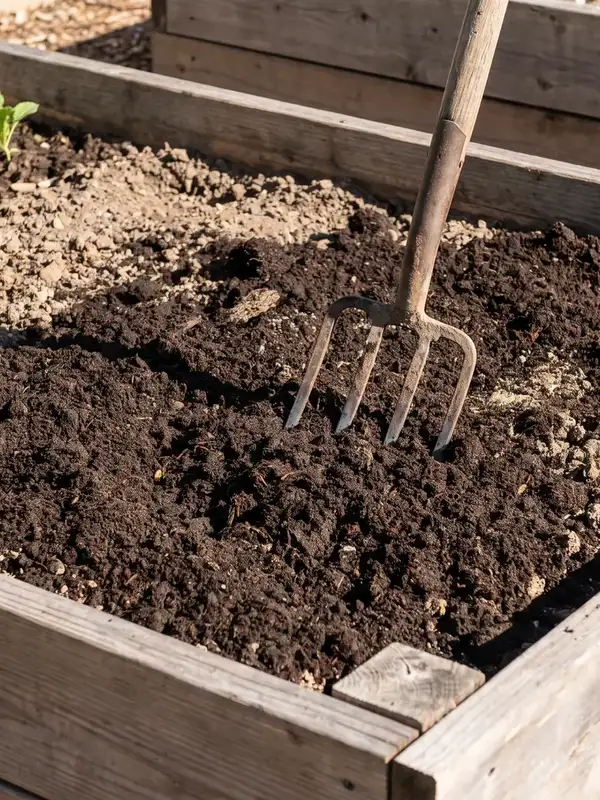
Compost Delivery in Palmdale, CA by the Cubic Yard
Bulk compost delivered in Palmdale, CA. Dark brown color.
Starting from $622.92 delivered to Palmdale for 2 yards, our minimum order
Why high desert soil needs compost
Palmdale gardeners work with Antelope Valley ground: fast-draining, low in organic matter and often alkaline. Compost is the most practical fix, and compost delivery in Palmdale, CA saves you from hauling it yourself across the valley. A few cubic yards worked into a bed changes how the dirt holds water and feeds roots.
Summers here are hot and dry, and winter nights can be cold. Soil that holds moisture longer takes some of the pressure off your irrigation.
Compost delivery in Palmdale, CA: how it is sold
MyGravelBuddy sells compost by the cubic yard, with a minimum order of 2 cubic yards. Type in your ZIP and the delivered price appears right away, calculated for your address. Larger orders get a lower rate per cubic yard, so planning one big delivery for the whole yard usually beats several small ones. Palmdale is a spread-out city of about 160,000 people, which is why the price is tied to your ZIP and not to a flat citywide figure.
Projects that use compost in Palmdale
- Drought-tolerant landscaping: blend a modest amount into planting holes for natives and succulents, which prefer lean soil, so go light.
- Vegetable and herb beds: these are hungry and benefit from a generous layer each season.
- Fruit trees: a mulch ring helps young trees get through the heat.
- Tough lawn repair: topdress thin areas to help the grass root in.
- Perennial borders: top-dress around established plants to improve the soil without digging up roots.
Calculating your order
Take the bed length and width in feet, multiply by the depth you want in inches, and divide the result by 324 to get cubic yards. A 30 by 10 foot area at 2 inches deep needs about 1.9 cubic yards, which rounds up to the 2 cubic yard minimum. The calculator handles the math if you prefer to type in measurements and get a number back.
Round up a little, since some will sink into dry soil on the first watering.
Compost alongside rock and millings
Desert yards often combine planting with hardscape. #57 Crushed Stone makes a clean base or path, and Asphalt Millings suit a rough driveway or turnaround. Both are sold by the ton, so keep them as separate line items from your cubic yards of compost.
Delivery details for Palmdale and the neighbors
The page on delivery in Palmdale covers how it works for your address. Customers in Lancaster, about 22 miles off, and Pasadena, Glendale and El Monte at 18, 21 and 23 miles can use the same ZIP check. Farther out, Inglewood is 36 miles away. A statewide overview lives at Compost in California.
Think about where the truck will tip the load. A level, open patch near the work area is best, away from sprinkler heads and any underground lines you know of.
Soil prep before the load arrives
Rake out rocks and old roots, loosen the top few inches with a fork, and mark where each bed starts and stops. Dry Antelope Valley soil can be hard as brick, so a deep soak the day before makes digging far easier. If you plan to run drip lines, lay them first and spread compost over the top, which keeps the tubing from drifting.
New homes in the area often sit on graded, compacted fill with almost no topsoil at all. In that case, plan on a thicker layer than you would for an old garden, and break the surface up before the compost goes on so roots can find a way down through it.
Getting it spread in the heat
Move compost in the cooler part of the day, when the work is easier on you and the crew. Spread in sections so the pile never sits half used, and bring each bed to an even depth with a landscape rake before moving to the next. A wheelbarrow runs best on a plank path laid across soft or freshly loosened ground, and a flat shovel moves compost faster than a pointed one.
About Compost
Compost is organic material such as yard trimmings and plant waste that has broken down into a dark, soil-like product. Expect a deep brown color, a loose crumbly feel and a mild earthy smell. It carries nutrients and, more importantly for dry ground, a lot of capacity to hold water.
A cubic yard weighs about 1,000 pounds, so it is sold by volume. In Palmdale it is most useful as an amendment for sandy, alkaline soil, as a topdressing on thin lawns, and as mulch around trees and shrubs. Mix it into native ground rather than planting into a pure pile, since roots do best when the two blend gradually.
Each order is priced for the delivery ZIP, shown live on this page, with a smallest order of 2 cubic yards.
What Compost costs in Palmdale
Around Palmdale, compost is quoted by the ton with delivery layered in based on distance from the closest yard. Send your ZIP and load size and we will send back a same-hour quote with the truck rate and the per-ton figure spelled out. Plan on roughly 216 sq ft of coverage per ton at 3 inches deep, which puts a single-car driveway in the 3 to 5 ton bracket.
How crews use Compost in Palmdale
Palmdale contractors keep compost on the order sheet for a short list of standard installs. Top of the list is planting bed gravel, where the material is rolled out in tight urban lots and infill builds and screeded to grade. Palmdale sits at about 162,536 residents, which means we see steady weekday traffic from landscape crews and weekend pickups from owner-builders.
Delivery day in Palmdale
Delivery in Palmdale runs out of the nearest pit; you get a two hour arrival window the evening prior and a call when the driver leaves the scale. Plan for 12 ft of clear path for a tandem and 14 ft for a tri-axle, plus a level area at the dump point so the bed lifts straight. Standard lead time on this lane is Mon-Sat, with same-day windows held open for orders that hit the desk before 11 AM and clear payment.
Related materials we deliver in Palmdale



Estimate how much you need
Work out your material
A planning figure, not a guarantee. Order roughly a tenth extra to cover settling and uneven ground.
Browse more
Available in nearby cities
Plan your project
Related guides
 GUIDEWhat Is Crushed Stone? Sizes, Uses and Buying BasicsCrushed stone is quarried rock crushed and screened into angular pieces sold by the ton. Here is what it is, how it is graded, and where to use it.Read guide →
 GUIDEHow Much Does Gravel Cost? A Practical Pricing GuideHow much does gravel cost and why does it vary? See the real factors behind ton pricing, delivery, and order size before you buy.Read guide →GUIDEGravel Size Chart: Pea Gravel to Crushed StoneA gravel size chart showing pea gravel, crushed stone and river rock diameters side by side, so you can match the right size to your project.Read guide →
 GUIDEThe Different Types of Gravel and How to ChooseA plain-language guide to the main types of gravel, covering pea gravel, crushed stone, river rock and decomposed granite.Read guide →
Frequently Asked Questions
Does compost help with alkaline desert soil?
It helps buffer it. Compost does not turn alkaline ground acidic overnight, but it adds organic matter that makes nutrients easier for roots to reach. Over a few seasons plants usually show better color and growth. A simple home soil test kit can track the change if you want numbers.
How soon can I plant after spreading compost?
Usually right away. Finished compost is ready to plant into, so transplants can go in the same day you spread it. Seed does best when the surface has been raked smooth and fine. Hold off on extra fertilizer for the first few weeks, since the compost already carries a slow supply of nutrients for young roots.
Can wind blow compost away after I spread it?
Fine, dry compost can lift in a gusty spell. Water it in right after spreading and cover it with a thin layer of mulch where you can. If a windy day is forecast, wait. Damp compost stays put much better than dry.
What happens if my compost pile dries out?
The surface crusts and turns pale. Hose it lightly and turn it with a shovel before spreading, and it will soften again. Keep a tarp over any pile that will sit.
How deep should I spread compost on a new planting bed?
Two to three inches worked into the top six to eight inches of soil suits most vegetable and flower beds. Established plantings only need a one-inch top-up. Going much deeper than three inches can leave roots sitting in material that dries unevenly.
Can I use compost in containers and planters?
Yes, but blend it with potting soil or sand, roughly a third compost to two thirds of the base mix. Pure compost holds too much water for a pot and can pack down. Mixed, it gives containers a steady supply of nutrients through a hot summer.
Is it better to buy compost by the yard than in bags?
For anything beyond a couple of small beds, yes. One cubic yard equals a large number of bags, and you skip loading, stacking and trash. Bags still make sense for a single container or a quick fix when you only need a little.
Can I order compost with other materials in one trip?
Materials are ordered and priced separately, since compost goes by the cubic yard and stone and millings go by the ton. Each item shows its own delivered price for your ZIP, so you can build the order that fits your project and budget.