
Compost Delivery in Tyler, TX for Beds, Lawns and Planting
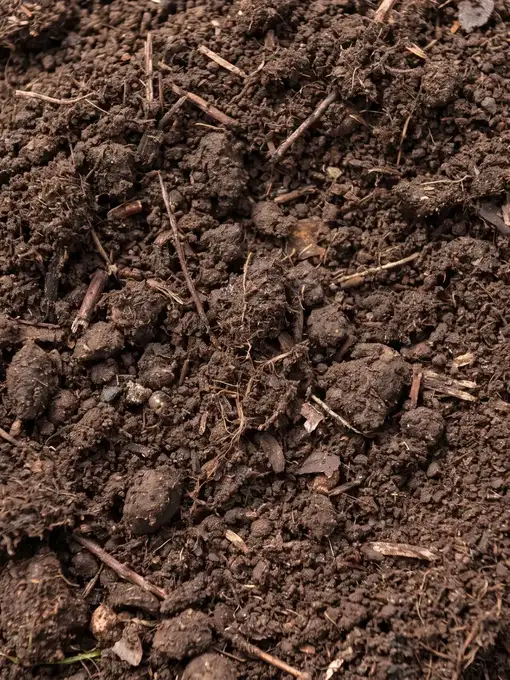
Bulk compost delivered in Tyler, TX. Dark brown color.
Starting from $511.73 delivered to Tyler for 2 yards, our minimum order
Tyler is a city of about 110,000 people in East Texas, and many yards here sit on sandy or acidic ground that dries out quickly. Compost delivery in Tyler, TX is a practical way to add organic matter where the native soil needs help. This page explains how to size the job, how the price is set, and how to plan beds and lawn patches before the material arrives.
Where Tyler yards use compost
Rose beds, vegetable plots, and shade borders under pines and oaks all benefit from a dark, crumbly top layer. Tyler is well known for its rose gardens, and the beds around them are a natural fit for compost. Common uses in town include:
- Rose and perennial beds topped with a loose, even layer.
- Vegetable gardens built up for each growing season.
- Planting holes for new shrubs, mixed with the native soil.
Where the native ground is thin or drains poorly, Premium Screened Topsoil gives a bed something solid to build on. Compost then goes on top as the finishing layer that feeds the planting.
Working out the cubic yards for a Tyler project
Measure the bed in feet, multiply length by width, multiply that by the depth in inches, and divide the total by 324. A 16 by 8 foot raised bed filled 4 inches deep works out to about 1.6 cubic yards. Write the answer down as yards before you enter it, since the order is placed in that unit.
For an irregular shape, split the area into rectangles, run each piece through the formula, and total the results. The calculator on this site can also check the arithmetic if you prefer typing in the dimensions.
Planting trees and shrubs in Tyler
Dig the planting hole wide rather than deep, then mix compost into the backfill so it blends with the native ground Tyler yards often have. Set the root flare level with the surrounding soil, and keep the compost off the trunk itself so bark stays dry where it meets the ground.
Roses and shade borders in Tyler
Roses prefer a loose, well-drained root zone. Work compost into the top layer around each plant, then keep the crown area clear so air can move around the base of the stems. Shade borders under trees are similar: a light, even layer suits the surface, and the leaves that fall each season can be raked in lightly rather than left as a separate mat.
How the Tyler price is set
The delivered price depends on your ZIP, so it is calculated live and appears on the page as soon as you enter it. The rate per cubic yard drops as the quantity climbs, which means a buyer covering a large lawn often finds one full order costs less per yard than a series of partial ones.
Because the total is built from the ZIP you enter, it pays to check the figure for the address you will actually use, not a nearby one.
Ordering compost in Tyler, TX
Enter the cubic yards from your sizing step, add your ZIP, and check the total before you confirm the order. The smallest order is 2 cubic yards, so a planting plan that needs less than that is better served by bagged product. For a closer look at how Tyler orders are handled, see our delivery in Tyler page.
Lawn patches and thin turf
Thin turf in Tyler often shows up along driveway edges and under shade. A light spread of compost, raked in and kept below the grass blades, gives the roots a better start before seed goes down. Patches larger than a few feet usually call for a full bed rebuild instead.
Compost alongside pea gravel
Compost is a soil product, so it does not belong under a path or a driveway. For those areas, Pea Gravel is sold by the ton and works well in borders and walkways. Keep compost in the planting areas and use gravel where foot traffic runs, so each material stays where it performs best.
For a statewide overview of compost options across Texas, the Compost in Texas page is the place to start.
About Compost
Our compost is dark, crumbly, and finished, with an earthy scent and a texture that breaks apart easily in the hand. It is sold by the cubic yard, and each yard weighs roughly 1,000 pounds, which is worth knowing when you estimate how many wheelbarrow trips a bed will take. Compost works as a soil builder rather than a fill, so it is best placed where plants will root into it.
Gardeners use compost to build the living part of the soil. It helps sandy ground hold water and nutrients, opens up dense ground so roots can spread, and gives soil organisms a steady food source. Because it releases nutrients slowly, it suits beds that are replanted every year as well as lawns that need steady feeding instead of one heavy dose.
What Compost costs in Tyler
Around Tyler, compost is quoted by the ton with delivery layered in based on distance from the closest yard. Send your ZIP and load size and we will send back a same-hour quote with the truck rate and the per-ton figure spelled out. Plan on roughly 216 sq ft of coverage per ton at 3 inches deep, which puts a single-car driveway in the 3 to 5 ton bracket.
How crews use Compost in Tyler
Tyler contractors keep compost on the order sheet for a short list of standard installs. Top of the list is planting bed gravel, where the material is rolled out in tight urban lots and infill builds and screeded to grade. Tyler sits at about 110,003 residents, which means we see steady weekday traffic from landscape crews and weekend pickups from owner-builders.
Delivery day in Tyler
Delivery in Tyler runs out of the nearest pit; you get a two hour arrival window the evening prior and a call when the driver leaves the scale. Plan for 12 ft of clear path for a tandem and 14 ft for a tri-axle, plus a level area at the dump point so the bed lifts straight. Standard lead time on this lane is Mon-Sat, with same-day windows held open for orders that hit the desk before 11 AM and clear payment.
Related materials we deliver in Tyler



Estimate how much you need
Work out your material
A planning figure, not a guarantee. Order roughly a tenth extra to cover settling and uneven ground.
Browse more
Available in nearby cities
Plan your project
Related guides
 GUIDEWhat to Put Under River Rock for Landscaping BedsHere is what to put under river rock landscaping: a compacted base where needed, then landscape fabric, then rock, to stop weeds and settling.Read guide →GUIDEHow to Clean River Rock and Restore Its ColorLearn how to clean river rock landscaping with rinsing, soap and vinegar methods, plus common mistakes to avoid for a brighter, longer lasting rock bed.Read guide →
 GUIDEHow to Lay a Gravel Driveway: Step-by-Step GuidePractical, field-tested guide: how to lay gravel driveway. Pulled from real US installer notes and 2026 supplier price data.Read guide →
 GUIDEDoes Gravel Stop Weeds? Honest Answer + What WorksPractical, field-tested guide: does gravel stop weeds. Pulled from real US installer notes and 2026 supplier price data.Read guide →
Frequently Asked Questions
Can I plant directly into a pile of pure compost?
It works better to blend compost with the native soil first. Planting straight into pure compost can leave young roots in a pocket that dries out on top and stays too wet underneath. Mixing the two gives roots a gradient to grow through and a steadier moisture level.
How long does a compost layer keep working in a bed?
Compost breaks down over time, so its benefits fade a little each season. Beds that are replanted every year usually get a fresh layer, while a perennial bed may only need a light top-up every year or two. Watching how the bed looks in spring tells you whether it needs more.
Does compost help sandy soil hold water in East Texas?
Yes. Sandy ground drains quickly, so water and nutrients pass the roots before plants can use them. Compost fills some of those large gaps with organic matter, which slows drainage and gives roots more to grip. The effect builds over seasons rather than appearing after one application.
Why does compost settle more than ordinary soil?
Compost is partly broken-down material, and that material keeps decomposing after it goes down. As it breaks apart, the layer loses volume and sinks. Planning for that shrinkage by putting down a little more than the bare measurement is the simplest way to keep a bed level through the season.
Is compost a good choice for vegetable gardens?
Vegetable beds are a common home for compost, since it supplies organic matter the soil can use over time. Work it into the top few inches before planting, and leave a small gap around the stems of young plants so they do not stay wet at the base.
What is the difference between compost and mulch?
Compost is decomposed organic matter that gets mixed into the soil and feeds it over time. Mulch is a layer kept on the surface to hold moisture and slow weeds. Many gardeners use compost first and mulch on top, since the two do different jobs.
Will compost change the pH of my soil?
Finished compost usually sits near neutral, so it does not swing soil pH sharply in either direction. A soil test is the reliable way to learn what a bed needs. Your local extension office can help read the results if the numbers are unfamiliar.
What should I do with compost I do not use right away?
Keep the pile on a flat, firm spot away from the house and out of the path of runoff, and cover it with a tarp if heavy rain is coming. Wet compost packs down and can turn sour. Spread it within a few weeks when you can, and turn it once with a fork before it goes onto a bed.