
Fill Dirt Delivery in Newport News, VA
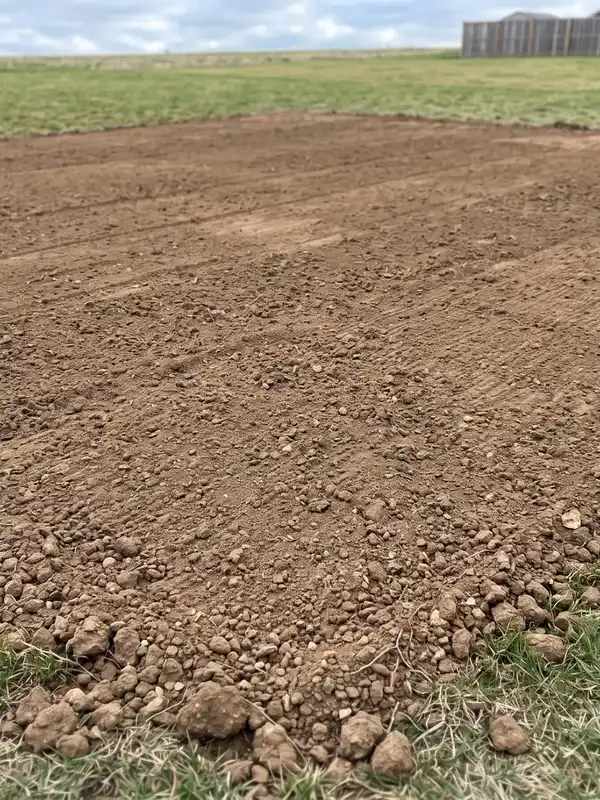
Bulk fill dirt delivered in Newport News, VA. Brown color.
Starting from $471.52 delivered to Newport News for 2 tons, our minimum order
Newport News jobs that need fill dirt
Newport News sits on the Peninsula, with the James River on one side and a lot of low, flat ground behind the shoreline. Most fill dirt delivery orders in Newport News, VA come down to two problems: ground that holds water, or ground that has settled below where it should be. This page covers the material, the quantities, and how ordering works. MyGravelBuddy sells fill dirt by the ton, and the delivered price for your ZIP is calculated live and shown on the page.
The city has roughly 185,000 residents. Hampton is about 6 miles away, Norfolk about 11, Chesapeake about 19 and Virginia Beach about 24, so the same low-lying coastal conditions run across much of the region. Our delivery in Newport News page explains how deliveries reach the city.
Fill dirt is excavated subsoil, chosen for bulk and for how it packs down rather than for growing anything. It belongs in the part of a project nobody sees once the surface goes on. Typical jobs here include backfilling beside a new slab, closing a utility trench, and building up the low end of a lot so it stops collecting runoff from the neighbors.
Ordering for low ground and slow drainage
On flat coastal lots the pattern is predictable. Rain collects in the same low spot, the grass there turns thin and soft, and the fix is to bring the grade up so the water has a path to leave. Fill dirt is the cheapest way to add that volume. Build it up in layers, shaping a gentle fall toward a swale, a drain, or the street. A slope of even a few inches over a long run changes where the water goes.
Fill is not the final surface. Finish with Premium Screened Topsoil where you want grass or planting beds. Where a wet corner needs a drainage bed, a trench lined for runoff, or a clean path, Pea Gravel moves water in a way compacted dirt cannot.
Working out the quantity
For a Newport News yard, begin by measuring the area. Pace out the length and width, then decide how deep the low spot actually is. Check it in several places rather than guessing from one, because a sagging yard is rarely level, and depth at the deepest point overstates what the whole area needs. Average the readings. Multiply length by width by average depth, all in feet, then divide by 27 for cubic yards. The calculator handles it if you would rather enter three numbers and read the result.
Our fill dirt is bought by the ton, not the cubic yard. The material runs about 2,200 pounds per cubic yard, so convert your volume to tons before you order. Sandy, wet ground near the river takes more fill than it appears to, because the new dirt packs down against it. The smallest order is 2 tons, and most grading jobs in a yard will clear that easily.
Timing around Peninsula weather
Saturated ground makes every part of this harder. A load of dirt placed on soaked turf sinks into it, and spreading wet fill gives you a muddy layer that never compacts properly. If a storm system is coming up the coast, hold the delivery until the lot has had a few dry days. Hurricane season matters too, so avoid scheduling a delivery for the days a named storm is forecast.
How the price is shown
There is no printed price list, because a delivered price depends on the address. The order panel asks for your ZIP and returns a delivered figure for that spot in Newport News. Larger orders get a lower rate per ton, so if the lot is big enough to justify it, order the whole quantity at once instead of in pieces.
Placing the order
Decide on a quantity, glance at what your ZIP returns, and check out. Contractors running several sites in the state can see where else we stock it on the Fill Dirt in Virginia page. Before the truck arrives, mark the drop spot, trim anything overhead, and keep pets and children clear of the area.
About Fill Dirt
Fill dirt is a brown, unscreened subsoil used to raise grade, level low ground and backfill around structures. It is a volume product. The goal is to add mass under a finish surface, not to grow a lawn, so it is not enriched with organic matter. A cubic yard weighs about 2,200 pounds, and the material is sold by the ton.
Expect some natural variation. Loads may contain clay, sand and a few small stones, depending on the source. That does not affect its use as a base. For a stable result, place it in layers a few inches thick, compact each one, and shape the final grade so water moves away from buildings. When the fill is settled, top it with topsoil for planting, or with gravel or stone where you need a drained surface.
For fill dirt in Newport News, the delivered price for your ZIP appears live on the page. You need to order at least 2 tons, and the per-ton rate drops as the load grows.
What Fill Dirt costs in Newport News
Around Newport News, fill dirt is quoted by the ton with delivery layered in based on distance from the closest yard. Send your ZIP and load size and we will send back a same-hour quote with the truck rate and the per-ton figure spelled out. Plan on roughly 98 sq ft of coverage per ton at 3 inches deep, which puts a single-car driveway in the 4 to 7 ton bracket.
How crews use Fill Dirt in Newport News
Newport News contractors keep fill dirt on the order sheet for a short list of standard installs. Top of the list is erosion control, where the material is rolled out in tight urban lots and infill builds and screeded to grade. Right behind that is driveway gravel, common in dense neighborhoods where curb access is short and often paired with edging or fabric below the lift. Newport News sits at about 184,896 residents, which means we see steady weekday traffic from landscape crews and weekend pickups from owner-builders.
Delivery day in Newport News
Delivery in Newport News runs out of the nearest pit; you get a two hour arrival window the evening prior and a call when the driver leaves the scale. Plan for 12 ft of clear path for a tandem and 14 ft for a tri-axle, plus a level area at the dump point so the bed lifts straight. Standard lead time on this lane is Mon-Sat, with same-day windows held open for orders that hit the desk before 11 AM and clear payment.
Related materials we deliver in Newport News
 Price by ZIP
- SizeScreened, no size grade
- Density2200 lb/yd³
- ColorDark brown
 Price by ZIP
- Density2000 lb/yd³
- ColorDark brown
 Price by ZIP
- Density1000 lb/yd³
- ColorDark brown
Estimate how much you need
Work out your material
A planning figure, not a guarantee. Order roughly a tenth extra to cover settling and uneven ground.
Browse more
Common uses for Fill Dirt in Newport News
Available in nearby cities
Plan your project
Related guides
 GUIDEHow Much Gravel Do I Need? Quick Sizing GuidePractical, field-tested guide: how much gravel do i need. Pulled from real US installer notes and 2026 supplier price data.Read guide →
 GUIDEWhat Is #57 Stone? Uses, Size, and Cost ExplainedPractical, field-tested guide: what is 57 stone. Pulled from real US installer notes and 2026 supplier price data.Read guide →
 GUIDEHow Deep Should a Gravel Driveway Be? Layer GuidePractical, field-tested guide: how deep should gravel driveway be. Pulled from real US installer notes and 2026 supplier price data.Read guide →
 GUIDEHow Much Does River Rock Cost? By Ton or YardRiver rock cost depends on your ZIP code, order size, and whether you buy by the ton or the cubic yard. Here is how pricing works.Read guide →
Frequently Asked Questions
How long should fill sit before I topsoil it?
Give it at least a few good rains, if the schedule allows. Fill settles as water works through it, and topsoil spread too early will follow that settling and leave dips. Rake the surface, check for low spots after rain, add more fill where needed, and only then spread the finish layer. For a structure, compaction in lifts matters more than waiting.
Will fill dirt fix a yard that stays soggy?
Only when the cause is a low spot. If the yard is wet because of a high water table or a downspout emptying in one place, extra dirt will not cure it. Check where the roof water goes and whether the ground is still wet days after rain. If it is, redirect that source first and treat fill as the second step.
Can I stack fill dirt against a fence or wall?
Keep it off wood. Soil piled against a fence, a shed wall or siding holds moisture against the material and can rot it, and a tall fill also pushes sideways on thin boards. Hold the new grade a few inches below the bottom of any wooden structure, or build a proper retaining edge first if the grade has to rise higher.
Can fill dirt be used as a driveway base?
It is not recommended. Dirt holds moisture and rutting follows. Fill works for building up the ground below, but the surface of a driveway should be crushed stone. Compact the fill thoroughly, then put stone on top. That arrangement carries vehicle weight and sheds water the way dirt cannot.
What should I do with leftover fill?
Use it for low spots elsewhere on the property, the back of a retaining wall, or a bed edge. Store it under a tarp away from drains if you need to keep it. Because the order has a 2 ton minimum, many people end up with some extra, and a covered pile stays usable for weeks.
Is it okay to place fill around trees?
Be careful. Burying a trunk or the roots under more than a few inches of dirt can suffocate them over time. Keep fill back from the base of established trees, and if the grade must change near one, build a small retaining ring so the trunk flare stays exposed.
How do I keep a pile from eroding while I work?
Cover it with a tarp and weigh the edges. If you are working in stages, shape the pile with a flat top so rain soaks in rather than running off the sides. Keep it away from the street and storm inlets, because sediment washing out of a pile is a nuisance for neighbors and for the city.
Do I need to remove sod before filling?
For anything more than a thin raise, yes. Cut the sod, or at least scalp it, so the new dirt bonds to firm soil instead of a mat of roots that will rot and sink. A shallow lift of a couple of inches over healthy grass is the exception, and it will usually grow through.