
Compost Delivery in Clovis, CA for Valley Yards
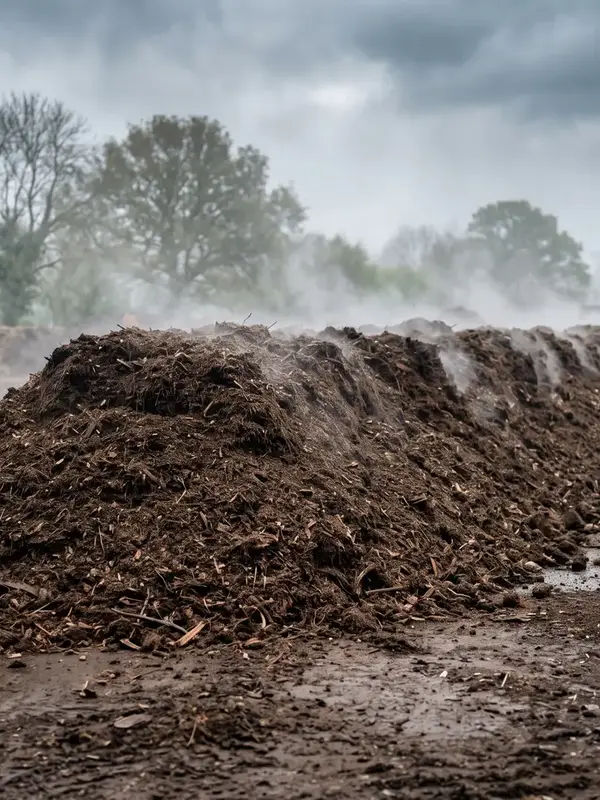
Bulk compost delivered in Clovis, CA. Dark brown color.
Starting from $620.98 delivered to Clovis for 2 yards, our minimum order
Clovis sits on the northeast side of Fresno in the San Joaquin Valley, and yards here often see hot, dry summers. That makes compost delivery in Clovis, CA a practical way to add organic matter that helps soil hold moisture. Pick the quantity you need, enter your ZIP code, and the delivered price appears before you check out.
Planning a Clovis compost project around the season
Valley weather shapes when compost goes down. Spring and fall are the most comfortable windows for spreading and working material into beds, because the soil is moist but not saturated and the heat has not yet built up. Summer spreading is still possible, but plan on watering the material in well so it does not dry out before the roots can use it.
Irrigation layout is worth a look before the load arrives. Drip lines and sprinkler heads can be buried under a thick layer, so pull the material back around them and check again after the first watering. For new beds, a deeper layer worked into the top several inches gives the best start, while established beds usually need only a light annual top-dressing.
When the load is in place, break up the pile with a fork and spread it across the area in a single pass if you can. Leaving it bunched for days makes it harder to move, and one spot can end up much deeper than the rest. Rake the surface level and water it in. Hot afternoons are hard on freshly turned soil, so finish the raking early in the day.
How much compost your Clovis project needs
Take the length and width in feet, then the depth in inches. Multiply the three numbers and divide by 324 to find cubic yards. A 12 by 15 foot planting area at 3 inches deep comes to about 1.7 cubic yards, so the 2 cubic yard minimum covers it with a little to spare. Larger yards can use the calculator on this site for a quick estimate.
Where compost fits in Clovis yards
Valley soils are often low in organic matter, so compost is a common addition for vegetable beds, flower borders and lawn repair. A few uses that suit Clovis yards:
- Building up soil in a newly prepared vegetable garden
- Feeding perennial borders and rose beds each spring
- Overseeding and topdressing patchy turf
- Improving the soil around young trees, kept clear of the trunk
Compost delivery to Clovis, CA: order size and price
Compost is measured by the cubic yard, and the smallest order is 2 cubic yards. The delivered price is calculated for your ZIP and shown on the page before you order, so the number on the screen is the one that counts for your address. Larger orders get a lower rate per cubic yard, which is worth weighing when several zones are on the list.
Delivery to Clovis and nearby cities
The city delivery page is delivery in Clovis. Nearby cities in our data are Fresno, about 7 miles away, followed by Lemoore at about 37 miles and Visalia at about 42 miles.
Other materials for Clovis projects
Some projects need a firmer base than compost can give. #57 Crushed Stone is sold by the ton and works for drainage trenches and under-slab fill. Asphalt Millings is also sold by the ton and is often used for driveways and parking pads. Pea Gravel and River Rock are sold by the ton as well, so check the unit on each product page before you compare orders.
Ordering compost in Clovis
Browse the full set of options on Compost in California, or go directly to the product page for Clovis. The steps are short:
- Put your Clovis ZIP code into the page and read the total.
- Choose how many cubic yards you want.
- Pick a drop spot that is level and reachable, with a clear path across the yard and no soft lawn for the truck to cross.
- Check out and have a wheelbarrow ready.
About Compost
Compost is a dark brown soil amendment made from broken-down organic matter. Clovis buyers order compost by the cubic yard. Mixed into the top few inches of soil, it adds organic matter, improves the way soil holds water and air, and feeds plants gradually as it decomposes.
Clovis gardeners tend to rely on compost for vegetable beds, perennial borders and lawn repair, where the Central Valley soil often needs more organic material. The texture is fine enough to spread by hand, a shovel or a wheelbarrow, and it can be worked in with a garden fork or tiller. It is a soil amendment, so it works best as a layer on firm ground or blended into existing soil rather than used alone to fill a deep hole.
Each order is measured in cubic yards with a 2 cubic yard minimum. The delivered price is set for your ZIP code and displayed before checkout. A larger quantity brings a lower rate per cubic yard, so plan the full project before you order.
What Compost costs in Clovis
In the Clovis market, compost is sold by the ton and priced at the gate before delivery is added on. Send your ZIP and load size and we will send back a same-hour quote with the truck rate and the per-ton figure spelled out. One ton covers about 216 sq ft at a 3 inch finished depth, so a 400 sq ft driveway pad runs roughly 2 tons.
How crews use Compost in Clovis
Crews working out of Clovis tend to call for compost on a few repeat jobs each week. The first is planting bed gravel, typically laid in tight urban lots and infill builds with a base lift compacted before the finish course goes on. With a population around 127,993, Clovis pulls a mix of single-truck homeowner orders and contractor full-loads through the season.
Delivery day in Clovis
On the day of the drop, the dispatcher pulls the closest yard, batches your ticket with other Clovis stops, and sends a window the night before. Tandem-axle dumps need at least 12 ft of clear width and 14 ft overhead to set the bed; tri-axles need 14 ft of clearance on both counts and a level pad to tip safely. Standard lead time on this lane is Mon-Sat, with same-day windows held open for orders that hit the desk before 11 AM and clear payment.
Related materials we deliver in Clovis


Estimate how much you need
Work out your material
A planning figure, not a guarantee. Order roughly a tenth extra to cover settling and uneven ground.
Browse more
Available in nearby cities
Plan your project
Related guides
 GUIDEWhat Is #57 Stone? Uses, Size, and Cost ExplainedPractical, field-tested guide: what is 57 stone. Pulled from real US installer notes and 2026 supplier price data.Read guide →
 GUIDEHow Deep Should a Gravel Driveway Be? Layer GuidePractical, field-tested guide: how deep should gravel driveway be. Pulled from real US installer notes and 2026 supplier price data.Read guide →
 GUIDEHow Much Does River Rock Cost? By Ton or YardRiver rock cost depends on your ZIP code, order size, and whether you buy by the ton or the cubic yard. Here is how pricing works.Read guide →
 GUIDEWhat Size Crushed Stone Goes Under a Concrete SlabMost slabs need 4 to 6 inches of compacted crushed stone underneath. What size crushed stone under a concrete slab needs, and why it matters.Read guide →
Frequently Asked Questions
Can compost help the soil around Clovis trees and shrubs?
Yes, when it is spread as a layer over the root zone and kept back from the trunk. Work a thin layer into the surface soil or top-dress around the drip line, then water it in. Compost does not replace regular watering for young plants, but it gives their roots better soil to work in.
How deep should compost go in a vegetable bed?
For a new bed, a layer of two to three inches worked into the top six or so inches of soil is a common starting point. In an established bed, a thinner top-up before each planting season is enough. Digging deeper than the roots will reach adds effort without much benefit.
Can I use compost when overseeding a patchy lawn?
Yes. Mow low, rake out dead thatch, sow the seed, and spread a thin layer of compost over it. The layer should be light enough that seed still touches soil. Keep the area moist while the new grass establishes, which in a dry Valley summer usually means frequent light watering.
Does compost replace fertilizer for roses and perennials?
Not entirely. Compost releases nutrients slowly as it breaks down, and its main job is improving structure and moisture holding. Roses and other heavy feeders often still benefit from a separate feeding schedule. Think of compost as building the soil that the fertilizer then works in.
Can I use compost on a sloped Clovis yard?
On a gentle slope, spread it in a thin, even layer and rake across the slope instead of down it. Heavy rain or irrigation runoff can carry loose material downhill from a thick pile. Planting soon after spreading helps roots hold the compost in place.
Do I need to till compost into the soil?
No. You can leave it as a top layer and let watering and soil life draw it down, which suits established beds and lawns. Working it in with a fork helps most in new beds, where you want organic matter mixed through the root zone before planting.
Can compost go in containers and planters?
Yes, but blend it with potting mix or garden soil rather than filling a pot with compost alone. A mix of roughly one part compost to two or three parts soil keeps drainage open. Top up the surface each season as the mix settles.
How do I tell if my soil needs compost?
Soil that cracks and crusts in summer, drains too fast, or looks pale and lifeless is a good candidate. Dig a small hole after watering and watch how the soil holds together. Sandy or crumbly ground and tight, sticky ground both improve with added organic matter.